 |
|
Sunday, April 7, 2019
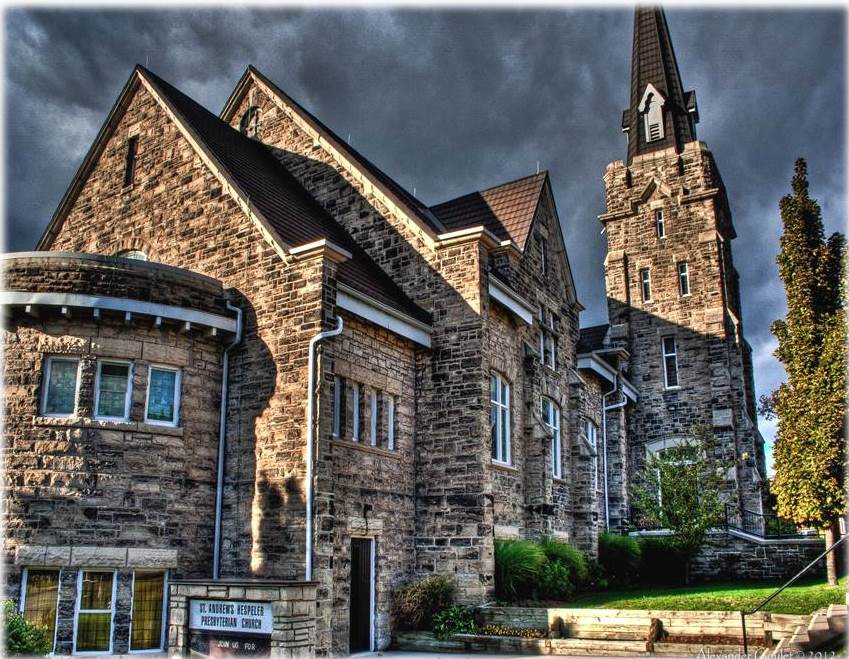 |
| The scripture readings for this week are:
The message this week is: One perfect afternoonIf you have any questions or comments about the scripture readings or the message please feel free to contact Rev. Scott McAndless at [email protected] Explorations in Music will be held in the Fellowship Room following worship for JK – Grade 6 children to participate in. Everyone is welcome to come in the see what goes on in these interesting and fun classes. |
While I kept silence…
Hespeler, 31 March, 2019 © Scott McAndless
Joshua 5:9-12, Psalm 32:1-11, 2 Corinthians 5:16-21, Luke 15:1-3, 11b-32
| W |
e read a story today – a rather famous story told by none other than Jesus – in which a young man gets a number of things tragically wrong. He goes to his father and asks to receive the inheritance that will rightly be his upon his father’s death. That is a bad thing to do. He is basically saying to this man who has done everything for him that he doesn’t value him as a father. He is saying that he would rather have him dead so that his value can be converted into cold, hard cash.
Can you imagine how much it would have hurt for a father to hear something like that? I’m pretty sure it would have broken his heart. And that is all on the son. But the father, perhaps recognizing his own imperfections in the parental role (for, I’m sad to say, there is no such thing as a parent who gets it all right) gave in to his son’s demand. Perhaps he was at a loss and didn’t know what else to do.

But the young son was not finished making bad choices. He went away to a distant land, foolishly thinking that he would leave all of his problems behind him. That is a strategy that almost never works. His problems went with him because he carried them within. The next mistake was to waste the precious resources that had been maintained and passed down by his family for generations. He threw it all away because he did not know its true value. He made bad connections – befriending people who did not value him for who he was but merely for what they could get out of him. Such people never make good friends.
The young son truly did mess up. But, you know what, I’m not going to write him off because of all that. Yes, he was foolish. Yes, he valued the wrong things. Yes, worst of all, he deeply hurt people who cared about him. But I have done that and so has pretty much everybody else. I think I’m actually pretty fortunate that, when I messed up, the consequences that were visited upon me did not lead to me sitting starving in a pigpen and dreaming about eating the food that I was supposed to feed the pigs. But it could have. I suspect that all of us have made mistakes in our lives that, had the circumstances been right, would have lead to a similar dire situation.
For example, one good way that someone the age of that young son can really mess up their life is by not taking their education seriously. A young person who is not interested in study and work – who only sees school as a place where they plan for their next party – runs a very serious risk of messing up the remainder of their life. We all agree that is true, right?
But is it? It may well be true if you are poor, a member of a racial minority or don’t have other advantages, but there are other young people who seem to have this privilege of being able to mess up without worrying about consequences. We just heard about a scandal in the last couple of weeks in which wealthy parents bribed their children into the best of colleges and universities regardless of how seriously those children had taken their education. Some people are spared the worst consequences of their errors because of who their parents are or because of other advantages that they have. But I think we can probably all say that we have done some things that could have, given the right circumstances or the lack of certain privileges, landed us in a very bad place.
What I’m saying is that I am not willing to condemn the young son because he messed up. Neither, by the way, is his father. And since Jesus told this parable in a way that clearly was trying to teach us something about God, neither does God. The crisis in this story is not that somebody sinned or made a big mistake. Sin and error are just part of what it means to be human. Sin, as a problem, is something that God has taken care of. That is what the coming of Jesus is all about. The crisis is in something else.
That brings us to the words of the psalm that we read together this morning. It is what is called a penitential psalm – a song that was written to be used by worshipers who have messed up and want to make things right. It is a prayer that certainly could have been prayed by the young son at his lowest point. But, as a prayer, it also points out where the biggest problem is. The penitent says this, “While I kept silence, my body wasted away through my groaning all day long. For day and night your hand was heavy upon me; my strength was dried up as by the heat of summer.”
You see, sins, mistakes errors and screw-ups they can all be overcome. In fact, they have all already been overcome. Jesus came and he was obedient even unto the cross so that the power of sin over the lives of people might be broken. We do not need to be in bondage to sin, not here and now and not in the life to come either. But people are in bondage. Many people are caught in patterns of disobedience or dependence. Many people are victimized by violence or hatred. Many more are trapped in the consequences of their own foolishness or of the evil systems set up by others. So what is the problem? What is it that keeps us in bondage to all of these things? I think that this psalm hits the nail on the head. The problem is silence.
I mean this certainly applies to the young son in the parable of Jesus. I suspect that he knew very early on that he had messed up. He knew it when he saw the hurt in his father’s eyes as he made his request for the inheritance. He knew it when the wild life that he was living in that far distant country did not satisfy him. He knew it as he watched the people that he had thought were his friends turn away from him when his money ran out. But clearly there was a long walk from knowing the truth of his errors and speaking them aloud even to himself. He held his silence. Why? Out of pride; out of a stubbornness that is common to us all. (The psalmist also hits the nail on the head when he compares us to, “horse or a mule, without understanding.”) He kept his silence out of fear of further repercussions. The reasons for his silence might have been many, but the fact of the matter is that his situation only went downhill while he kept silent about his errors.
But as soon as he decided to speak, everything changed. I’m not saying that it was easy. I am quite sure that he felt a whole lot worse before he began to feel better. But that decision to speak up about how he had messed up was the beginning of healing for himself and for his father and even, I would suggest, for his older brother.
But we all get stuck in that time of silence don’t we? You know that you have hurt somebody. You can feel it every time you are in their presence. The feelings of resentment and tension only build and build. And the longer you wait, the harder it is to move from silence to speech. But breaking the silence is truly the only way to move forward.
It is the same thing with God. I know that doesn’t make sense to some people. Why do you have to tell God your sins or the things that you regret? Doesn’t God already know everything about you? Why do you have to say it; it can be so hard to say – hard for your pride, hard to admit your own weakness. If it doesn’t change anything for God, why do you have to say it? Well, I don’t presume to understand it all from God’s point of view, but I do know this: it certainly changes something for you when you break that silence. It is precisely because it is so hard for you – because you don’t want to do it – that speaking honestly with God about your failures can begin to change things for you. It frees you to start moving forward to new and better ways of acting and being.
And sometimes it is also helpful to speak to God through another human being. I know that, as Protestants, we don’t buy into the whole Roman Catholic sacrament of confession. We don’t believe that you have to go through a priestly mediator in order to find forgiveness from God. But they are not completely wrong in their approach. Sometimes speaking to a wise and trustworthy spiritual counsellor – to speak aloud to another human being our regret – can be a very helpful experience, especially when the person you open up to is then able to speak to you the words of grace and forgiveness that God would speak to you because of Jesus. You break your silence and they break the silence of God and healing and hope can abound.
There are other ways in which silence is the enemy. When people remain in silence, that is an environment in which guilt and shame breed and become ever stronger in their destructive power. Shame, in particular, is a very destructive force – especially when people are made to feel ashamed of things that are completely beyond their control. When someone feels shame for something that is simply a product of who they are (their heritage, their gender, their sexual orientation) or because of something that has been done to them (rape, abuse, other crimes) it can destroy lives. Even when people feel shame for something that is a result of their own choices, it is rarely a helpful or productive thing.
Shame festers in silence. It spreads its destructive power to every area of a person’s life and can damage their every relationship. But breaking the silence robs shame of its power. When we speak of the reasons for shame aloud, we can realize how ridiculous they often are. And when we speak words of grace and forgiveness aloud, shame is revealed to be a powerless tyrant, defeated by God’s love.
And what of the other sins that plague this world? Sins like racism and hatred, sins like economic systems that drive some people deeper and deeper into poverty while a few reap all of the riches and then think they can bribe their kids’ way into top colleges, sins like an opiate crisis that inflicts our entire society because countless people were driven into addiction by drug companies that, thinking only of their profits, promised doctors that they could prescribe their opioids to patients without worrying that it would lead to addiction even though this was a lie.
Well those sins all thrive in an environment of silence. So long as people are afraid to speak up and name what is happening, these things will continue to rule in this world. So long as people don’t challenge the racism or injustice that they see, it will continue to flourish. So long as we fail to call greed the sin that it is, it will continue to be presented as a virtue and the world will never change. So long as silence is the rule, so will sin be.
The psalmist was incredibly wise. Silence is often the root of so much of our misery. God has done so much to take care of the power of sin and guilt and shame, but the roadblock that gets in the way of us experiencing everything that God has done for us is silence. So I will close today by asking you a simple but very hard question: is there a silence that you need to break? Is there someone that you have wronged and you know it but you haven’t been able to say it to them? Speak. Do you need to break the silence between you and God about something that you have regretted or resented? Speak. Or do you need to speak up about something that is just wrong in some situation that you find yourself in? Speak. It is the simplest thing in the world, but it can also be the hardest thing you have ever done. May God give you the strength and the grace to break the power of silence.
Sunday, March 31, 2019
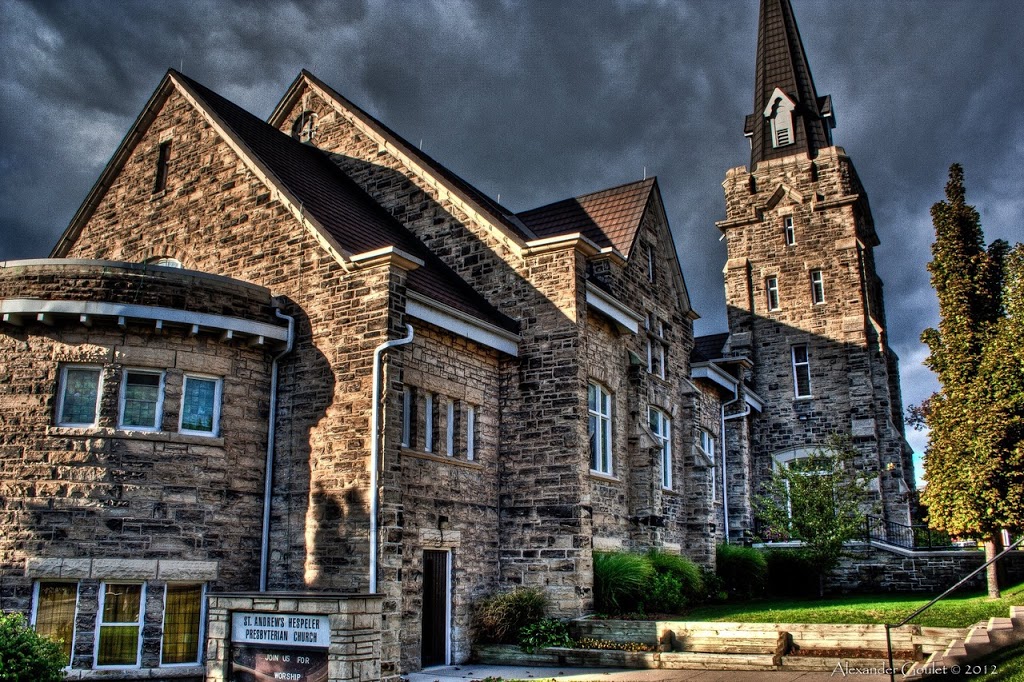 |
The message is: “While I kept silence” If you have any questions or comments about the scripture readings or message please feel free to contact Rev. Scott McAndless at [email protected]. Special music given in praise by our Adult Choir with soloist Randy Vermaas. We also welcome the University of Waterloo Gamelan Ensemble to our worship service and Explorations in Music. For more information about the Gamelan Ensemble you can go to this link: https://uwaterloo.ca/music/events/uw-balinese-gamelan-ensemble Explorations in Music will meet in the sanctuary this week, following worship. And finally, order forms for flowers for Easter are now available. |
Ho! Everyone who thirsts!
Hespeler, 24 March 2019 © Scott McAndless – 3rd Lent
Isaiah 55:1-9, Psalm 63:1-8, 1 Corinthians 10:1-13, Luke 13:1-9
| H |
o, everyone who thirsts, come to the waters; and you that have money, come, buy and drink. Come, buy and drink.
There is a well, not all that far from here from which a certain company pumps 3.6 million litres of groundwater every day. This is a fact that upsets a few people because it is such a large amount of water from a water table that we all depend on and maybe mostly because they don’t pay anything for that privilege. Well, that is not quite right. They actually pay something – a little over $13 a day. But, considering that they then put that water in bottles that they can sell for a dollar each or more – a markup that is so huge that I couldn’t even figure out how to calculate it – you might say they pay close to nothing.
And I realize that the whole Nestlé Aberfoyle Bottling Plant water contract thing can be a bit of a controversial topic in these parts. And I don’t mean to get into the whole political controversy around it. I mention it, simply to name it as one of the controversial issues of our time.
The fact of the matter is, whether we like it or not, whether we are more concerned for the job creation aspect or the environmental health aspect, it is an issue that’s simply not going to go away. We are living in a world where some of the basic things of life, things like water, have become and are becoming commodities and not merely services. And there is a lot of money and jobs and investments on the line as we deal with the question of the commodification of these things. These are issues we simply cannot escape.
And it is strange. In fact, there are times when I just don’t recognize it. I mean, this is not the world that I grew up in. This is not the world that I was promised When I was small, the notion that someone would buy a bottle of water, much less that some corporation would build a billion-dollar enterprise on the sale of water, was simply laughable. Water was a service, not a commodity. That would never change especially in a place like Canada with abundant water resources. And yet here we are. Sometimes I feel as if I’m living as a stranger in a strange land.
Ho, everyone who thirsts, come to the waters; and you that have money, come, buy and drink. Come, buy and drink.
The prophet had heard that song every day of his life for decades now. He was living in the city of Babylon, but he was not a Babylonian. He was a Judean, a foreigner, who had been brought there many years before by a hostile invading Babylonian army that had destroyed his land. And in Babylon, they had these water sellers. Early in the morning they would walk the streets with their song: Ho, everyone who thirsts, come to the waters; and you that have money, come, buy and drink. Come, buy and drink.
And the Judeans had no choice. They didn’t own access to wells or streams. Since no one could live without water, they had to buy from the water sellers. This was not the world that the prophet had grown up in. In Judah, the people had possessed the land that God had given them. They dug their own wells and built their cisterns or shared them in their communities. Never, back then, could they have imagined that the song of the water seller would be a part of their lives. It was as unthinkable to them as, well, the idea of buying plastic water bottles once was to us. It was simply laughable. It would never happen. And yet here they were, living as strangers in a strange land.
That is the situation that the prophet is speaking to in our reading this morning from the Book of Isaiah. This passage was almost certainly addressed to Judeans who were living in exile. In fact, they had been living there so long that they had gotten used to a lot of things – things like the calls of the Babylonian water sellers. They had gotten so used to it that, while they were nostalgic for the lost past, they could not see a way forward.
And the prophet was given the task of proclaiming the word of the Lord to the people who were living through all of that. And that word, amazingly, was that God was about to do something new. There was no way to go back to how things were before exile; that way of life was over. But God was about to take his people in exile back to the land where they had once lived so they could make a new beginning.
We don’t know what the name of this prophet was; he was just the man who took up the words of the original Prophet Isaiah from over a century before and interpreted them for the new situation in Babylon. But I think that in many ways he is the biblical prophet we need most to hear today. I think we have an awful lot in common with the people that he was preaching to. We, like them, often feel as if we are living as strangers in a strange land.
And I’m not just talking about the strangeness of finding ourselves living in a world where water has become a commodity and a part of a corporate business plan. There seems to be so much that we find so strange about the world today. We are living in a multi-faith, multi-ethnic, multi-cultural country of Canada today that I am sure many of us never imagined when we were younger. We are living in a world where we are being forced, many of us, to think of our relationship with Canada’s indigenous people in strange new ways. We are living in a strange, constantly connected world of social media.
And maybe especially the Christian church finds itself living in a strange new world. Thirty years or so ago, the church had a place of honour in society – why society even reserved one day a week to the almost exclusive use of the church. But today that is almost all gone, and it often feels like the church is living in a society that is sometimes even hostile to its existence.
We do often feel like exiles living in a strange land. And, like those exiles in Babylon, we know somewhere deep inside that there is no going back to the world that used to be. But that doesn’t stop us from looking back with nostalgia and pining for that lost world. God sent the prophet to those Judeans in exile in Babylon to break them out of that attitude. He didn’t want them to live in their memories of the past, but he also didn’t want them to just become complacent where they were now. He had to break them out of both of those things because God was about to do something completely new. So how did the prophet do that?
 Well, one day he went out in the streets of the exile community and he imitated the cry of the Babylonian water sellers: “Ho, everyone who thirsts, come to the waters; and you that have no money, come, buy and eat! Come, buy wine and milk without money and without price. Why do you spend your money for that which is not bread, and your labour for that which does not satisfy?” (And I’m sure that he sang it much better than that but that is probably what he did – he sang it.)
 What was he doing? He was taking the familiar song of the water sellers that reminded the people every day that they were living as exiles in a strange land, and he was changing it. He was jarring them with an unexpected twist of the familiar. Pay without money? Buy without price? Spend instead on something that is not a commodity? That wasn’t how the world worked! It still isn’t how the world works? You are kind of forced into looking at everything from an entirely new point of view.
It makes me wonder, what might the prophet do if he were among us today? I think that he would recognize us as fellow exiles – fellow strangers living in a strange land. He would recognize the tendency that we have to look back at the past with nostalgia and see everything in that past with rose coloured glasses. He would recognize the complacency with which we look at where we are right now and how we don’t necessarily want to risk change or anything new. He would recognize us as people who are caught between a lost past and an uncomfortable present. Those were the people he was talking to in exile in Babylon and I really think that we would seem familiar to him.
He might even recognize what all of that leads to at its worst. Some people who can’t let go of that idealized image of the past – who think it must have been always good when for example, white men ruled unchallenged – will try and take us back there sometimes by the most despicable means. They will target and scapegoat immigrants and racial minorities, blaming them for all the problems they see in the world. They will imprison children and separate them from their parents for what is technically a misdemeanour in crossing a border without proper documentation. At the very worst, they will run, guns blazing, into mosques or synagogues. These things are all things that people who are troubled do because they feel like they no longer recognize the world that they are living in. Fortunately, the vast majority do not respond to such extremes, but the fact that a few do should give us pause.
What would the prophet do for us? I suspect he would shake us up – maybe take something familiar to us, something that reminds us that we are caught living in this world where we don’t quite feel at home. He wouldn’t use the ancient water seller’s song, of course, because that doesn’t mean anything to us. But he might do something like impersonate the Fiji water girl at the Golden Globes. But the point would not be to merely mock what’s happening in our world today. The internet is full of people mocking what’s happening in the world today. He would be doing it in order to challenge our lack of imagination. You see, we are falling into this rut where all we can see is the world that used to be, which we look back on with nostalgia and not necessarily a whole lot of accuracy – we see that and the flaws of the present world. But we can’t imagine the world that needs to be – the world that God is calling into existence. That is what the prophet was really doing for the people who were stuck in Babylon. That is what God would like to do for us.
“Seek the Lord while he may be found, call upon him while he is near.” That is what he would challenge us to do. He’s throwing out before us the radical idea that God is actually doing something in the world today and that, if we are ready to respond, we can be part of it. I know that we have fallen into thinking that God being active in the world is something that only happened in ancient times, a time before this exile in which we find ourselves, but that is a lie and we cannot accept it.
Even more, the prophet challenges us with these words, “For my thoughts are not your thoughts, nor are your ways my ways, says the Lord. For as the heavens are higher than the earth, so are my ways higher than your ways and my thoughts than your thoughts.” He is saying that we think too small. Our ideas are limited by what we may have known in the past before we entered this strange land of exile, and our ideas are constrained by the realities that we find ourselves living in today. God’s ideas and thoughts are not limited like that and God does not want our ideas to be limited either.
God is calling us onwards towards the new thing, the new creation and the new possibilities. But we have a hard time dealing with that because of where we are. God is sending us messages of possibility, wants us to dream big and to be bold enough to trust him for the big things. That was what the prophet was trying to do and he was successful. He persuaded many of the exiles in Babylon to step out and risk everything to build a brand new future. Now if only we would be so faithful.
Sunday, March 24, 2019
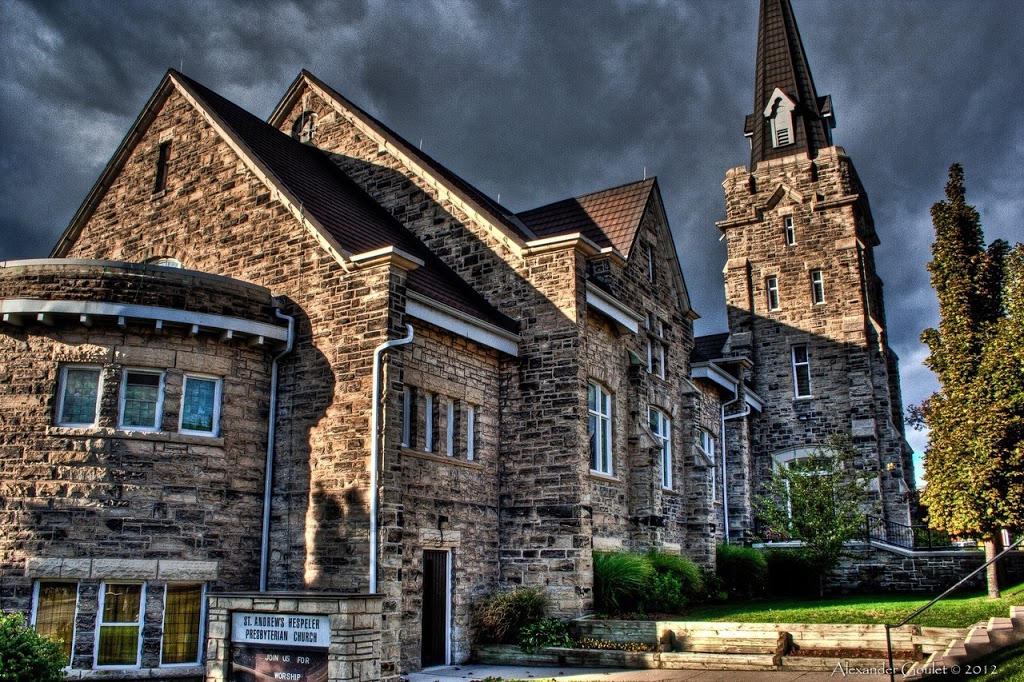 |
The scripture readings for Sunday are:
The sermon is: Ho! Everyone who thirsts!If you have any questions or comments about the scripture readings or sermon please contact Rev. Scott McAndless at [email protected] Special music given in praise by our Adult choir with soloist Randy Vermaas as well as our Youth Band. Explorations in Music will meet again this Sunday following worship. |
One desert evening
Hespeler, 17 March 2019 © Scott McAndless – 2nd Lent
Genesis 15:1-12, 17-18, Psalm 27, Philippians 3:17 - 4:1, Luke 13:31-35
| D |
uring the season of Lent this year, I have noticed, a lot of our scripture readings take us into desert places. Last week we spent forty days and forty nights with Jesus in the wilderness as he was tempted. And I think you will find over the coming weeks that many other readings take us into the desert as well. The desert is a hard place to be, of course. With no food and water, you quickly become desperate. It is also far from human society and culture and that can be very hard for some. But there is also no question that the desert can be a profoundly spiritual place – a place where God seems nearer.

In our reading from Genesis this morning, the person we find in a desert place is none other than Abraham, the great father of our faith tradition. (In this text he is actually called Abram, but, since the story of how he changed his name really doesn’t have much to do with this particular passage, I’m going to ignore that and just call him by the name that we are used to.) But it is not just that Abraham is in a literal desert in this passage. I mean, he is. He seems to have pitched his tent in a very isolated place where there is nothing to interfere with him seeing all the stars in the sky and there are vultures and other things that prey upon dead things around him. But more than a literal desert, Abraham seems to have found himself in a spiritual desert.
How can I tell that? Well, look at how Abraham reacts when God comes to him and, in a vision, gives him an extraordinary promise. “Do not be afraid, Abram, I am your shield; your reward shall be very great.” I mean, that’s a pretty amazing thing for anyone to hear. The great creator of the universe comes to you and says that he has an enormous reward just for you! But how does Abraham react? The Book of Genesis puts his reaction kind of nicely, I mean, Abraham is one of the heroes of the Bible after all. “You have given me no offspring,” he says, “and so a slave born in my house is to be my heir.” But Abraham’s reaction is basically to say, “God, don’t talk to me about rewards. What good are your rewards if I don’t have any future?”
That is a pretty bleak place to be. Abraham is declaring that rewards, blessings and protection are absolutely meaningless to him because of something going on in his life. I mean, if I had friends who said that to me, I would be worried about them. That sounds like depression. And what has pushed Abraham into this spiritual desert? He actually has a great deal at this point. He is a very wealthy man according to the standards of his time and place. He has honour and respect from the people around him which, in that world, counted for even more. There were many who would have looked at Abraham and said that he had it all. So where does this discouragement come from? It comes from the simple fact that he sees no future.
Abraham sees no future because he has no children of his own. But his feelings are not just unique to him, I feel, nor even just to people who have dealt with the problem of infertility. I think a lot of people today are feeling that despair for the future. The current and ongoing environmental crisis certainly makes many people feel that way. The nuclear arms race has certainly had that effect on many as well. You can understand the feeling – what is the point of anything that I achieve or amass if there is not going to be anyone around in the future who can appreciate it?
Honestly, the church is feeling much the same thing in many places these days. The church has so much – such a powerful legacy that it has received from the past and so many vibrant ministries and beautiful buildings. But the church – and this is something that is true almost entirely across the board – is worried about the future. Every single denomination in Canada has suffered loss of membership in recent decades and, by far, the greatest loss has taken place in the youngest generations. The church is afraid that it’s losing its children and youth. That’s just the reality and everyone is talking about it. So, I think that Abraham could sympathize perfectly with the church today; we too are asking the question, what good are God’s promises and blessings if we don’t have children or youth to pass them onto?
Now, I would like you to note that all these dark and depressing thoughts that Abraham is having seem to happen in a particular place. He is inside. We only know that because at some point we are told that he goes outside but I think that his location is significant. It doesn’t say what he is inside, but I think it’s fair to assume, based on the rest of the story, that he is in a tent. So we have poor little Abraham, sitting in his tent in the desert feeling sorry for himself. He is surrounded, I’m assuming, by all his flocks and cattle, all the symbols of his great wealth and success, but, as he thinks of all that success, he cannot help but feel that it is meaningless because he has no children – because the future is dead and empty to him.
Often, honestly, that is exactly where the church is these days too – sitting inside our churches, surrounded by many blessings, but feeling sorry for ourselves because the future seems a bit bleak.
But then something prompts Abraham to go outside. In fact, not just something but someone. It says, “He brought him outside.” “He” refers, of course, to God. And, in many ways, I think that is the most significant thing that God does for Abraham in this whole passage. God takes him outside. And what is outside? Well, the desert is outside. Ah, but it is the desert at night that is outside the tent.
I wonder, have you ever been there – in a desert, far from civilization, in the middle of the night? I know that there aren’t too many deserts in Canada, but if you’ve been out in the Canadian wilderness someplace far from civilization – say in the middle of a Muskoka lake or in a clearing in Algonquin Park – you might have some sense of it. There, far from any artificial lights, there is only darkness. The only light comes from the stars and that light will completely blow you away. If you’ve only seen the stars in the city, I’m afraid that you have no idea. It’s not just the sight of those stars, it is the sheer uncountable abundance of them and the unfathomable space that they fill.
I don’t think that anyone has a simple response to such a sight. It doesn’t just send information to your eyes it speaks to your soul. You may be someone who has decided, based on logic and reason, that there is no God, but when you are staring at such a sight, you cannot just respond to it with logic and reason. It speaks to the heart and what it tells you is that there are things in the universe that are far beyond your logic and understanding.
So I, for one am not surprised that, when poor despondent Abraham lifted his eyes to the blazing glory that hung above that desolate place as he left his tent that night, God spoke to him – and Abraham received that as a much more hopeful word than he had heard inside. “The heavens are telling the glory of God; and the firmament proclaims his handiwork. Day to day pours forth speech, and night to night declares knowledge. There is no speech, nor are there words; their voice is not heard; yet their voice goes out through all the earth, and their words to the end of the world.” (Psalm 19:1-4) That was the voice that Abraham heard that night in the desert and it was the voice of God.
Now, the particular word of hope that Abraham received when he went outside was that God would grant him a child that would come from inside his own body. The incredible overhead display made that promise undeniable. The God who could arrange for such an incredible sight could surely not only grant Abraham just one heir – could grant as many as those uncountable stars that filled the sky. That was the particular message that Abraham received when he looked up, but I don’t think that is necessarily the entire message nor that that voice has since been silenced.
It makes me think of many people in the world today who are a lot like Abraham – people who have received many significant blessings and even protection from God but for whom those blessings mean little and may even be a reason for despair because they see no future. I have seen reports that the upcoming millennial generation in North America is, to an unprecedented degree, opting out of having children because they despair for the future given the promise of climate change and environmental destruction. They seem to have lost hope for the future. In these discouraging times, they are not alone.
And then there is the church which, as I said, seems to have a lot in common with Abraham as we contemplate the future. Yes, we have many blessings and even riches. Many flocks and herds surround our tent on every side, but we cannot help but ask the question, what does all this mean if we do not have a future, especially a future that includes a healthy population of children and young people?
Abraham’s story is extremely relevant today. And what do you think that God would say to us when we are feeling that way? I think that God would say, “Why don’t you go outside?” To the church, sitting inside of its magnificent buildings, God would say, “Go outside, I want to show you something.”
In many ways, that is what I think God is saying. God is telling the church, for one thing, that if we think we can just wait around inside our tent – just doing the things that are familiar and comforting to ourselves – and that eventually a younger generation is going to just show up, we are deluding ourselves. Can a younger generation show up in the church? Absolutely! But I will tell you that it is far more likely to happen when the church sets out from what is familiar and what feels safe and steps into the world outside the church in mission. But if we’re just sitting in our tents feeling sorry for our lack of future, why would God make that happen?
But even more important than that, stepping out of the tent means being willing to trust God enough to be people of faith in the big bad world. We’re told that when Abraham looked up and read the promise of God in the stars, “He believed the Lord; and the Lord reckoned it to him as righteousness.” God is looking for that kind of faith from us as well and will always reward it when he finds it in us.
Is there a future for humanity? For the planet? For the church? Do our fears concerning that future suck the meaning and joy out of the blessings of the present? If ever they do, remember that the future is and always has been in the benevolent hands of God. And God would not have us sitting inside our tents paralyzed and demoralized by fear of the future. God is inviting us outside, to consider the wonders of creation and the heavenly hosts. He is inviting us outside to trust him as we do the new thing, the risky thing, that we are called to do in the name of Christ Jesus.
A Lament (Inspired by Psalm 79 and the events in Christchurch)
So here we are, once again, struggling in the aftermath of a terrible tragedy and outrage. White supremacists have attacked and killed peaceful Muslims at prayer in Christchurch, New Zealand.
I always struggle with the question of how to respond, as a leader in a Christian church, in the aftermath of such events.
We may well pray in intercession -- pray for healing for the wounded and aggrieved and for a better world.
We may well pray in confession -- confessing the ways in which we participate in systems of oppression and exclusion of those who are different.
We should do these things, of course. But I believe that, in the immediate aftermath, we are not really able to do them with a whole heart.
Our first need, I believe, is simply to express to God our feelings, our desires and our disappointments. We need to complain. This is a legitimate response and a very biblical one. Therefore, for worship in the aftermath of the events in Christchurch, this is the prayer that I have written for my congregation:
A Lament (Inspired by Psalm 79)

L: O God, the wicked have entered into a sacred place. They have defiled two mosques sacred to many and thus sacred to you. That have left hundreds of lives in ruins. They have slain many people who you created and who you love. They have poured out their blood like water all around Christchurch.
P: They have spread their hatred far and wide through social media. They have made Muslims – our neighbours, our friends and fellow people of faith – feel unsafe at worship even here in Canada on the opposite end of the world.
L: How long, O Lord? Will you endure such wickedness forever? Will you let zealous wrath burn like fire?
P: Pour out your wrath on evildoers and those who support them for they have devoured people at prayer and laid waste to their mosques.
L: Help us, O God of our salvation, for the glory of your name; deliver us, and forgive our sins, for your name’s sake.
P: Why should the nations say, “Where is their God?”
L: Let the avenging of the outpoured blood of your servants be known among the nations before our eyes.
P: Let the groans of the aggrieved and wounded come before you; according to your great power preserve those in danger of death.
L: And let those who are afraid, who are wounded and surrounded by hatred know blessings sevenfold in repayment of the taunts with which they have endured, O Lord!
P: For you are our God. You are the hope of all nations. You are the hope of peace.
Sunday, March 17, 2019
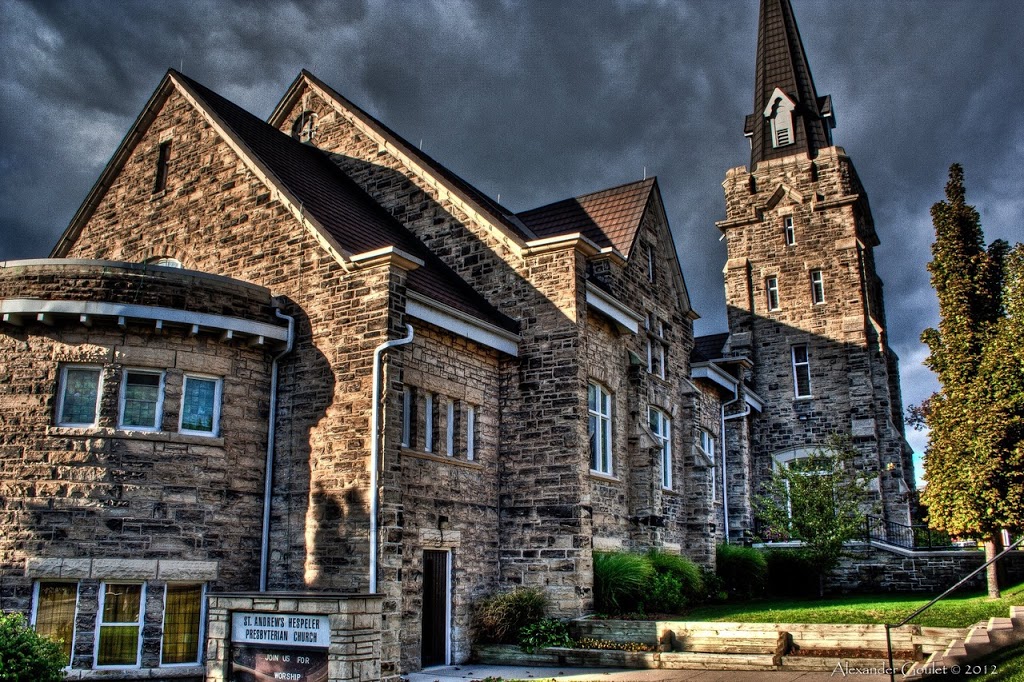 |
Here is your Sunday news for the Second Sunday in Lent.The scripture readings for Sunday are:
The sermon is: One desert evening If you have any questions or comments about the scripture readings or sermon please contact Rev. Scott McAndless at [email protected] Special music given in praise by our adult choir & Ray Godin. |
Our Spring/Lent Newsletter is out!
https://www.standrewshespeler.ca/PDFs/2019SpringNewsletter.pdf
Continue reading »
 |
| https://www.standrewshespeler.ca/PDFs/2019SpringNewsletter.pdf Click on the link to read all of the latest news or go to the home page and click on the link below the picture. |