News Blog

Peace, peace, when there is no peace.

Posted by on Tuesday, November 7th, 2017 in Minister

Hespeler, 5 November, 2017 © Scott McAndless Remembrance Sunday
Jeremiah 6:10-15, Matthew 10:34-39, Ecclesiastes 3:1-8
W
e call Jesus the Prince of Peace. We love to tell the story about how, when he was born in Bethlehem, the angels sang that an era of peace on earth had dawned. And Jesus was the one who said, “Blessed are the peacemakers, for they will be called children of God,” wasn’t he? I don’t know about you, but that is one of the key reasons why I am pleased to identify myself as a follower of Jesus. We need peace. The world needs peace. And on a day of Remembrance like this when we remember all of the carnage, all of the death and all of the grief of war, we particularly look for the healing power of peace. Indeed, no one craves peace more than veterans who remember war’s horrors all too well and soldiers on active duty. So I feel blessed indeed to be a follower of the Prince of Peace
      But Jesus doesn’t seem to have always remained consistent on the topic of peace. There were days when he seemed to be no fan of it at all: “Do not think that I have come to bring peace to the earth;” he warned. “I have not come to bring peace, but a sword.” And he further promised that he would stir up trouble between all sorts of people: sons and fathers, daughters and mothers pretty much anyone else in any household.
      Is it just me, or is there a certain inconsistency there? Either Jesus came to bring peace on earth or he came to banish it. You can’t have it both ways, but Jesus apparently thinks you can. It is, in fact, one of those contradictions in the Bible that I have wondered about the longest. Except it is not a contradiction – not really – it is more a matter of definition, of people using the same words in wildly varying ways.
      Let me offer you a simple example of what I mean by talking about some contemporary events. Some of you may have heard of an American football player named Colin Kaepernick. If you have heard about him, you have likely also heard that he is the player who, a few years ago, was the first NFL player to take a knee during the singing of the national anthem. And he did it, he would tell you, for a very particular reason: to protest against the treatment of his people, Black Americans and other racial minorities, in American society. He was protesting the fact that black people are imprisoned at an extremely high rate for things like drug related crimes despite the fact that they actually use illicit drugs at the same rates as people in other communities. He was protesting numerous incidents when black men were killed by police when it was far from necessary.
      What Kaepernick was asking for was a bit of justice and peace for minority people who looked like him. He was just trying to create some peace for a certain group of people for whom peace was lacking.
      But what has been the response to his protest and to others who have joined in. As you may have heard that there have been a lot of negative reaction. And one of the most common negative reactions seems to have gone along the lines of, “Why, Colin Kaepernick, do you want to disturb my peace. I just want to go to a nice football game, to have a nice afternoon’s entertainment and I just want to be able to stand there and feel my heart swell with pride for my country which I love as I listen to the National Anthem. Why do you have to go and ruin my peace with your self-centred grievances?”
      So you see it is quite possible that Kaeperneck’s quest for peace could totally disturb the peace of somebody else. And I think that Jesus could be saying something similar to that in our passage this morning. He is not denying that he has indeed come to bring peace on earth, he is just warning that the kind of peace he is bringing doesn’t necessarily look like peace to some people.
      For most of us, when we ask for peace, what we are usually looking for is tranquility. We want calm waters and smooth sailing. We especially don’t want anyone causing any trouble. That is what it means when frazzled parents ask their children for a little bit of peace and quiet. That is what people often dream of at the end of a war. When we pray and ask God for peace, that is also often what we are looking for. But what if that is not what God means by the word peace?
      The quest for tranquility and calm waters, although understandable, has certainly taken us to some bad places. Over the last several weeks, we have heard a number of terrible accusations of sexual harassment, misconduct and even rape against high profile and powerful men in the entertainment industry, media, politics and other places. So many stories have surfaced and they are so terrible that it seems undeniable that there has been (and continues to be) an epidemic of abusive, powerful men in our society who have gotten away with it for a very long time.
      But the obvious question is how – how is it that so many victims of so much abuse have been persuaded or forced to remain so silent for so long? That is a complex question with multiple answers, but one of the answers is definitely that our society often prioritizes peace over justice. Women who have experienced abuse have had it drilled into them that they must not disturb the waters or cause conflict by complaining or reporting. Peace in the workplace – and especially peace for powerful men – is considered to be more important than doing what is right for victims. But what if that is not what God means by the word peace?
      In 1963, at the height of the Civil Rights Movement in the United States, Martin Luther King Jr. went down to Birmingham, Alabama (in the heart of the most racially segregated part of the country) to lead some non-violence actions. While he was there, not surprisingly, he was arrested and thrown into the Birmingham City Jail where he remained for quite some time. While he was there, the clergy in the area – the white clergy – gathered and came up with a statement that they published. They declared that the Civil Rights Movement was seeking what was right – that it was working for racial justice. But they condemned the actions of King and the other leaders. They said that stirring up trouble and getting people upset was not the way to bring about the change that was needed.
      Martin Luther King, as you might expect, disagreed. And from his jail cell he wrote a letter – famously known as the Letter from a Birmingham Jail. It is a letter that I like to keep with me and take out and read from time to time because King had a way of putting his finger right on what the problem is with the wrong idea of peace. He wrote this, in part, “I must confess that over the last few years I have been gravely disappointed with the white moderate. I have almost reached the regrettable conclusion that the Negro's great stumbling block in the stride toward freedom is not the White Citizen’s Counciler or the Ku Klux Klanner, but the white moderate who is more devoted to “order” than to justice; who prefers a negative peace which is the absence of tension to a positive peace which is the presence of justice.”
      That is, I believe, a helpful way to think of the issue. There is such a thing as a negative peace which is all about the absence of things like tension, conflict and trouble. And I understand how attractive that kind of negative peace is. I also understand that we all need it sometimes because you cannot live in continual conflict. But Jesus, the Prince of Peace and the one whose advent offers peace on earth doesn’t promise you that kind of peace. Sometimes he will bless you with it and you can be grateful when it comes, but when a negative peace becomes your main goal, you become an obstacle to true peace. The white moderate Christians that King was talking about, by prioritizing order and a lack of conflict, were actually perpetuating the problems and injustices that would prevent genuine peace or what King calls positive peace.
      Positive peace is the kind of peace that Jesus did come to bring on earth – peace with justice, peace that is the very presence of justice. That is actually a promise that is coded into that very angelic hymn that was sung at Jesus’ birth. When the angels sang about “Peace on earth to people of goodwill,” that phrase would have been very familiar to the shepherds and to anyone who heard the story.
      “Peace on earth,” was a propaganda phrase that was used by Roman Emperors at that time – a phrase that has been found on countless monuments and inscriptions. One of the things that made the Emperor an emperor was the fact that he had brought about peace on earth. He had brought peace on earth through victory – by defeating all of his enemies so that there was nobody left to make war any more. It was a negative kind of peace – a peace that was created through the absence of conflict – but as far as the Romans were concerned, that was the only kind of peace that mattered and only the Emperor could bring it.
      For the angels and the early Christians to just say that somebody other than Caesar had brought peace on earth was to defy the emperor. It was also to say that the emperor’s definition of peace on earth – a negative peace – was insufficient.
      Remembrance Day is celebrated every year on the eleventh hour of the eleventh day of the eleventh month, because it was at that moment in time in 1918 that the First World War ended. Except it wasn’t called the First World War at the time. It was called the Great War and it was called the War to End all Wars. It was called that because victory in that war was supposed to bring a permanent peace. It was a peace through victory moment – a negative peace through an ongoing lack of conflict.
      How did that turn out? Not so well. The peace that the victors imposed on Germany and its allies in the Treaty of Versailles did not have a whole lot in the way of justice going for it. Today it is generally agreed that the peace that was imposed in 1918 set Europe up for the terrible war that began twenty one years later.
      We celebrate today and on this coming Saturday all of those who served and who fought in those conflicts and in too many others that have followed. Few of those people fought because they loved the conflict; they fought for the sake of peace and in the hope of peace. But I must ask what would truly honour their service and their sacrifice? I would suggest to you that what truly honours them is not simply a pursuit of negative peace. That is the temptation, of course. So many of us would settle for a mere absence of conflict – especially those who have gone through the horrors of war. But negative peace will never be a truly lasting peace.
      That is why I believe that we must truly honour our veterans by choosing to dedicate ourselves to positive peace, the peace that can only come when justice reigns in this world. But if we are going to do that, we will have to take what Jesus says in our gospel reading this morning seriously. It means that we must not shy away from conflict or from uncomfortable situations when questions of justice and what is right are on the line. That does not mean that we should resort to violence, by the way (Jesus taught his disciples that committing violence can and should be avoided whenever possible) but it does mean a willingness to disturb the waters and maybe to make people feel uncomfortable.
      Peace is a worthy goal – one of the things that this world needs most these days. But it is so very important and valuable that we must not settle for anything less than true positive peace and the road to get there may sometimes be rough indeed. God give us all the strength to stand up for justice and for what is right, as troubling and uncomfortable as that can be sometimes. That is how we will discover the fullness of the promise of the kingdom of God in this world here and now.
     

140CharacterSermon #Peace, according to #Jesus was not avoiding conflict. Sometimes working for peace with justice meant creating conflict. 
Continue reading »

Remembrance Sunday at St. Andrew’s

Posted by on Thursday, November 2nd, 2017 in News

November 5 will be Remembrance Sunday at St. Andrew's Hespeler in 2017. This is always a very important and meaningful service as we take time to remember those who have served our country in the military, many of whom have been killed are wounded in mind or body down through the years.  This year, our worship will be made extra meaningful in a number of ways:


  •  Our new Women's Ensemble will be singing to God's glory for the very first time. This group will highlight the excellence of our Women's voices and specialize in music from the Folk genre. They will sing "Spirit, Open my Heart" to the tune of a traditional Irish Folk Melody.
  • Our Adult Choir will sing, "There Is Room for All."
  • Our minister, W. Scott McAndless, will be preaching on the challenge of finding peace in the modern world with a message called, "Peace, peace, when there is no peace," (a phrase borrowed from Jeremiah 6.)
  • And one big bonus for the day: you will set back your clocks on Saturday night so that you can have an extra hour's sleep the night before!
Continue reading »

500 years later, what does God want nailed on your church door?

Posted by on Monday, October 30th, 2017 in Minister

Hespeler, 29 October, 2017 © Scott McAndless Reformation, Baptism
Matthew 19:13-15, Ephesians 2:1-10, Psalm 13:1-6
A
lmost exactly five hundred years ago, on the last day of October in 1517, a young monk and doctor of theology took a piece of paper upon which had been printed 95 theses and he nailed it to the door of a church in Wittenberg. It was not, I want to be clear, an act of vandalism. Though Luther was angry about a few things that day, he was not taking out his anger on that door with a hammer.
      It was actually quite an ordinary thing for a professor in his position to do. He had written down these 95 little ideas on one sheet of paper because he thought that they were provocative ideas. He didn’t necessarily think that people would agree with them – not all of them anyway – but he wanted people to discuss them together so that, out of the discussion, they might come to a better understanding of where the truth lay. Nailing the theses to door was simply the normal way of posting them in public. The church door was basically the sixteenth century version of Facebook.
      But the banging of the hammer that nailed that document to the church’s door was loud – so loud that it has echoed down through the last five centuries. For the posting of that list of ideas did not lead to the civil discussion that Luther was looking for. It was the spark that ignited protestant reformations that would transform the spiritual landscape.
      Today is actually a big deal in church history. It is the 500th anniversary of the beginning of the Protestant Reformation. And, in Protestant churches across the country and around the world, churches are celebrating, in particular, the unique contributions of Protestant Christianity. And there is no question that there is much that is worth celebrating. The Protestant reformers, starting with Luther, really did open up new possibilities for how we could think about and relate to God.
      The reformers did that by declaring what are often called the Five Solas. (Sola is a Latin word that means alone – like when someone sings alone and we call it a solo.) By declaring these solas, the reformers were saying that we only really needed these five things in order to work out our salvation and our relationship with God. The five solas are: Sola Fide (by faith alone), Sola Scriptura (by Scripture alone), Solus Christus (through Christ alone), Sola Gratia (by grace alone) and Soli Deo Gloria (which means glory to God alone).
      These were wonderful and powerful ideas in their time especially because, in Luther’s day, the institution of the church as it existed then had been trying to control every aspect of the human relationship with God. The church had been teaching people that it’s traditions and authority were sufficient to fix our relationship with God and that you could even purchase the forgiveness of your sins with gifts of money. That was the thing that had made Luther particularly mad when he nailed up those 95 theses.
      So the reformers came along and said no, you didn’t need to be dependent on the church and its traditions and officials; you really only needed five things. You could work out your relationship with faith alone, with scripture alone, through Christ alone, by grace alone and so that God alone should be glorified. That was a beautiful and liberating message and, as I said, it transformed the world.
      I happen to believe that the message of grace was by far the most important part of that. They realized that it is pointless to try to please God with your good works or by being more righteous than anyone else. Nothing you could ever do could impress God after all. All you can do is receive God’s gracious gift of salvation, forgiveness and whatever you need most. You can never pay for it.
      But I have a question. What is the best way to honour what those reformers did? Should we just take their lessons and wisdom and set them in stone? Should we just say that they figured it all out once and for all and we don’t have to think about any of it anymore? That can easily become the temptation on this 500th anniversary of the Reformation – to get frozen in what happened 500 years ago. But does that really honour Luther’s courage and the courage of the other reformers?
      The Christian church is now about 2000 years old. And someone recently pointed out to me that in those 2000 years, the church has gone through three major shifts. The church began, after the time of Jesus, as a small movement that was at odds with the power structures of this world, especially the Roman Empire, but by about the year 500, it completed its first great transformation to become the official religion of the Roman Empire. That changed everything. Then, 500 hundred years after that, the church was shaken by a second great transformation as it split for the first time into two great churches, the Roman Catholic in the West and the Orthodox in the East. From there the two churches took two very different courses. In particular the western church gave ever more power to its hierarchy which led to a number of abuses which led, five hundred years after that, to Martin Luther and the Protestant Reformation.
      Every five hundred years the Christian Church has gone through a major upheaval – a series of events that changed everything. It is consistent enough to make me think that there is a design to it all – to make me think that perhaps it is part of God’s plan. But, of course, you have realized the other question that such a history raises: what if, five hundred years after the Reformation, we are due? Is it possible that God is going to do something new in the church today? This is not to suggest for a moment that God is leading us to question or reject the wisdom that comes to us from the Reformation, but maybe we have gone somehow astray in how we have been living them out and God is getting ready to call on us to live out the gospel more authentically given the new challenges of the twenty first century.
      I tend to think that that might be just the case. I see many indications that we are in a time of transition. For example, one of the developments that drove the Protestant Reformation 500 years ago was the invention of a new communication technology. You may have heard of it; it was called the printing press. It allowed for the ideas of the reformers to spread about at an unprecedented speed – so fast that the people who were invested in just maintaining things the same as they had always been could do nothing to stop it. Well, we are living in an age when new developments in communications are coming at us so quickly that almost nobody can keep up. Things are moving so quickly that the authorities – including church authorities – cannot manage the change.
      So this looks like a time when God might be doing a new thing. But what new thing could God be doing? I don’t claim to know that for sure, but I wonder if God might not have sent us a messenger today. We had the great privilige and honour today to welcome Clara into the life of the church through baptism. We have admitted her into all of the fullness of what it means to be a Christian. But we have done that, as you may have noticed, without her really understanding what it means to be a Christian. We asked her some questions but she really couldn’t answer them. Her parents had to answer for her, as did we as her church family.
      I believe that God has sent Clara to us to teach us about being a Christian in this present age. We believe and confess, as we have read, that we are saved by grace. That means that we believe that we are brought into the very presence of God (both now and for all eternity) not because we have done anything to deserve it but because of God’s kindness and love shown to us (particularly through what Jesus Christ did for us).
      That is an essential part of the teaching of this church – of all Protestant churches – and one of our key inheritances from the Reformation that began five hundred years ago. But I suggest to you that we don’t really believe it. We don’t believe in salvation by grace because we constantly give into the temptation of adding conditions. We say, for example, that what we have done for Clara is not quite complete – that some day, when she is able to have some intellectual understanding of some of the things that we have said to her, she will have to make her own personal decision about whether or not she believes it. We suggest that her faith is not yet complete because she lacks in understanding.
      But I suggest to you that, while she certainly will have to work out what she believes about many things for herself someday, none of that needs to limit the gift that God gives her today. Remember what Jesus said to his disciples when they wanted to prevent the little children from coming to him. He said, not merely that they could come to the kingdom of God but that the kingdom actually already belonged to them. Jesus believed that little children were actually more capable of the faith that gave them the kingdom than his disciples were. Maybe the disciples understood more, but Jesus knew that faith isn’t really about what you believe or understand, it is about who you trust and trust comes much more naturally to children than it does to us.
      Ah, but you see, we Protestant Christians have this tendency to want to set up barriers. We are like the disciples in the story who spoke sternly to those who brought” the children to Jesus. There are days when I really feel like there is a lot of stern speaking going on in the church. Anyone who disturbs your notion of what the church is supposed to be – who likes the wrong kinds of music, who doesn’t read the Bible in the same way that you do, who has a different understanding of how relationships are supposed to work – you speak sternly to them. Anyone who does something in a way that you think it is not supposed to be done, who makes the wrong noise at the wrong time, who leaves a mess behind them, you speak sternly to them. I’m sorry to say that I see it and hear about it all the time in the church. We may say that we are welcoming and loving, outwardly we may speak that way, but it is so easy to speak sternly to those others and it turns them off. Whenever we do it, we are forgetting the message of God’s grace.
      So, I don’t know exactly what Reformation God may be aiming to start in the coming years. I am no Martin Luther and I don’t want to be one, but I can think of a few theses – a few ideas that it might be worth opening a discussion about. I don’t necessarily know what the answers are to these ideas are, but I also don’t know what new avenues for change might be opened up if we did boldly tackle these issues. So, in closing, I would propose a few theses for the church door in 2017.
      the church door in 2017.
e a ver issues. So, in closing, I in ther standing of how derstood that faith isn'le child
1.      What if we actually took Jesus at his word and acted as if we believed that Clara and infants like her have a better grasp of what the kingdom of God is actually about than we do?
2.      What if we didn’t speak sternly to children, or to anyone really, just because they had a different idea of what it means to live out their trust in Jesus than we do?
3.      What if we believed in the grace of God so much that we actually treated everyone like a genuine sister or brother without regard to their ideas, their background, status, gender, sexual orientation or intellect.
4.      What if we actually decided that the Good News about Jesus Christ and the people that that news is for were more important than keeping up the institutional traditions and trappings of the church?
      I invite you to consider these four theses. (Nails the 4 Theses to the church door.)
      Now, I don’t know if these are the right ideas to be debated. I don’t know if the debate will ever be held. But I do know this: sometime soon, God will take a few new ways at looking at questions similar to these and make a Reformation out of them. I also know that if you are more concerned for the state of an old church door than you are for the question to whom does the kingdom belong, your priorities might be out of whack.

      
Continue reading »

A very special worship service this weekend for so many reasons.

Posted by on Thursday, October 26th, 2017 in News

500 year ago, on the last day of October, a monk and university professor named Martin Luther set off a firestorm of change that spread through Europe. How did he do it? He did it by daring to post a bunch of radical ideas in a public place. He nailed the ideas (or theses) up to the door of a local church. We will make the five hundredth anniversary of these remarkable events in some very special ways at St. Andrew's Hespeler Presbyterian Church this Sunday.


  • We will celebrate the baptism of a beautiful infant named Clara. It will be a celebration of God's gift of newness to us.
  • We will enjoy some very special music from our Youth Band who will offer up "Now there is no male or female."
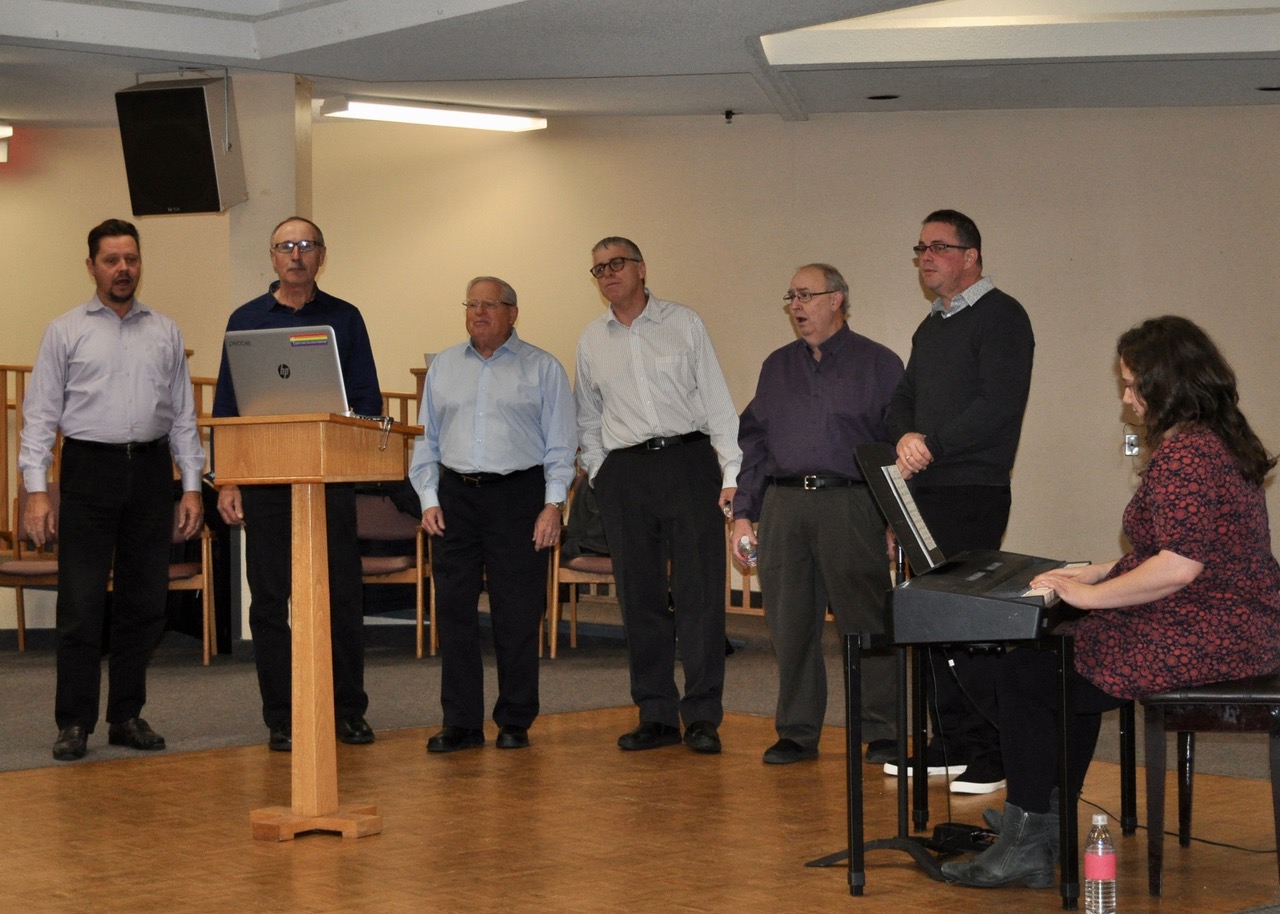
  • Our men's ensemble, Joyful Sound! will be singing "Higher Ground."
  • The sermon, which will attempt to gather together all the various threads of celebration of the day will have the following title:
Continue reading »

We are ready for you this evening!

Posted by on Saturday, October 21st, 2017 in News

Everything is being put in place for the Silent and Live Dream Auction tonight at St. Andrew's Hespeler. Here are some of the really valuable items available in the silent auction. (See all the envelopes, they are filled with valuable gift cards). You will definitely be able to bid on many beautiful and bargain items. Silent auction (and refreshments) begin at 7:00 pm.


On top of that will be the live auction starting at 7:30. Just a few of the amazing items on auction:
Amazing Cheesecakes!
Amazing Scones
Catered dinner for 4 delivered to your home!
Name a topic or title for an upcoming sermon
Babysitting
Yard cleanup
Cord of top quality firewood
Weekend getaways
etc.
etc.
etc.
Hope to see you tonight and bring your friends -- they'll thank you.
Continue reading »

The Auction is Tomorrow!

Posted by on Friday, October 20th, 2017 in News


There’s a team of people hard at work getting ready for our Dream Silent & Live Auction! The auction is tomorrow, Saturday, October 21.  Desserts, coffee, tea & viewing start at 7:00 pm (you can also start bidding on the silent auction items at that time) and the live auction starts at 7:30 pm.


The live auction will no doubt be a lot of fun with friendly bidding wars and some good natured joking.  


Below is only a partial list of items for auction.  There are many other items, something for everyone!


Please join us for a fun night out -  bring your friends, family & neighbours!


Continue reading »

Posted by on Tuesday, October 17th, 2017 in Clerk of Session


Hello St Andrews'          Just a reminder that meat pies and soups are available for order Until November 6th.Order forms are available from the Church Office, in the  Sanctuary and from me – Rob Hodgson. New lower prices and discount bulk orders for those that want.


In appreciation of the shortened order cycle I would like to offer a second order/delivery in December if sufficient support is shown. Ask me if you’d like a second opportunity to get these pies & soups.
Continue reading »

Bright and Breach

Posted by on Sunday, October 15th, 2017 in Minister

Hespeler, October 15, 2017 © Scott McAndless – Baptism
Matthew 1:1-3, Genesis 38:27-30, Psalm 78:1-7
T
oday is a very meaningful day for this congregation, for Sarah and Joelle ______ and for their family. But I would like to remind us that it is not just one day. I mean, if any family decided that they wanted to share the birth of their first child (or children) with us in a celebration of baptism, that would be a wonderful gift and a day of rejoicing. But Sarah and Joelle, though they are in worship with us for the first time today, are not really among us as strangers.
      For one thing, their mother has been part of the life of this congregation for her whole life which means that some of the most important and formative moments in her life have happened in this place and with people from this congregation. We have been part of the person she has become in significant ways.
      Even more important, when, four years ago, she and Andrew made the most important decision of their lives and decided that they would tie their destinies together, they came here to celebrate and to make their mutual vows. I had the privilege of presiding, on your behalf, on that very special day and I particularly remember it because I was kind of inspired by Andrew’s career. His job involves building things out of concrete that is reinforced by steel rebars, so I spent some time talking about the rebars that God wanted to use to reinforce their relationship – rebars like patience, kindness and God’s unfailing love. A little corny? Maybe. But I like to think that, amongst the many things they were thinking about that day, they did hold onto some of what I said because they seem to have indeed built a strong and enduring relationship that will stand the test of time.
      But if you think that their marriage four years ago changed their life, that is nothing compared to what happened to them one year and one day ago when Sarah and Joelle showed up and began to rearrange absolutely everything – especially all of their priorities. It has got to be the most significant single event in their lives up until this point and yet today they have chosen to invite us into their relationship with their children. And not just today, but on into the future as they have said that it is their intention that this congregation should be a part of their children’s life as it has been a part of Laura’s.
      As I thought about this very special day, my mind turned to the stories of births in the Bible and, for some strange reason, I particularly thought of the stories of the births of twins. There are only a few twins mentioned in the Bible. All of them happen to be boys. Some of them, like Jacob and Esau, have pretty well-known stories. But as I thought of Sarah and Joelle and what their coming among us means, I remembered another set of twins who seemed to have something important to say to us today: their names are Perez and Zerah.
      But before we can talk about these two very important, but somewhat obscure twins, we need to understand that the Bible comes to us out of a world that looked on children in very particular ways. For one thing, the naming of a baby always holds deep significance and meaning in the Bible. They didn’t just give their babies names because they were popular that year or because they were naming their child after some popular television character. (And, yes, I am talking about all those parents out there who gave their daughters the name Khaleesi last year.)
      It didn’t work like that in Ancient Israel. Back then, the custom was for the mother to chose the name of her child (it was one of the few things in that society that women were actually given control over) and she would choose the name based on her hopes and expectations for her child or on some circumstance surrounding the birth.
      Another thing that you need to understand about the ancient people of the Bible: birth order mattered a lot. The difference between being the first born and the second born was like the difference between night and day. The firstborn male got everything (and, yes, this was all about the boys; girls were not valued in the same way, but that was really their problem and their mistake). The second son got nothing. This makes the stories about the birth of twins in the Bible particularly dramatic. The question of which one will be born a few seconds before the other one becomes a near life and death struggle.
      So, with that in mind, let us take a look at the story of the Bible’s less famous twins, Perez and Zerah. Now, even though you have probably never heard their names before, they are actually very important and significant twins as far as the Bible is concerned – so important that they are named in the third verse of the New Testament – Matthew 1:3 – among the ancestors of Jesus Christ. The story of their mother, Tamar, and how she came to have them is also one of the strangest stories in the whole Bible but it never gets read in church (for reasons I’m just not going to explain to you) so you’ll just have to read it for yourselves later. (We preachers will resort to anything to get people to read the Bible for themselves.)
      But the importance of these two children is something that we should pick up on here today because one of the reasons we are here is because we don’t just think that Sarah and Joelle are cute and beautiful (which they are, by the way) but also because we believe in their potential. They are only a year old. They have already started to form personalities and interests but we have no idea what they might grow up to do and to be. We don’t even have a clear idea of what the world will be like when they grow up. But we have baptized them today because we believe that God can use them and their uniqueness…… to bring about a better world – to establish some manifestation of the reality of the kingdom of God. That is ultimately what this is all about.
      Now, as I said, birth order meant everything to the ancient people of the Bible – much more than it means to us today. And this story in Genesis plays with that ancient obsession because, of course, when you are talking about twins, that sort of obsession is exposed as ridiculousness. After all, why would you insist that a child’s destiny and inheritance must be limited by its place in the birth order when, in the case of twins, we’re only talking about a difference of a few minutes or even seconds?
      But it is even more ridiculous in this case when one of the two children puts his hand out and the midwife marks him as firstborn by tying a thread around his wrist and then, in the end, it is the other one who is actually born first. By the end of it, even the author of Genesis seems confused, not really knowing which one is the eldest. (The confusion is actually even more clear in the original Hebrew text. The translators have clarified something that wasn’t very clear in the original.)
      I believe that that confusion in the story is quite intentional. The Bible is reminding us – as it frequently does – that all of the systems of this world, the systems that we human beings like to set up in order to say that some people are just better or more valuable than others – are truly meaningless. We keep trying to divide people by birth order or race or wealth or status and God just seems to delight in overturning all of that. The birth of these twins is a graphic illustration of one of Jesus’ favourite sayings, “The first shall be last and that last shall be first” because God just loves turning things upside down.
      That brings us, finally, to the names that are given to these Biblical twins, for their names are taken directly from the story of the contest between them to be born first. The twin who is born first (after the other twin puts out his hand and gets the bright red thread tied on it)ay that you get full otory of the contest  is called Perez and Perez means breach. The meaning of this has nothing to do with what is called a breech birth which is what you call it when a child comes out of the womb feet first. This was a particularly dangerous kind of birth in the ancient world and could often be fatal for mother or child or birth. But that is not what breach means in this story. It is rather a reference to ancient warfare when a breach would be made in walls or defensive fortifications to allow an enemy army to win a battle or take a city.
      The idea behind this name seems to be that Perez has made a breach in the normal ways of doing things. He has overturned the whole way that the world works by stealing the first place from his brother and maybe from all firstborns everywhere.
      Wouldn’t you agree, Laura and Andrew, that breach or Perez does make a good name for a twin because I am pretty sure that you have experienced exactly that. The arrival of these two children, especially when they both have come at once, has turned everything upside down for you. They have breached every single habit, every assumption every limit you thought that you had set. They have changed everything including your living arrangements and your relationships with your families and with almost everyone else. They have changed your priorities and your anxieties. But that is what children do and they do it all the more powerfully when they come two at a time.
      The other child is given the name Zerah. This is the one who first put his hand out of the womb and the midwife tied a red thread around it. The name Zerah sounds like the Hebrew word that means bright so the idea seems to be that this child is named for the bright colour of the thread.
      But, wherever the name comes from, the promise that the arrival of this child brings a new brightness into the world is one that can celebrate here today. Laura and Andrew, I know that you have named your children Sarah and Joelle, but there is no question that they have brought a new brightness into your lives and into the world even as they have breached and disrupted everything. You now know a new meaning to your lives and a new purpose to your being. You now find laughter and joy in places where you never found them before – even in dirty diapers, sleepless nights and just being together. This is a precious gift and we pray that you get full enjoyment of it. And thank you today for sharing that gift of brightness with all of us.
      These children, Sarah and Joelle, are among us all as a gift from God today – a gift to their family first but also a gift to all of us. They come to disrupt us because the reality is that the church needs to have its comfortable assumptions of what its priorities are breached and disrupted. They are here as a reminder that the church needs be open to change and to breach if it is going to provide for these children and for others like them a place where they can grow up and take their own proper place in the kingdom of God.
      They are also here as a gift of brightness – of new life and new beginnings. They are a sign of the hope that God is with us and will continue to renew us. Andrew and Laura, thank you for sharing these gifts of breach and bright with us today!

Sermon Video:


Continue reading »

Thanksgiving after Harvey, Irma, Maria, Las Vegas, the Cariboo Fires, the Mexico Earthquakes, Charlottesville, the Quebec Mosque, the South Asia floods, First Nations boil water advisories, the Battle of Aleppo, Freetown Mudslide, etc. etc. etc.

Posted by on Sunday, October 8th, 2017 in Minister

Hespeler, 8 October, 2017 © Scott McAndless – Thanksgiving
Isaiah 25:1-8, Luke 7:31-35, Psalm 138:1-8
I
t is Thanksgiving Sunday and many people who live in the Cariboo Region of British Columbia are having a hard time knowing what to be thankful for. They have spent most of the last three months on the run. The forest fires and wildfires in that whole region have been record-breaking this year. People have had to leave behind homes and livelihoods and many have heard the word that what they left behind has been completely destroyed. They don’t have their good dishes with them. Some of their closest family members have taken shelter in communities hundreds of kilometers away. I think that it is worth asking, when they gather around the table later today, what will they find to be thankful for?
      And they are not the only ones. In Northern Alberta, an extended family will likely gather this weekend, but probably not for Thanksgiving. I think they’ll be gathered for the funeral of a young mother of four who went down to Las Vegas to see a concert last week and didn’t come back.
      A family gathers in Houston, Texas. Their home has been flooded and toxic mold has taken over everything. The wood is rotten, the foundation is crumbling and the insurance company doesn’t want to pay for anything. Even if they could rebuild, they are not sure that would want to. What would be the point of rebuilding on a floodplain after all? They would just get their lives back together in time to get flooded out again. So what have they to be thankful for? And, yes, I know that this weekend is not their Thanksgiving; that it is more than a month away, but do you really think that their situation will have changed significantly by then? So when will their Thanksgiving truly be?
      And there are others – so many others it seems – who struggle with the same reality. The scores of Canadian First Nations communities that have been under boil water advisories for years. They are saying that it could take 30 years for Puerto Rico to recover from Hurricane Maria! Mexico is recovering from three earthquakes and counting. Huge swaths of Southeast Asia and Africa have seen unprecedented flooding and there are the other human-made disasters that are Syria, North Korea, and American race relations. The world seems a mess these days, doesn’t it? So much so that when I was trying to come up with a title for this Sunday’s sermon and I wanted to describe the setting for Canadian Thanksgiving 2017, I ended up with a bit of a run-on title.ea and American Race relacidented flooding.
      But the question is obvious, isn’t it? How are we supposed to be thankful at such a time as this – when so much seems to be going so wrong for so many. What is there to be thankful for? Some people might suggest one answer. It is an answer that I hear a lot from the people that I visit. I often have the privilege of being there with someone who has been through a rough time. They will tell me the story of the trials that they have gone through and the long road to recovery that lies in front of them. And some of those roads are hard and it is hard to find the words that will encourage them to persevere. But then, what will they do? They will finish off the story of their struggles by saying, “But, you know, Rev. Scott, there are a lot of people out there who have it a whole lot worse than I do and I can be thankful that I don’t have to deal with what they do.”
      So that is one possible answer to how we can be thankful on this particular Thanksgiving day. When, later on today, we all gather with our families around tables overloaded with bounty, we could all bow our heads and sincerely pray, “Dear Lord, thank you so much that today we are not in Houston… or Florida or Puerto Rico or Northern British Columbia or Mexico City or Syria or Liberia (where thousands recently died in mudslides) or any number of other equally horrible places right now.”
      And there isn’t really anything wrong with that kind of thankfulness. It is true that we are so much better off today than so many others in the world and realizing how true that is can certainly help to keep us from falling into self-centred or self-pitying attitudes when things do not entirely go our way. But the reality is that it is not quite as simple as that. It may be true that we haven’t yet seen the kind of disasters that they have, but it doesn’t mean that we can’t or won’t. Even more important than that, I believe that thankfulness should be about more than just getting beyond our own self-centredness and self-pitying. I believe that thanksgiving is one of the forces that God wants to use to transform the world. So what kind of Thanksgiving is called for in 2017?
      As I thought about that question, my mind turned to the Prophet Isaiah because that is how the mind of a preacher works. I thought of Isaiah because, of all the Biblical characters, he’s the one who lived through a time most like what we’ve been seeing over the last couple of months. Isaiah didn’t live through any major hurricanes that I know of (hurricanes don’t really make it to the shores of the Mediterranean Sea) but he did get caught in a major earthquake in Jerusalem. But worse and more destructive were the wars and invasions that Isaiah had to live through and witness. First the terribly destructive war against Samaria-Damascus and then the completely devastating Assyrian invasion.
      Now the specific history of these events doesn’t necessarily matter. All you really need to know for the moment is that these events were horrible and that, in particular, they left in their wake a multitude of cities that were reduced to rubble and decimated populations of citizens. So Isaiah and his contemporaries were very familiar with the very disturbing images that we can see today of devastated cities like San Juan, Mexico City, Houston, Texas, Freeport, Liberia and the list goes on and on.
      So how did Isaiah call on the people to respond to the terrible things going on in the world in his day? Well, interestingly enough, he looks at the big mess that is the world and he says this to God: For you have made the city a heap, the fortified city a ruin; the palace of aliens is a city no more, it will never be rebuilt.” I’m not sure which particular city he is looking at when he says this and it probably doesn’t matter. What is remarkable is who Isaiah apparently starts out blaming for all this mess. He says to God, you have done this. In fact, he even seems to be listing these ruined cities among the “wonderful things” that God has done.
      I have heard this kind of talk lately as people have seen the disasters taking place in our world. There are some people who are only too happy to name God as the cause of them. Some do it because they are angry with God and really think that God (who is supposed to be all powerful after all) ought to do something to prevent these sorts of disasters. Others do it as a way of blaming the victims of these disasters for their own misery, saying that God has brought it upon them as a judgement for their wickedness and evil (whatever that might be). The worst example of that, in my mind has been the inclination to blame Puerto Rico’s present state on its heavy debt load and even on the implied laziness of its inhabitants.
      So it is not too surprising that Isaiah would flirt with laying the credit for all the disasters he is seeing on God. But I believe that he turns away from that idea because something else immediately catches his attention. “Strong peoples will glorify you; cities of ruthless nations will fear you,” he says to God. But why will they glorify God – that is the surprising part: “For you have been a refuge to the poor, a refuge to the needy in their distress, a shelter from the rainstorm and a shade from the heat.” You see, Isaiah has been surprised as he watches these disasters unfold. He has been surprised to see God, but not where he expected to find God. He has not found God in the rubble, mud and destruction. He has instead found God in the acts of compassion that have been done – especially those done for the poor and for the needy.
      I think I know what Isaiah is talking about. If you are like me you have probably been overwhelmed as you have watched all of these back-to-back disasters taking place. Feelings of powerlessness and despair pile up. Sometimes it is so much that we begin to suffer from compassion-fatigue. You start to feel like you just can’t care anymore.
      But then God has a way of showing you another part of the story that it is easy to miss in the midst of the misery: the acts of courage and kindness – the Mayor of San Juan running around the city in hip waders actually rescuing people who are about to drown, the stranger who stays for hours by the severely wounded man lying on the ground in Las Vegas, the hordes of people moved by compassion who donate far beyond what they can really afford. And the more you look, the more of these amazing stories you can find and, if you are paying real attention, you can discover that God is very much and very powerfully present in the midst of that disaster, just not in the ways that you thought at first.
      It is as Isaiah learned: God is most present in the amazing acts of selflessness and service to the poorest and weakest. This is not something that you can prove or logically demonstrate to someone else. It is a truth that comes to you through a kind of mysticism. But once you have seen it, you know that it is true and that God is miraculously present in these selfless acts. They can bring healing and hope far beyond the mere content of the gesture itself and if there is one thing for us to see and to be thankful for in this strange world where we find ourselves on this Thanksgiving Sunday 2017, I believe it is that.
      But Isaiah’s vision doesn’t end there. He goes on to describe a feast. Why do we feast on Thanksgiving? We do it because we instinctively understand that one of the best ways to show how grateful we are is to actually enjoy the bounty that we have been given together with the people that we love and who mean the most to us.
      But, maybe especially this year, we might ask if it is appropriate and seemly that we should enjoy this abundance of food when there are so many in the world who have so little – when people in San Juan are literally starving for example. I am sure that Isaiah asked himself that question too. But he came back with an overwhelming answer that, yes, it was a time for feasting.
     
ing answer that yes, the feasinhelming answer that yesny in the world who have so little “On this mountain,” he declared, “the Lord of hosts will make for all peoples a feast of rich food, a feast of well-aged wines, of rich food filled with marrow, of well-aged wines strained clear.” What Isaiah was doing, in the wake of so much devastation and destruction, was calling people together – all people of God will no matter who they were and what their faith and nationality was. A feast was necessary because it would create a new alliance of people who could change the world.
      “And [God] will destroy on this mountain the shroud that is cast over all peoples, the sheet that is spread over all nations;” Isaiah continues, “he will swallow up death forever. Then the Lord God will wipe away the tears from all faces, and the disgrace of his people he will take away from all the earth.” Isaiah is here talking specifically about wiping away the scourge of death that has been brought on by war in the land. And that makes this promise amazing. God is promising to use gatherings of people of good will to change the conversation – to turn the world away from violence to hope.
      If we could claim this promise this Thanksgiving, wouldn’t that be amazing? If, when you gather today or tomorrow with your loved ones to eat “a feast of rich food, a feast of well-aged wines, of rich food filled with marrow, of well-aged wines strained clear,” what if you all used the opportunity not just to enjoy good food and company but to rededicate yourselves to working together for a world of changed priorities – a world where we actually take care of the broken-hearted, where we actively strategize for peace instead of ginning up divisions and enmity as seems to be happening so much lately. Isaiah’s promise is that such feasts can change the world, so let me ask you: what will you do this weekend to make your Thanksgiving feast that kind of feast?


#140CharacterSermon How to #thanksgiving in wake of many disasters? Hold a feast like in Isaiah 25. Dedicate selves to making a new approach
Continue reading »