Category: Minister

Minister’s blog

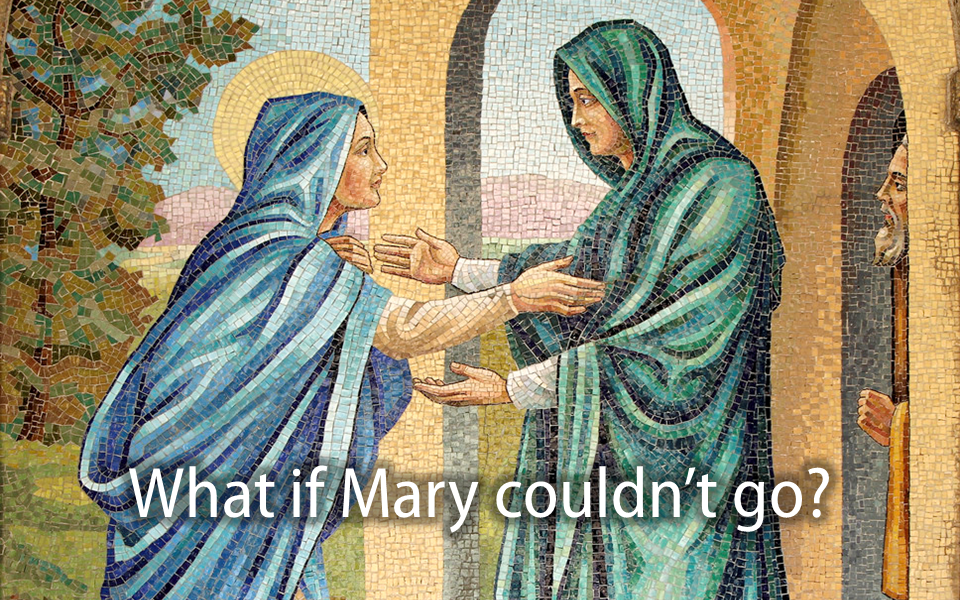
What if Mary couldn’t go?

Posted by on Sunday, December 20th, 2020 in Minister

https://youtu.be/xCs4Xzzqb0Q

Hespeler, 20 December 2020 © Scott McAndless
2 Samuel 7:1-11, 16, Romans 16:25-27, Luke 1:26-55 (Click to read the scripture)

After the strange visitor had left her, Mary just sat there for a while. Her mind was reeling. How could it be that she, a nobody, a lowly woman from a small town, could possibly be described as being highly favoured? How could it possibly be said that the Lord was with the likes of her? Most of all, how could it be possible that she would be having a son?

Yes, she was young, but she was not an idiot. She knew how these things worked. She might be engaged, but she had barely even met Joseph. She had basically seen him from across the room while her parents and his had sorted out the whole matter that was to be between them. But that was it. Nothing else had happened. So how could what the stranger said be true?

Now, she had listened and nodded along as he had offered his explanation. What he had said had sounded completely crazy, but he said it with such authority and gravity that you couldn’t help but look into his eyes and agree with him. And he had confessed that, yes, what he was talking about actually was impossible. His argument, basically, was that the impossible was possible. So she had agreedhttps://www.biblegateway.com/passage/?search=Luke%201%3A26-55&version=NRSV and she had bowed her head and taken on the mission he seemed to be giving her. But now she was troubled because it seemed as if it was one thing to agree with the words, but it was another to actually feel as if it were true with all her heart.

But wait, wasn’t there something else that he had said? Hadn’t he spoken about another impossible thing? Oh yes, it was about cousin Elizabeth – poor cousin Elizabeth who for so long had struggled with her inability to have a child. And yet he had stated the impossible as a fact: she was already six months pregnant! Suddenly Mary knew what she needed in order to make all of this surreal experience into something that seemed real. It was one thing to hear the word that Elizabeth was pregnant, but it would be something else to be with a joyful Elizabeth. She needed to see her for herself. But, unfortunately, it was 2020 which meant that nothing was as simple as it might usually be.

Skype call initiates on screen. Mary is calling Elizabeth and when she answers, we see them both on split screen.

Elizabeth: Hello? Oh, Mary, it’s you! How sweet of you to call your old cousin.

Mary: I’m calling, Cousin Elizabeth, because I heard a rumour. Do you and cousin Zechariah have some news that you should share with the family?

Elizabeth: You’ve got me, Mary. I don’t know how you found out, but it’s true. I’m expecting a baby!

Mary: Congratulations! I know that you and Zechariah have wanted this for so long! But you wouldn’t believe what has happened to me.

Elizabeth: Actually, at this point, I think that I’d believe just about anything.

Mary: Okay, but this is all kind of thrown me for a loop. I can’t even explain what happened. But somehow, I can’t help but think that, if I could see you, if I could see the miracle growing in your belly, somehow that would make it all real. Maybe then it would make sense.

Elizabeth: Oh Mary dear, you know that Zechariah and I would love to have you come up here and visit. But I’m afraid that you just can’t come. The covid numbers up here in the Judean hill country are just too high and the governor has ordered people not to even visit their close relatives. We have to be sensible and safe, even if such wonders are going on.

Mary: Yes, of course you are right. I guess I’ll just have to sort through all of this on my own. But somehow, it seems, it is harder to live with miracles when you’re alone. Okay, bye Elizabeth.

Elizabeth: Bye dear. Thanks for calling!

I have thought this year about that trip that the Gospel of Luke says that Mary took to the hill country after her visit from the angel Gabriel. It seems clear enough that the reason why she went had something to do with the angel’s suggestion that the fact that her cousin Elizabeth was pregnant was a sign that nothing was impossible for God. Now, I don’t think that this was because Mary didn’t believe what the angel had told her about having a child. The story seems pretty clear that, by the time Gabriel had left, Mary had accepted the truth of what he was saying. So she wasn’t seeking proof, but surely she was seeking something. She wasn’t just going to throw a baby shower for her favourite cousin.

I think that Mary was understanding something that we often miss in our modern individualistic society. Our assumption is often that faith is an intently private thing. It is something between me and my God and it is really not anybody else’s business. But that is a very impoverished understanding of faith, and it often reduces the question of faith to a matter of the things that we intellectually believe to be true or false.

But while faith may begin in the intellectual mind, it is actually something that only becomes a powerful world-changing force for good in community. And I believe that that is what actually drew Mary out to the hill country of Judea. Luke doesn’t say anything about the relationship of Elizabeth and Mary other than that they were cousins, but there was clearly a deep bond between them. Mary didn’t just need to see if what the angel had said was true, she needed Elizabeth to help her sort through it all and to make sense of it.

We read Mary’s song this morning – the Magnificat – and what people often don’t realize about this song is that it’s not just the song of a young pregnant woman. It is a song that is rich in tradition and particularly in tradition that has been handed down among women from generation to generation. Her song contains explicit echoes of the song of Hannah, the mother of the prophet Samuel, of the story of the mother of Samson and even of the stories of the great matriarchs of the Jewish people, Sarah, Rebecca and Rachel.

These are obviously stories that she has heard, that have been told to her by older women like her cousin Elizabeth. These are the kinds of stories that women have told each other down through the centuries to help them make sense of the trials and tribulations of their lives, especially as they live in a world where they are so dominated by men.

It even makes me wonder whether, for some reason, Mary’s mother was no longer in her life at that point and Elizabeth had become a mother figure for her. I certainly wouldn’t be surprised if Elizabeth was that person who had passed women’s wisdom and tradition down to her young cousin.

So, when Mary was given life-changing information by this visitor in the form of a man named Gabriel, she may have believed, but she still needed help to sort it all through and I expect that it is exactly that that compelled her to visit Elizabeth.

And think about that for a few minutes. If Mary, the one chosen by God, this special vessel uniquely used by God to bring about the wonder of the incarnation and given a clear and unambiguous explanation of the whole thing by a messenger from God, needed the help of family and of a long-standing tradition passed down through the generations to really make sense for herself of what was happening to her, how much more do you or I need that?

And, in fact, I think it is something that we all experience especially at Christmas time. At this point in our lives, if we are practicing Christians, we have all heard the Christmas story hundreds if not thousands of times. We know where the baby was laid. We know the song that the angels sang to the shepherds and it has become our prayer for peace on earth among people of good will. We know the gifts that the wise men brought and what they were seeking.

So why do we gather to celebrate? Do we really think that the preacher might give us information about the nativity that we have never heard before? I mean, I may try to give you a unique angle, but I know I’m unlikely to teach you something completely new. No, we gather because we know that information, facts and data are not enough. We know that we have to experience it all collectively to make it real.

And that is not just when we gather in churches, by the way, but also when we gather in other ways. I know when we gather with our extended families, we may not spend a lot of time discussing the deep meaning of the nativity together. (I mean, that may depend on your family, but I suspect most don’t.)

But whether we talk about it or not, when we gather like that, we are living out the truths of the Christmas story – the truths of joy to the world, the truths of reconciliation with others who might see the world differently from us and the truths of unconditional love. We may think about such things in the quiet moments around Christmas, but we can only truly understand them when we experience them in community.

And that is exactly what makes this Christmas so difficult. If Mary had gotten pregnant in 2020, she wouldn’t have been able to travel to the Judean hill country to visit with Elizabeth. And so what are we supposed to do when we cannot gather like we traditionally would this year – not in the church, not with our extended families and friends. And what is Christmas without Mary’s Song, without a deeper understanding of what it’s all about that is cultivated in the community of two women who gathered together. I think there’s a real danger that, though we hear the Christmas story yet again this year, it just doesn’t get through to our hearts.

And what do we do about that? I know there are some out there who are saying that we should just ignore or violate the limitations on gatherings, that Christmas is too important and that we can’t let them stop us from getting together. But I cannot agree with that. The limitations that have been put in place are there for the sake of the protection of the community and especially of the most vulnerable, which has more in common with the Christian gospel than anything else we could possibly do at this season. No, it is right that we should behave in an exemplary fashion as much as we can.

But I don’t think that means that we must forgo the deeper experience of the Christmas truths. We are just going to have to be much more intentional this year, despite the limits, despite the need for physical distancing, to breach that distance as much as we can in other ways whether it be over the phone or over Zoom or with actions of compassion and care that can be shown over such distances.

The miracle of Christmas is real, and I’m not just talking about the miracle of a young virgin conceiving over two thousand years ago. I’m talking about the miracle that any one of us can experience this year. I’m talking about the miracle of hope in the midst of a time when there is too much despair. I’m talking about the miracle of life in the midst of too much death. And I’m talking about the miracle of light in the midst of the darkness of this world. I want to remind you that these miracles are all there for all of you and that all you really need to do is make a connection no matter what barriers might be there preventing it. I pray that you might know and experience these miracles this year.

Continue reading »

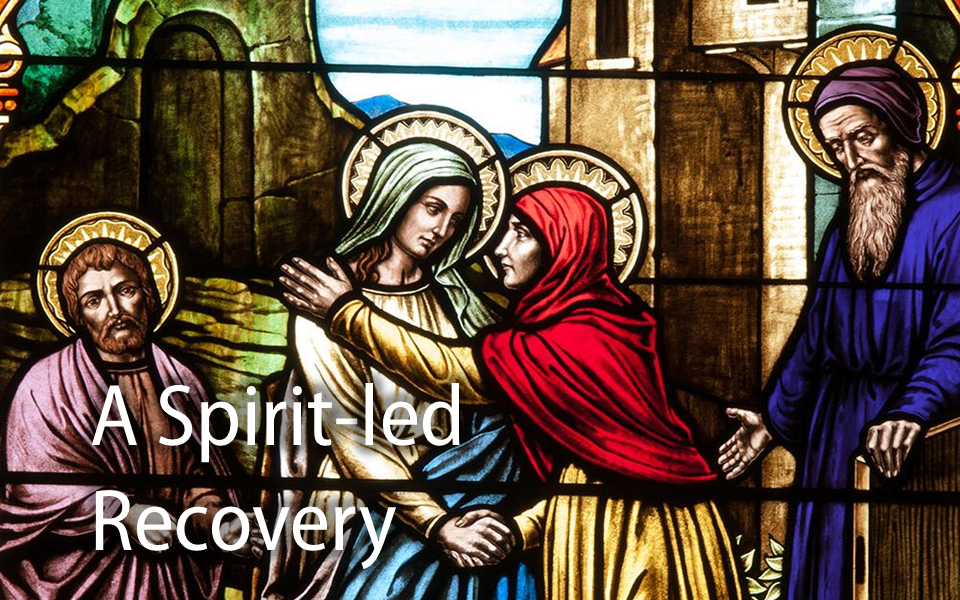
A Spirit Led Recovery

Posted by on Saturday, December 12th, 2020 in Minister

https://youtu.be/rUcCvcqxDgA

Hespeler, 13 December 2020 © Scott McAndless – Advent 3
Isaiah 61:1-4, 8-11, Luke 1:46-55, 1 Thessalonians 5:16-24, John 1:6-8, 19-28

So, a vaccine – or rather a few vaccines at this point – have been created. Distribution in Ontario will begin in a matter of days and, if all of the research and testing turn out to be correct, we may soon get to the place where our entire lives are no longer dominated by a tiny little thing called a coronavirus. This is good news, and I realize that it’s probably a little bit premature to celebrate too much – certainly far too premature to celebrate with large maskless gatherings – but maybe it is time to at least start thinking about what comes next.

I am sure that some people are expecting that, on the day when it’s finally done, the day when enough people are vaccinated and herd immunity is attained, that the crisis will just be over. Everyone will just get up in the morning and go back to living their lives the way that they used to. That is what everyone who lives through a crisis dreams of and it is understandable. Sometimes when you’re living through a crisis, the only thing that keeps you going is the thought of getting back to life the way you used to know it. And yet, I think we all realize on some level that that is not all that realistic. Because of the direct and indirect effects of this crisis, there are many things that will simply not go back to the way they were.

We have no idea how many yet, but we can be sure that, when this is over, there will have been many businesses that have long been important parts of our local and national economies that will simply no longer exist. People’s savings will have been decimated and their debts will be that much more unmanageable. People will lose their homes or be thrown out of their apartments. People will continue to struggle to find good jobs for some time to come. Women, in particular, seem to have fallen out of the workforce and will face many struggles to get back in.

Oh, the end of the crisis will go just fine for some people: the fortunate few. That is almost always what happens in the aftermath of a crisis. In fact, for those who have the resources and are willing to ruthlessly take advantage of the misery of others, there is a very good chance that they will make enormous profits out of the whole situation. Chances are, when this is all over, there will be a small group that finds themselves greatly richer and there will be a very large group that have simply fallen through the cracks of society and the economy. And the simple fact of the matter is that, when that is the situation, it makes an economic recovery for everyone that much harder. But, that is where we will likely find ourselves in the coming months.

But, of course, we are not the first people in history to face such a situation. In fact, it is the kind of thing that happens just about every time a society faces a major crisis and then has to recover. Take, for example, the great crisis of the exile for the ancient people of Judah. When their country was destroyed and all the leading citizens were taken away into exile by the Babylonians, well you can just imagine the kind of devastation that caused.

But when that crisis finally came to an end, and the people were able to return from that exile and start all over again, their troubles were hardly over. The country had been ruined. The economy was in shambles. They were trying to rebuild and they had almost no resources to do so.

And, under those circumstances, it was the poorest folk who struggled most of all. They had no savings and they went deep into debt. Meanwhile, the few wealthy people who had returned were in a great position to benefit from the misery of these others. They loaned them money, and then, when they were unable to repay, they seized their lands, if they had any, and then they seized the people themselves and turned them into slaves.

And given that that was the kind of thing that was going on, the economy only got worse and the whole thing was a real mess. As a very few people got very rich and the great mass of the people fell into poverty and slavery, the recovery was looking like a complete disaster.

But then, a prophet came along. And he came along with a stunning message. “The spirit of the Lord God is upon me, Because the Lord has anointed me;” he cried out in the ruined city. “He has sent me to bring good news to the oppressed, To bind up the broken-hearted, To proclaim liberty to the captives, And release to the prisoners; to proclaim the year of the Lord’s favour.” And this was not just the ranting of a crazy person, it was actually a plan – a plan for a real recovery.

You see, there was an ancient law in Israel. Every fifty years, all debts had to be forgiven, all lands that had been foreclosed on had to be returned and all debt slaves released. It was called the year of Jubilee. It was a way – admittedly a radical and very disruptive way – but a way of making sure that people didn’t fall into permanent poverty and that the richest people were not able to exploit their misery, at least not forever.

Now, I do hear all of the objections that you are thinking about this idea of a year of Jubilee. I mean, can you imagine the havoc it would wreak in our economy if all debts were forgiven and all sales of land were undone? It is something that is quite unthinkable under our present economic system, though it may have made a bit more sense in the ancient agrarian economy of Israel.

But, even back then, it was likely problematic. So perhaps, many have suggested, the Jubilee was not practiced, at least not on a regular basis. Sure, it was a law, part of the law of Moses, but you can well imagine that it would have taken a strong will on the part of the authorities to make sure that such a law was actually implemented and you can also well imagine that there must have been times when that will was lacking.

And so, in the aftermath of the exile while the people were trying to rebuild their lives in the city of Jerusalem, it had probably been a very long time since there had been the will to hold a year of Jubilee. And there were almost certainly no authorities who would be inclined to implement the ancient law at that moment. And so, guess what happened. A prophet stood up and declared that he didn’t care that there was no king or priest or other authority who was going to implement a year of Jubilee.

Why didn’t he care? Because the Spirit of the Lord God was upon him. He might have been nobody, he might have had no power at all, but he had God’s Spirit and that was enough. And so he would speak up and demand that the Jubilee be proclaimed. And there is no doubt that a Jubilee is what he means when he speaks of, “good news to the oppressed. . . liberty to the captives, and release to the prisoners.” It is clearly what he means when he proclaims “the year of the Lord’s favour.”

And I have a lot of respect for that prophet for having the courage to do such a thing. I don’t think I’m the only one. You are probably aware that, according to the Gospel of Luke, when Jesus began his public ministry in his own hometown of Nazareth, he did it by taking this very same passage of scripture and applying it to himself, basically saying that he was the fulfillment of the prophecy.

That is to say that Jesus came at a moment in history when the people were facing the same kind of crisis of a country and an economy that were falling apart, this time mostly due to the greed of the Romans. And so, Jesus declared that he would be the embodiment of the same call of the ancient prophet. Though he also had no earthly power to do so, his presence in the world would bring about a new Jubilee.

But it is not something that is just there when Jesus announces it at the beginning of his ministry – it is something that runs through the entire Gospel of Luke, as we see in our reading from the Magnificat this morning. You see Mary doesn’t have to wait until Jesus returns to Nazareth to speak in synagogue to know that his mere presence in the world means that the impossible Jubilee is now possible. As soon as she can sense that she is pregnant she sings it: “He has scattered the proud in the thoughts of their hearts. He has brought down the powerful from their thrones, and lifted up the lowly; he has filled the hungry with good things, and sent the rich away empty.”

The mere presence of Jesus in the womb of his mother is enough – the fact that he is coming into the world means that the reality of the world and how it works is being turned upside down and the rich and the powerful are losing their place and the poor, the neglected and the forgotten have taken that exalted place. The unthinkable is happening.

I worry about the recovery after this pandemic, I really do – not because I doubt the ability of medical science and research to come up with a vaccine that will get us out of this mess. I have no worries about that. But I do have worries about human nature and especially that our greed and our selfishness will mean that whatever wealth is available will stop circulating and remain in the hands of a few and so the recovery will be much less than it could possibly be and that it will leave far too many people behind. I worry because I suspect that our leaders, who, after all, owe so much to the rich and powerful, will not be able to oppose them.

But maybe, if I listen to the Old Testament prophet, if I listen to the mother of Jesus as her hands clutch the life that is just beginning to grow inside her, and if I listen to her son as he stands before the people in Nazareth, I will realize that we don’t necessarily need to wait for our leaders to wake up and realize what is actually needed. All it takes is someone who has the Spirit of the Lord upon them. And, my friends, that is and can be any of us.

When you think about it, it is kind of amazing to hear some of the voices that are being raised right now, voices of people who are essentially powerless and who, under normal circumstances, would never be listened to, and yet, those voices are being heard right now even though they are saying things that were previously unthinkable.

I’m talking about people who are saying that maybe it is time to forgive student loan debt. I’m talking about people who are saying, let’s take some of that money that has been used to militarize the police and instead redirect it towards mental health and housing and building up social capital. I’m talking about people who are daring to suggest radical ideas like a universal basic income. These words are not coming from the powerful and the influential, and yet they are being heard. I wonder, is it maybe because somehow the spirit of the Lord is behind such ideas right now because that is what is needed?

I don’t know. I honestly don’t know how much merit is in some of those ideas and whether they will work or not. But I absolutely welcome such voices being heard because I know that we will never get anywhere if we quench the voice of the Spirit of the Lord.

What’s more, I believe that we, as people of faith, really ought to be those who are most open to such things because it is right there in the scriptures that we profess to believe. And it is especially there in the story of the incarnation, in the meaning of Jesus coming into the world in the first place, into the body of his mother and into that synagogue at Nazareth. If the spirit of the Lord God is speaking through somebody in the world today, we ought to be the first to rejoice in that.

Continue reading »

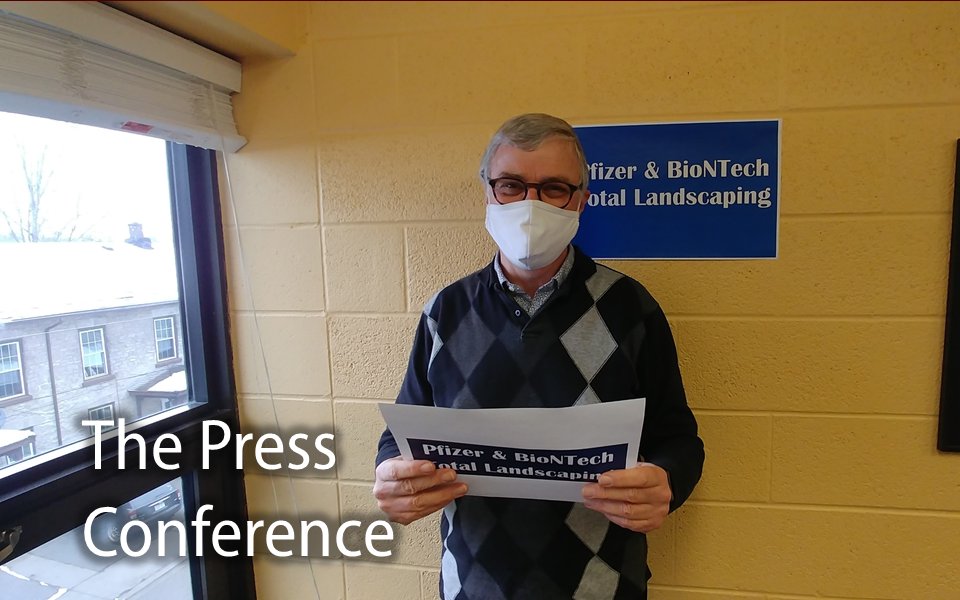
The Press Conference

Posted by on Sunday, December 6th, 2020 in Minister

https://youtu.be/g1DZl3rskMQ

Hespeler, 6 December 2020 © Scott McAndless – Communion
Isaiah 40:1-11, Psalm 85:1-2, 8-13, 2 Peter 3:8-15, Mark 1:1-8 (Click to read)

Good morning. It is Monday, November 9, 2020, and we take you now live to the headquarters of international drug companies, Pfizer and BioNTech for an announcement that that world has been waiting for:

Good morning, Scott, I am standing outside of the building where a stunning announcement has been made. The chief executive officers of Pfizer and BioNTech just came out to announce, and I quote, “Comfort, O comfort my people,” says the corporation. “Speak tenderly to the world, and cry to it that it has served its term, that its penalty is paid, that it has already received from the deadly coronavirus a double portion of suffering.

“For unto us, a vaccine has been born and an inoculation has been given. And behold, it’s efficacy shall be established at 90%.”

That is the announcement, Scott, though I would note that there is a little bit of fine print. There are a few steps yet to be accomplished. The vaccine will have to receive final approval and, of course it will have to be manufactured in significant quantities. But that’s not even the most complicated part. The companies say that, in its original form, the vaccine will have to be stored at -80 degrees Celsius, which will definitely complicate distribution. There is also the thorny necessity of convincing the vast majority of a population that, over the last little while, has discovered that it has some reasons to be wary of political authorities and medical experts, to actually take a vaccine that might make them feel sick for a short time.

And so, between now and the time when a sufficient portion of the population can be vaccinated and herd immunity be attained, there is a whole lot of work to be done. Basically, to get from here to there, we’re going to have to build a distribution highway. And you know how you build a highway: “Every valley shall be lifted up, And every mountain and hill be made low; The uneven ground shall become level, And the rough places a plain.” And I know that that sounds like a lot of work and that it’s going to take a lot of time, but, my friends, this really is still good news. Our salvation has arrived! Take comfort, O my people.

I have said it many times during this difficult year of 2020. Again and again as I open the scriptures during this year, I read familiar passages that I thought I understood and I see them in an entirely different light. And that is true yet again on this second Sunday in Advent. Every year around this time, the church traditionally reads from the fortieth chapter of the Book of Isaiah. We not only read it, but we also sing it or hear it sung as one of the most favorite arias of Handel’s Messiah. The passage is so powerful that you would think that it could not more deeply affect me this year than it has in the past, but it has.

This part of the Book of Isaiah was originally written to people facing a very difficult historical struggle. It is addressed to the people of Israel who have, for far too long, been living in exile in the land of Babylon. Forcibly taken from homes, they have been made to live in a strange land surrounded by strange gods and strange customs. It has been extremely hard for them. But, in this passage, the prophet comes to them with some exciting, good news.

Babylon has fallen (or maybe it’s just clear that it’s about to fall) and the Persian Empire is about to take over its territories. And that might not seem like a big deal, I mean, who cares if you exchange one overlord for another, but actually it is. The thing that makes that good news is that Cyrus, the king of the Persians, has a different policy about exiles. As far as he is concerned, if they want to go back home, they can. Yes, the good news of the moment is that the people of Israel can finally go back home.

And it is in that context that the prophet says, Comfort, O comfort my people, says your God. Speak tenderly to Jerusalem, and cry to her that she has served her term, that her penalty is paid, that she has received from the Lord’s hand double for all her sins.” He is announcing that the exile is over by saying that God has decided that the people have suffered enough.

But, like I say, I really found those words sounded very different to me this year after we have seen our society struggling with an extended period of suffering caused by a pandemic. And when that announcement of a vaccine came, it certainly seemed like the very same kind of announcement of comfort to a people.

So, the words of the prophet certainly hit me on a different emotional level this year, but there was also something else that really struck me, something that I hadn’t seen before. When these words of comfort appear, it’s like a sudden announcement that everything is going to change for the better. The announcement of the vaccine sounded like that too. But, after that initial euphoria, there comes a let’s-get-down-to-earth moment when we realize that there is still a long way to go before we get there, that the road is going to be difficult and that it might even get worse before it gets better. I think we’ve all been feeling that as well.

Well, the same thing happens in this prophecy from the Book of Isaiah. Because, you see, no sooner did the prophet announce this incredible, wonderful news that the exile was over, than the people had to deal with a huge realization. The people were in Babylon, and Babylon was a long, long way from Jerusalem. I mean, not only was it about a thousand kilometers in an age where most people travelled on foot, but it was a thousand kilometers across the biggest, most uncrossable terrain in the entire world – a vast desert.

So, immediately after announcing this enormous comfort, the prophet goes on to announce a gigantic work project: “A voice cries out: “In the wilderness prepare the way of the Lord, make straight in the desert a highway for our God.” It was a highway for the people to return home and a very difficult highway to build: “Every valley shall be lifted up, And every mountain and hill be made low; The uneven ground shall become level, And the rough places a plain.” That’s right, we need to bring in the bulldozers and level the whole terrain, and that’s all before you can even start to lay down the asphalt!

Now, to be clear here, this passage is not describing the construction of an actual highway to take the people home. This is poetry – a poetic way of saying that it’s going to be a long and difficult process that takes a lot of work to get the people home. But it is still a stunning change of tone from the original promise – we go from supernatural comfort to a major public works project that has to be completed before the promise is fulfilled.

But that is how life often goes. We are told that we get to go home, but then we have to build the highway to get there; the vaccine gets announced but there is all this other work to be done before its promise is realized. This is the kind of thing that keeps on happening and so this passage is forever new – forever speaking to the hopes and the frustrations of delays that people have to live with.

Which is, of course, why, when the author of the Gospel of Mark was trying to capture the mood in Galilee just before Jesus appeared on the scene, he turned to this very same passage in the Book of Isaiah. He describes John the Baptizer as, “the voice of one crying out in the wilderness: ‘Prepare the way of the Lord, make his paths straight.’”

Now, on the surface, it might seem that what has happened here is that Mark has just misunderstood the original meaning of the Book of Isaiah. The original prophecy said, “A voice cries, ‘Prepare the way in the wilderness.’” And Mark has changed that to “A voice in the wilderness cries, “Prepare the way.” That is pretty close, but it is not exactly the same thing and Mark makes that change because Mark does see John himself as the voice that is crying in the wilderness because John preached out in the wilderness.

But I do not think that this is simply a mistaken interpretation on the part of the gospel writer. It is rather his way of saying that the ministry of John the Baptizer was a fulfillment of what had been anticipated in the prophecy in Isaiah, not literally in the sense that John was building a highway out there, but certainly in the sense that John’s call had so much in common with that of the ancient prophet.

In fact, I think we should greet the message of John the Baptizer today in almost exactly the same way that the ancient exiles in Babylon greeted the ancient prophet’s message – which is to say, much like how we received the news of the successful vaccine trials.

When John announces, “The one who is more powerful than I is coming after me; I am not worthy to stoop down and untie the thong of his sandals,” how should we react? We should greet that news – the news that God has come to us in the person of Jesus Christ to show us the power of God’s love and salvation – with joy because that means that the end of the story is written. God will bring us home. Because of Jesus we can know for sure that God’s purposes will not be thwarted and that our destiny and indeed the destiny of the whole world is safe in God’s hands.

And yet at the same time we cannot help but recognize that there is still some highway building to do before we get from here to there. And now especially, during this season of Advent, we are living in that tension between the promise of the coming of Christ, a promise that is sure and certain, and the simple reality that we are not quite there yet.

Because of Jesus because of his incarnation, because of his extraordinary teaching and example, because of his death and his resurrection, God has accomplished it all. The world is reconciled to God in Christ. The kingdom of God is established in the face of all the powers, principalities and rulers of this world. And we are forgiven, renewed and reconciled to God. That work is all done. As Jesus said on the cross at the very last, “It is finished,” which could also be translated as, “It has all been accomplished.”

And yet we are still in that waiting place. That is, by the way, what the season of Advent is all about; it is about life in the waiting place. Because, while everything is in place for all of that salvation to play out, we are still stuck here preparing for it all to be rolled out, for the highway to be built through the desert, for the vaccine to be approved and manufactured and safely distributed. That salvation is there, we can almost taste it, it is in the sights in the smells of this season of wonder, but there is still that sense of not quite yet.

And as Christians we are called to live into that promise. We are called to offer hope to people, to let them know that God has done the work and it is completed. And we are also called to live as if it were already so, and, in so doing we will make it so. That is our job. That is how we build the highway through the desert.

Continue reading »

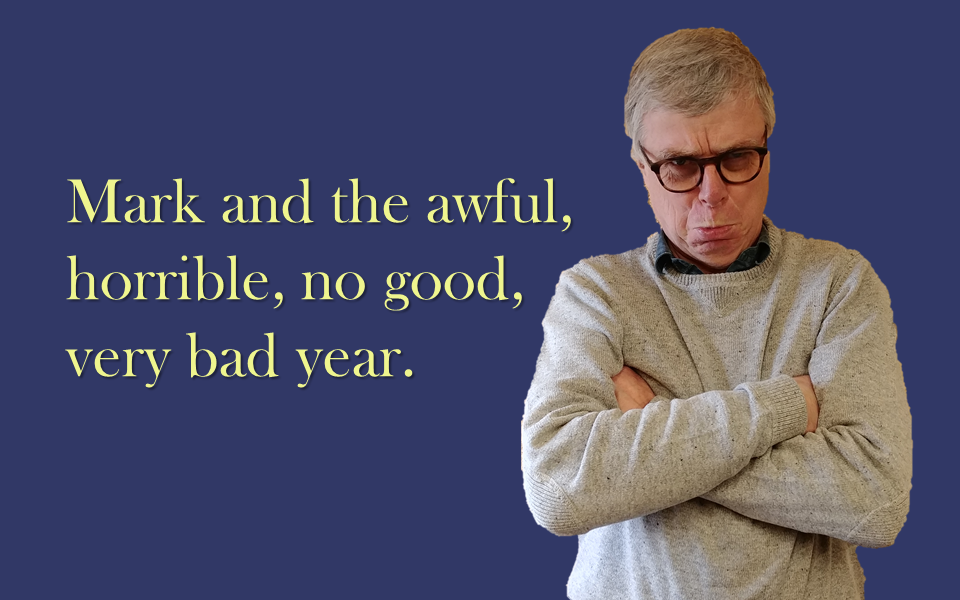
Mark and the awful, horrible, no good, very bad year

Posted by on Sunday, November 29th, 2020 in Minister

https://youtu.be/H-5OVQFQ-zM

Hespeler, 29 November 2020 © Scott McAndless
Isaiah 64:1-9, Psalm 80:1-7, 17-19, 1 Corinthians 1:3-9, Mark 13:14-37 (click to read)

I’m going to ask you to use your imaginations here for a little bit. I want you to imagine a year, an entire year, that just went really badly. A year during which just about everything you could possibly think of to go wrong went wrong and a bunch of other things that you would never think of in a million years also went wrong. Say that that year began with terrible, almost apocalyptic bushfires in the far distant continent of Australia killing or displacing an unimaginable number of animals, something like 3 billion. And then say that, only weeks later, a terrible pandemic began to sweep across the globe shutting down ordinary life and leading, ultimately, to tens of millions of cases and well over a million deaths.

And then throw a few other things into this imaginary year – cases of what clearly appear to be racially motivated police violence leading to massive protests and in some cases rioting and violence. Throw in a sharply divisive election and a transition of power wrought with confusion and fear. Hey, while you’re at it, why not throw in a few murder hornets? You know just a wildly unrealistic awful, horrible, no good, very bad year.

And imagine that you were coming to the close of that year with some hope, of course, that maybe the next year would be a lot better but, at the same time, a fair bit of worry that it might just be a whole lot worse. So, say it was around the end of November of that year. What do you suppose the mood of people would be? And given that mood, that I suspect you can probably imagine, what do you suppose that somebody might write that could actually reach people, catch their attention and speak to them exactly where they were?

I ask that question today because it is the First Sunday of Advent which the church counts as the beginning of the year. And, as it is the beginning of the year, we turn, on this Sunday to a new part of the Sunday lectionary. Last year, our gospel readings were mostly taken from the Gospel according to Matthew. Starting today, we are going to turn to a new gospel: the Gospel of Mark.

And what an introduction to the Gospel of Mark we have in our reading this morning: the sun darkened, the moon dimmed and the stars falling from heaven and, indeed, heaven and earth entirely passing away. Now, I know that this passage in the Gospel of Mark is not necessarily everybody’s favourite, but I think that it is actually a very good thing that this very passage is actually our introduction to the entire book in our readings for this year.

Most scholars today believe that of all the gospels in the Bible, the Gospel of Mark is the oldest; it was the first one written. Now the reasons why scholars believe this are rather complicated and I’d be happy to get into the details at some other time, but for the moment, let’s just say that sometime around 70 AD, that is about four decades after the death and resurrection of Jesus, somebody first came up with the idea of writing down the story of Jesus’ life and death, and this gospel was the result.

That immediately raises some questions – questions like, why then? Why, at that moment in the history of church, did someone finally feel compelled (or inspired by the Spirit) to write down the story of Jesus? Did it have something to do with the fact that the first generation of believers was, at that point, passing away and they felt a certain urgency to collect and write down their witness? That may have been part of it, but I am not sure that it was the main part.

No, I suspect that it had more to do with what was going on in the world at that moment in time. Because, as I said, the consensus is that Gospel of Mark was written sometime around 70 AD. And 70 AD was an awful, horrible, no good, very bad year. What’s more, 70 AD was only one in the midst of a number of awful, horrible, no good, very bad years from about 66 to 74 AD. So it actually doesn’t matter what exact year the Gospel of Mark was written, we can be pretty sure that it was written during an awful, horrible, no good, very bad year.

Let me just give you some sense of all the horrible things that happened during that period of time. It started in Judea when somebody made fun of the local Roman governor but, when the governor tried to find the people who’d made fun of him, they’d gone missing and so he just grabbed a whole bunch of people at random and crucified them which led to a bloody general uprising. During this period of time, the reign of the worst Roman Emperor ever, Nero, finally came to an end, but it led to the worst and most violent succession crisis that you can possibly imagine. Does that sound familiar?

During that crisis, one prominent Jew looked at one of the people fighting to be the next emperor (who happened to be in Judea killing Judeans at the time) and said, “Look, there is the messiah!” Now, can you imagine that? A powerful political leader hailed as the true messiah? Well, it happened.

And then, the whole countryside of Judea and Galilee blew up an open revolt against Rome which was brutally defeated by the son of the new emperor at the cost of thousands of lives and the destruction of the temple and the city of Jerusalem.

During one of these horrible years, it is said the Christian church that was in Jerusalem was so alarmed by the whole situation that they up and ran, leaving everything behind them to escape the city – an episode that is likely referred to in our reading when Jesus says, “When you see the desolating sacrilege set up where it ought not to be (let the reader understand), then those in Judea must flee to the mountains; the one on the housetop must not go down or enter the house to take anything away; the one in the field must not turn back to get a coat. Woe to those who are pregnant and to those who are nursing infants in those days! Pray that it may not be in winter.”

That is the kind of thing that was going on while this gospel was being written. And again, I ask you the question, why, at that kind of moment, did someone decide to write this book. Do you suppose that it might have been because somebody decided that just such a book as this was exactly what was needed at such a moment as that? I suspect that this is exactly what happened. The Gospel of Mark was not written merely to record what happened to Jesus during his life, though it certainly did that, but it was also written to give comfort and guidance to some people who had just lived through an awful, horrible, no good, very bad year.

I think that is true of the entire Gospel of Mark, but it is maybe especially true of the thirteenth chapter of the Gospel which we read from today because it most directly references some of the very things that were going on when this book was written. So what was the message that the writer of the Gospel of Mark was trying to give to people who were living through such times?

Well, one thing is especially clear in this chapter. He wrote it to tell people that this had all been foreseen. In this chapter, he particularly highlights the very things that Jesus predicted would happen and that were now coming to pass. Jesus did predict the destruction of the temple and much of the strife that surrounded it. And so Mark underlines that prediction and, I suspect, doesn’t hesitate to add a few details from the things that he and his fellow Christians have recently lived through.

Now, what would be the point in doing that? How is that supposed to help people deal with all they are going through? Well one thing it tells people is that nothing that has happened is as random as it might seem – that it has all been foreseen.

Now, I don’t think that that is the same thing as saying that every bad thing that happens is a direct result of the will of God. I personally do not believe that God wills that bad or tragic things happen to anyone. But tragedy is an inevitable part of life in this world and our loving God is never far removed from the struggles that people are living through. And, yes, I do think that this was exactly the kind of message that people needed to hear when this book was written.

Think of that in terms of some of the things we’ve been living through. Does the mere fact that a lot of what we have been living through was actually predicted seem like a comforting thought to you? Because it is largely true. We have been warned very clearly for a number of years now that a devastating global pandemic was bound to come sooner or later. We have been clearly warned that the effects of global warming would lead to worse and worse hurricane seasons and worse and worse forest fire seasons and we have just lived through the worst of all recorded times in both cases. Certainly, the post-election strife in the United States that we are living through right now has been predicted over and over again over the last four years.

It has all been predicted, but does that make us feel any better about any of it? Not necessarily. But maybe it does give us an imperative to listen to those who make such predictions next time and to do what we can to prepare a whole lot better. It may not give us comfort but it gives us a sense of agency, of something we can do, and that is maybe the kind of thing we need right now. I think the Gospel of Mark provided something like that for its audience.

And, if there was a comfort to be found, it was to be found in the knowledge that somewhere above and beyond the troubles of an awful, horrible, no good, very bad year, there was someone who had a plan that looked beyond the troubles of the moment to something bigger, to the redemption of a troubled world and its ultimate healing. That also was a comfort to them and I think it can also be for us.

I suspect that there is a reason why God is leading us, through the Revised Common Lectionary, towards reflecting on the Gospel of Mark as an awful, horrible, no good, very bad year comes to a close and a new year begins. I suspect this gospel has some really important things to say to us exactly where we are right now.

I pray that, in the year to come, this gospel might give us some perspective on the difficult things that we have had to live through this year and that might linger in the year to come. Like I say, I don’t believe that it is God’s desire that bad things happen to us, but that does not change the fact that we have a God who oversees the events of this world, who cares and who is determined to bring some good out of the most troubling developments.

Of course, the other thing that the Gospel of Mark gives us is a picture of Jesus. As the first Gospel written (or at least the first one written that was not lost), Mark shows us who Jesus is in the midst of the struggles of this life. And the picture we get is of the Son of God but also of one who is not removed from the struggles of this world, who entered into them willingly and freely, who knows our difficulties and comforts us in them. Because, you see, Mark was determined to present the kind of saviour that people who have lived through an awful, horrible, no good, very bad year really need to meet.

Continue reading »

When did we see you?

Posted by on Sunday, November 22nd, 2020 in Minister

https://youtu.be/N4fvQO5LYEU

Hespeler, 22 November 2020 © Scott McAndless
Ezekiel 34:11-16, 20-24, Psalm 95:1-7a, Ephesians 1:15-23, Matthew 25:31-46

Salvation is by grace through faith. That is perhaps the most central teaching of protestant Christianity. And, in many ways, every sermon I preach, every study I lead is ultimately trying to explain what that teaching really means. The bottom line seems to be this: none of us are going to be able to earn God’s favour by being good enough. God is rather looking for us to place our trust in God and in what God has done for us in Jesus Christ.

And that makes the parable that we read this morning from the Gospel of Matthew a bit of minefield for a good old-fashioned Protestant preacher. I have privately heard Christian preachers and teachers suggest that they really don’t like this parable and that they kind of wish that Jesus never told it because, of course, this parable depicts the final judgment. And when the people are divided and judged as to whether they have pleased God, there seems to be only one criterion that matters: those who have behaved in the right way are blessed and those who have behaved in the wrong way are condemned. It seems to be a textbook example of salvation by works and not by faith.

And, yes, the actions that are celebrated in this parable are all really good. I would absolutely love to see people welcoming strangers, feeding the hungry, clothing the naked and visiting those who need it. And obviously those are precisely the kinds of actions that do please God. But, at the same time, I do not believe that we, as people, can become more pleasing to God by our frequency or quality of such actions. So, what am I to do with this parable? How am I supposed to relate it to some of my central theological convictions?

Let me first say something about the whole notion of salvation. In the minds of modern Christians, we often make an easy connection between the notion of salvation and the whole question of who gets into heaven. For too many Christians, that is all that salvation means, a ticket to heaven someday after we die. But I just feel I need to say that this parable is not actually about who gets into heaven or into the afterlife and who doesn’t. It is a parable about who is already in the kingdom of heaven.

The kingdom of heaven, in the Gospel of Matthew, is very clearly more about a present reality that people can live in right now than it is about what happens to people after they die. The key point is that those who do the things described in the parable are already in the reality of the kingdom of heaven and those who don’t aren’t. That is not to say that the kingdom of heaven does not have a reality or fulfilment beyond this present world. And I do believe that, in this world, we are meant to prepare for that ultimate reality, but the focus of this parable is on this present world.

So, that is one thing I always keep in mind as I read this parable. But there is also a second assumption about this parable that we easily make that I think needs to be challenged. On the surface, yes, this parable seems to be all about works, about what we do. The word faith is not mentioned. But I would like to suggest that, actually, this parable is all about faith.

Here is what I noticed on this time reading it through. When the Son of Man comes, and all his holy angels with him, and he separates the sheep from the goats, he addresses both groups in terms of what they have done. “I was this, and you did that” or “I was this and you failed to do that.” And there seems to be no discussion when it comes to what the sheep and the goats have done. The sheep do not push back against the Son of Man and say, “Wait, we didn’t do that kind of thing.” Nor do the goats push back and say, “Oh yes we did.”

No, the pushback all seems to be over one particular question and that question has to do with seeing. Both the sheep and the goats respond by asking, “Lord, when was it that we saw you hungry or thirsty or a stranger or naked or sick or in prison. . .” But here’s the thing: the Son of Man never asked them if they saw him. He only spoke of what they had done for him. He was not concerned at all about sight or recognition. And this is a significant point because the Bible has a lot to say about the relationship between faith and sight.

For example, in 2 Corinthians, Paul writes, “we walk by faith, not by sight.” (5:7) And the eleventh chapter of Hebrews begins like this: “Now faith is the assurance of things hoped for, the conviction of things not seen.” Clearly, seeing is not necessary to faith. It even sometimes seems to get in the way of faith. And yet these sheep and goats seem to be fixated only on what they can or cannot see, as we all often are.

So why does this parable shift from the Son of Man’s focus on doing the right thing to the sheep and goats’ focus on seeing? Because this story is actually more about faith than we realize.

What is the real difference between the sheep and the goats in this parable? The two groups actually have far more in common than we usually realize. You see, apparently, according to this story, Jesus is constantly present in this world. He is particularly present in the poorest of the poor, in the hungry, in the sick, the forgotten and the prisoners.

Now, the heart of God has always been with such people. Throughout the scripture we see God prioritizing reaching out and taking care of the most marginalized people in society. But apparently something new and something unique has happened because of Jesus, because of the incarnation.

Because somehow, in Jesus of Nazareth, God entered into the human experience not just in some kind of sympathetic understanding but actually in the form of a human body that could understand human suffering, there is a sense in which Jesus remains uniquely present in this world in the persons of those who struggle or suffer the most. I can’t explain that. I can’t even really claim to understand it, but I know that it is the truth.

But here is what we see in this parable, though Jesus continues to be bodily present in this world, nobody can see it. The sheep, those who intentionally set out to take care of those who live on the margins, confess that they did not see it. And the goats, those who did nothing, did not see it either. So both the sheep and the goats have their blindness to this reality in common. And the Bible tells us that, when there is not sight, that is when there is a great opportunity for faith. And it is in what these two groups do with this opportunity that we see their paths diverge.

And let’s focus in on the goats for a moment. What do they do with their opportunity for faith? They do not see the reality that Christ is present in the marginalized, but what do they do with that? They continue to insist upon relying on their flawed sight. They look at the people who are living on the margins of their society, and what do they see? They see, first of all, people who are not like them. They may belong to other racial or ethnic groups. They may not talk like them or dress like them, and so they conclude that they have less value.

Or perhaps they look at them and can only see the short term. They see how costly in the short term it is to provide income support or addiction rehabilitation or health care or shelter for them. They see all of that and they conclude that such a high cost cannot be justified.

And, of course, they completely fail to see that, over the long term, there are costs that are even greater. They do not see the cost of lost potential and how people who are given a little bit of support now can contribute enormously to the society down the road. They do not see how entrapping people into conditions where they feel they have no hope and no prospects for the future is bound to create even more costly problems down the road. None of that is particularly visible and they do not see it.

They, not seeing the truth that Christ is somehow alive and present in this world, become caught up only in what they can see. And so they have no faith whatsoever. They have completely missed the incredible gift that has been given by Christ, his presence with them in this world.

The sheep, on the other hand, also have failed to perceive the presence of Christ in those that they have encountered. The only difference is that for them, this failure to see the truth has not mattered. Whether they have seen it or not, they continue to act as if every person that crosses their path, every person for whom they can make a difference for the good, is an opportunity to serve the Lord that they love. They, lacking sight, have continued to walk forward in faith and in so doing they have embraced the reality of the kingdom of heaven because they are living in the reality of it.

Salvation is by grace through faith. What that means is that God saves us. God saves us from whatever we need saving from. Salvation comes in the form of healing, of hope, of redemption and forgiveness and, yes, it also comes in the form of defeating death which is the ultimate enemy. God gives all such salvation as a free gift with absolutely no strings attached. That’s what grace is. But we access that through faith. And faith, in that context, does not mean that we have to believe a bunch of things about God or about Jesus. Faith is not about intellectually accepting certain tenants of belief. It is about trusting in God’s grace and salvation and it is about especially exercising that trust even though we cannot see it.

And so, if you want to experience God’s salvation now, you need to start living in the reality of the kingdom of heaven. You need to start living in that reality even if you cannot see it and even if you cannot feel it. It is hard for us to do that, I know, because we are so dependent on our senses. But God’s reality is God’s reality and the only way we can learn to trust that is by exercising our faith. We live as if it is so, and in time we will begin to experience it. That is what those sheep were doing, they were living in the reality of the kingdom of heaven even though they could not see it.

And, yes, there is an ultimate reality of the kingdom that comes on the other side of death. I cannot pretend to be able to describe that reality or what we will experience there. And I do believe that our entrance into that reality is in the loving and gracious hands of God alone – the God who has opened our way to that reality in Jesus Christ. My personal belief is that God is willing to accept any level of trust to grant us access to that reality.

But I believe that this parable, the parable of the sheep and the goats, is about how we live in that reality as much as we possibly can in this present world. And the bottom line is that we live in that reality and we experience the real presence of Jesus Christ with us here and now when we live our lives like those sheep, depending not on what we can see but on the promises of God who has so graciously extended salvation to all of God’s children.

Continue reading »