Hespeler, February 23, 2025 © Scott McAndless – Seventh Sunday after the Epiphany
Genesis 45:3-15, Psalm 37:1-11, 39-40, 1 Corinthians 15:35-38, 42-50, Luke 6:27-38
The sons of Jacob had been hearing disturbing things about the country to the south (and west) of them for some time. It seemed that Pharaoh, the king of Egypt, had essentially handed over the control of his entire nation to some unelected immigrant who he called Zaphnath-Paaneah. (Genesis 41:45)
I realize that that name is a bit of a mouthful. That is why people mostly referred to this man as the First Buddy. When they wanted to mock the Pharaoh for giving up most of his power, they called him President Zaph.
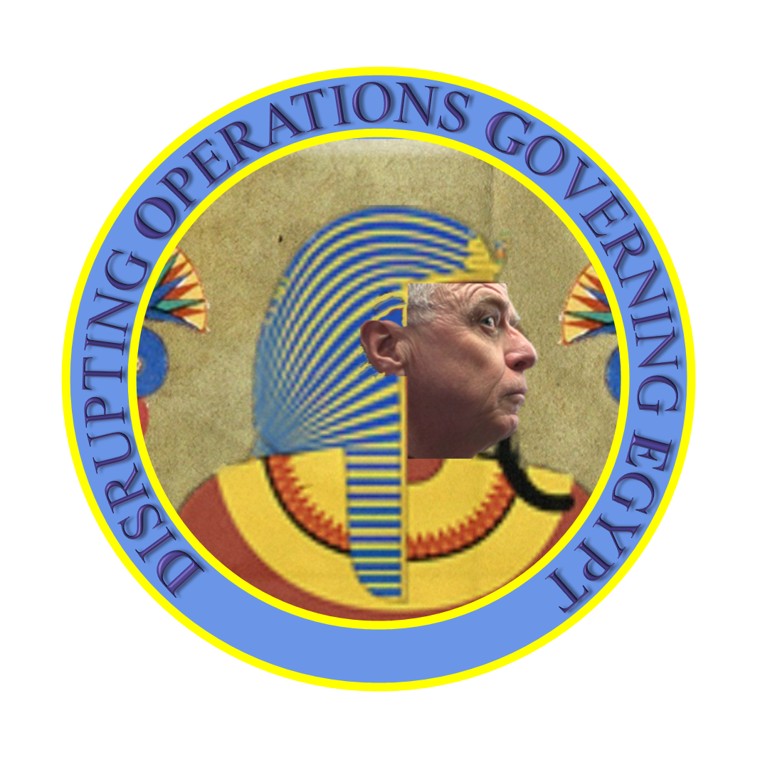
Having obtained enormous power, President Zaph immediately set about using it in unprecedented ways. He created a new department to achieve his goal of Disrupting Operations Governing Egypt (or D.O.G.E. as he liked to call it). And he sent out his DOGE goons to seize control of all of the granaries in the country.
The Seven-Year Plan
He spent the next seven years plundering the best food produced in the Nile Valley, the breadbasket of the ancient world, from the farmers and workers of Egypt. All of the food he took and stored up in the granaries that were under his exclusive control.
When people complained and asked who he was to do such things, Zaph explained that he was doing it all for their own good. He understood that what he was doing might cause the people of Egypt enormous harm, but that was a price that he was willing to pay.
The Collapse
And then, after seven years of Zaph sucking up everything from the people and imposing complete control, it was like everything finally collapsed. The entire economy had been despoiled of all of its resources and many sectors just began to shut down. This led to a recession that caused widespread shortages.
This was the crisis that President Zaph was ready to exploit. He opened up his granaries and storehouses to offer food to the Egyptians and even to people who were starving everywhere. And, since he had established complete control of supply, he was able to charge whatever he wanted for the food.
Opposition?
Did anyone complain? Did anyone point out that the food that he was now selling to the people of Egypt at a premium had actually been seized from them over the previous seven years? Did anyone add that it had been taken with the promise that it was being done for their own good and that it would be available for them when bad times came?
Well, there were no reports of anyone raising any of those issues. Was that really because everyone was happy with the situation? Maybe, but the sons of Jacob suspected that it was more like no one was brave enough to object, or maybe even that anyone who did dare to step forward had been eliminated as a lesson to the rest.
The View from Up North
The people of Egypt, and indeed of the whole world including the sons of Jacob up north in Canaan were reeling. The change and chaos brought by Zaph’s actions had thrown everyone off balance. People were walking around shell-shocked and hadn’t a clue what to do.
Many assumed that Zaph was just plain evil. Perhaps they would have had some sympathy for him if they had known some of the struggles he had faced in his life.
He had always had a hard time fitting in. He was different – probably on the autism spectrum or neuro-divergent in some other way. His birth family had also treated him horribly, inflicting horrible emotional trauma on him.
So maybe there was more to the story of Zaph and what had made him the man that he was. Whatever the whole story was, though, the devastating effects of everything that he was doing were plain for anyone to see.
Practical Effects
The Egyptian people lost everything – not only their life savings, but also their livestock, their ancestral farms and ultimately their own freedom as they literally sold themselves into slavery.
And there was President Zaph sitting upon an ever-increasing mountain of wealth. He said that he was holding it on behalf of the Pharaoh and all people of Egypt, of course. But he was the one who had exclusive control of it. And when it comes to wealth, practical control always trumps theoretical ownership.
The Crisis in Canaan
The crisis in Egypt quickly became a recession. The Pharaoh responded by raising tariffs on surrounding nations which meant that the economic pain quickly spread beyond the borders. Up north in Canaan, the brothers were suffering. They needed to replenish their stores and they had heard that the only place where there was any surplus was in the granaries that were under control of Zaph.
And so, they pulled together an enormous amount of money and headed down south to deal with the man himself.
The Brothers in Egypt
It was a horrible experience. First of all, he treated them like criminals, interrogating them endlessly, probing into every detail of their lives and family. Then, just for his own amusement, he just threw them in jail for three days. Finally he let them buy some supplies and return home, but actually kept one of them as a hostage that he said he’d only release to them when they brought back to him their youngest brother, Benjamin, their father’s favourite.
They were terrified by this man, but what choice did they have? They played his game. And then when they returned with Benjamin, Zaph went on to frame him for theft, threatening to take him and make a slave of him.
The brothers were beside themselves. This man was clearly a monster! But now he was not only robbing from the Egyptians and using the stolen goods to play with them. He was about to destroy the life of their baby brother for no reason! And this was not just about Benjamin, if they didn’t bring Ben home, the loss would probably kill their father too.
That was when Judah stepped forward and fell to the ground before the evil oligarch. “Take me, take me instead, O President Zaph. You can ruin my life if you wish, but please, if you have an ounce of humanity in you, let the kid go.”
Surprise Reaction
That was when Zaphnath-Paaneah suddenly ordered all of his Egyptian attendants to leave. This included his Canaanite interpreter who had enabled the entire conversation up until this point. The brothers looked at each other uneasily. For all they knew this madman had just gotten rid of the witnesses and he was about to have them all killed, and their bodies thrown in the Nile! They were going to be annihilated!
But, no sooner had everyone left than a strange look came over Zaph’s face. Then, as the brothers look at each other in utter confusion, the most bizarre thing that had happened yet in this entire story took place. Zaph began to weep uncontrollably.
It was a real ugly cry. The tears flowed down his face like a waterfall. He kept trying to speak but he was sobbing so hard that they couldn’t make anything out even though he amazingly seemed to be trying to speak their own Canaanite dialect.
True Identity of President Zaph
This went on for several very embarrassing minutes until Zaph finally caught his breath. When they finally caught what he had been trying to say, they completely understood why it had taken them so long. It was literally unbelievable.
“Judah, it’s me. It’s Joseph. Remember, the brother that it was your brilliant idea to sell into slavery for 20 pieces of silver? Is… is my father really still alive?”
That was about all he managed to get out before he turned and hugged his brother Benjamin like a man who had never before been hugged in his entire life.
That was when the fear of the brothers turned into utter panic.
Skipping the Troubling Parts
We have a certain tendency in the church to skip over some of the really troubling parts of the story and rush to the happy ending. I think that might be one reason why people sometimes think that the Bible is irrelevant to modern life. We give people this impression that it only says that all is well and that God is obviously in control and making everything well. Meanwhile, people are living in a world where things go very wrong all the time.
Well, the story of Joseph is a story that is very much set in the real world. To just reduce it to a happy ending (which our reading selection from the Lectionary would have us do) is to totally miss all of that. For one thing, we skip over the terrible trauma that Joseph goes through. It starts with him being rejected, beaten and sold into slavery by his own family and gets worse from there.
Egypt’s Trauma
But more interesting to me today is how we skip over the trauma that was inflicted on Egypt and the world because of the trauma that Joseph had suffered. The story I just told you about what I call the disruption of Egypt is absolutely there in the Book of Genesis and it is the story of people who had their whole world systematically dismantled.
The Story in Genesis
Of course, the story in Genesis is told from the point of view of Joseph who seems to be confident that he is doing the right thing for the people of Egypt.
But let me tell you something. Anyone looking from the outside on the actions of the man given the name Zaphnath-Paaneah by the Pharaoh would have seen it much like I have described. He disrupted every system and norm of the Egyptian state leaving fear, destruction and chaos in his wake. And everyone was terrified at where all of this might lead – even Canaanites looking on from the North.
Does any of that sound familiar? Does any of it sound relevant to the kinds of things we see going on in our world today? I’m afraid it does. And I talk to many people who are reeling these days as so many of our assumptions about how the world is supposed to work are thrown into chaos.
Well, I wanted to tell you this story to let you know that, if you are feeling like that, you are not alone. The people of Egypt experienced it in biblical times and so did their appalled neighbours to the north.
So, the Bible understands what you may be feeling. But I suspect you may be looking for more than just understanding today. The big question for today is what do we do when the world falls apart like that. The big question is where do we find hope.
Seeing Their Enemy Anew
Joseph stared at his brothers; his brothers stared at him. It was a remarkable moment. The sons of Jacob had spent the last nine years seeing this man in front of them only as President Zaph – their enemy who had been put on earth merely to torment them.
And now, they were being forced in a moment to see him a completely different light. They were forced to see how they were connected to him. Indeed, they were all part of the same dysfunctional family and had even played their own part in making him the flawed person that he was.
I wish I could tell you that that recognition of their connection suddenly made everything alright. The damage that Zaph had done still remained. The Egyptians were still destitute and enslaved. The whole world was in an economic mess that was causing untold misery. There are no easy fixes once the oligarchs take over and plunder everything of value.
More Connected than We Think
But perhaps if this story can teach us anything, it is that we are more connected than we usually realize. The objects of our hatred and scorn – the ones who seem to be ruining our lives are our own family.
That means, for one thing, that we have a voice. We can speak up against the systems at work that are robbing people of their autonomy and freedom. It also means that we can have compassion for those who are plundering the world – to understand that they are only trying to fill an aching void within them that can never be filled by all the wealth in the world (as some of our wealthiest billionaires are definitely demonstrating to us these days).
Compassion doesn’t mean we don’t oppose them, of course, but it does recognize that healing can only come when we find the common humanity of all.
Joseph wept inconsolably on the neck of his little brother Benjamin who reached up and placed his hand on Joseph’s head.
“You are my brother and I love you,” he said. “You’ve made a terrible mess, but I love you.”