News Blog

Canada 150: Will protect our homes and our rights

Posted by on Sunday, July 23rd, 2017 in Minister

Introductory video:


Hespeler, 23 July, 2017 © Scott McAndless
Jeremiah 42:7-17, Luke 17:28-33, Psalm 37:1-15
A
s all Canadians know, our much-loved Canadian national anthem was first written in 1880 in the French language. The words were written by Adolphe-Basile Routier. It was only decades later that the anthem appeared in English with lyrics by Robert Stanley Weir.
      Weir’s lyrics have since been changed and edited a number of times – most significantly when the anthem was officially adopted in 1980 and there is still talk of editing them to this very day. But, since they were first written – for 137 years now – the original French lyrics have never changed.
      If you only speak English, you may have always assumed that the words in French said pretty much the same thing as the words in English – after all, both languages start with the words, “O Canada.” But, if you assumed that, you would be wrong. Robert Stanley Weir didn’t translate the anthem so much as he completely rewrote it. There are significant differences between the content of the French and the English anthems. For example, the French anthem is much more religious with references to Christian faith and even to the Christian cross. Th e English anthem, for its part, contained no references to God at all until it was revised in 1980 to include the words, “God keep our land…”

      The two versions also take a different angle on the singers’ relationship to the country of Canada. In English, as you may have noticed, the anthem focusses a lot on what we can do for our country – on how we owe it, for example “true patriot love.” Most important of all though, the anthem becomes a declaration and promise that we will “stand on guard” for Canada. That must be really important because we repeat it three times and it is the stirring climax of the whole song: “O Canada we stand on guard for thee!”
      There is none of that in Routier’s original French text. There the focus is not on what we do for our country but rather on what our country does for us. This is especially clear in that same climaxing phrase which, in French, is, “Et ta valeur, de foi trempée, Protégera nos foyers et nos droits.” That translates as, “And your valour steeped in faith Will protect our homes and our rights.”
      So you might say that in English, the singers stand on guard for the country while in French the country stands on guard for the singers. And, honestly, I don’t really think that one of those is better than the other. We actually need both approaches. I believe (with some apologies to John F. Kennedy) that healthy nationalism is always found in the balance between asking what you can do for your country and appreciating what your country does for you.
      But there is one thing that particularly strikes me about that final line in the French anthem and that is how relevant it is today, 137 years after it was first written and 150 years after Confederation. The final promise is poignant: Canada will protect our homes and will protect our rights but I’m sure that even when those words were written there was a recognition that there could be a clash between those two things – a clash that has only become a bigger issue in modern times.
      How many times have we been told, in the last few years, that in order to protect our homes and our way of life, we would have to give up rights and liberties? How many times has a commitment to protecting rights and freedoms – especially the right to a fair trial, the right to have representation, the right to not be subjected to cruel and unusual punishment – been criticised as being soft on terrorism and as something that puts us all in danger. This has all come to a head in the last week or so as the Omar Khadr case and settlement has erupted again in the news.
      It is often portrayed as a choice: we can have one or the other. We can have security or we can have rights but, because of the terrible dangers at work in the world today, we can no longer have both. In the case of Khadr, I guess the message is that we can either defend his rights or we can be safe but it can’t be both. It seems rather timely that our National Anthem can remind us, every time we hear it, that we have actually been promised that we can and should have both.
      I don’t think that it should be a choice. Both of those things – both rights and security – are extremely important and valuable. We shouldn’t have to compromise either of them but there is one very good reason why we think we do. The reason is fear. When people are afraid, of course they are going to begin to believe that that the need for security far outweighs the need to protect rights. And when they are terrified, they will not even think sensibly about what actually makes them secure.
      And terror is the deliberate strategy that has been deployed against us. No wonder our thinking gets out of whack! But most ironically, it seems that our craving for security might just be the things that undoes us. At least, that’s what Jeremiah would say and probably Jesus too.
      The Prophet Jeremiah lived in very troubled times – times of great fear and terror. The people most to fear in Jeremiah’s day were the Babylonians – who came, interestingly enough, from the same places that the terrorists of ISIS have their centres of power today. Babylon was an empire that was dead set on conquering the world and could be remarkably cruel while doing so. Of course when the Babylonians set their sights on conquering Jerusalem, people were terrified.
      I think that Jeremiah understood their fear but what he had a problem with was what they did in response. He told them to stay where they were and ride it out, promising that it would be rough and scary in the short term but that God would see them through and re-establish the nation. But they said, “No, we will go to the land of Egypt, where we shall not see war, or hear the sound of the trumpet, or be hungry for bread, and there we will stay.”
      Now, of course, Egypt was an empire too, even if it was no longer as powerful as it had once been, and the Egyptians certainly had their own history of oppressing Israelites, so you have to wonder why people would have been so willing to run there. It was a case of “the devil you know.” The Egyptians were scary but at least they were a familiar kind of scary and so they seemed a lot better than the unknown terror of Babylon.
      So Jeremiah’s complaint is that these people are using neither their reason nor their faith. They are mindlessly acting on their terror by running towards something that feels safer and Jeremiah gives them a stark warning: “If you are determined to enter Egypt and go to settle there, then the sword that you fear shall overtake you there, in the land of Egypt; and the famine that you dread shall follow close after you into Egypt; and there you shall die.”
      Jeremiah was right when speaking about that particular situation. The people who did flee to Egypt met with disaster there. In fact, Jeremiah himself was taken to Egypt (in his case against his will) and he died there too. While those who stayed or went to Babylon certainly had a very rough time but at least had a chance at rebuilding in future generations. But I am not just concerned for the particular prophecy that Jeremiah gave here. I am concerned for the important lesson that he gave that transcended the particular circumstances he was speaking to.
      It is a lesson that no one expressed better than Jesus himself when he said, “Those who try to make their life secure will lose it, but those who lose their life will keep it.” Both Jesus and Jeremiah recognized the importance of security, of course, but what they were both saying was that, when you allow your fear to overcome you to the point where security becomes the only thing that matters, you defeat your own purpose. You sacrifice everything that matters just in order to feel safe, and you don’t actually end up any safer.
      There is a neurological reason why we do this by the way. There is one particular part of your brain, called the amygdala, that is in charge of powerful reactions like fear and anger. When you are truly terrified of something, this powerful part of your brain takes charge of everything. You were created this way so that you would be able to react quickly and save yourself from a truly dangerous situation.
      But one thing that means is that when you are afraid, your brain does not prioritize the work of another part of your brain – the prefrontal cortex – that specializes in analysis and logical thinking. Your sophisticated, logical thinking machine is literally starved of the energy it needs to operate when you are afraid. Now that may be a very helpful thing when you are faced with an immediate danger – when you are being attacked by a sabre tooth tiger and all you can do is either fight back or run away – but it does mean that people will react in quite irrational ways when they are afraid of something that is not quite so immediate or when they are afraid of a more abstract idea like terrorism or foreigners that they have never met.
      That does explain why the Israelites might run to Egypt because they were afraid of Babylon even though it was actually a much more dangerous thing to do than remain where they were and deal with the Babylonians. They were not thinking straight because they were so afraid.
      But think of how it might also explain the actions of Canadians and Americans in the present international environment. We have been made to feel afraid. Some of that terror has been created very intentionally by those who are called terrorists because terror is really the only tool they have. They intentionally cause events to take place that will make us feel the most afraid – making the places that once felt safe feel unsafe.
      But it is not only the terrorists who make us afraid. Sometimes our own leaders will go out of the way to stoke our fears or to direct our fear against particular groups who are different. They will usually do this as a way of gaining more power or something else for themselves because, believe me, they know very well what both Jesus and Jeremiah knew, that people don’t necessarily think through what they are giving away (and especially what rights and freedoms they are giving away) when they are afraid.
      So, in short, fear and terror have this way of throwing off that delicate balance between protecting our homes and our rights. They make us much more inclined to sacrifice our rights and freedoms because all we can think of is our need for security.
      And the worst part of that is what Jesus points out: “Those who try to make their life secure will lose it, but those who lose their life will keep it.” When you give up everything for security, you not only lose your rights and freedoms, it doesn’t even actually make you safer. It can even make you less safe. This is because a society where there are no freedoms and no rights is a society in which more and more people will give up on hope for the future. This easily becomes a society where lots of hopeless people start to resort to things like crime or violence. A world where people have given up their rights is a world that easily becomes more dangerous for everybody.
      Now, I know that some of you might say that when Jesus said, “those who lose their life will keep it,” he wasn’t talking about holding on to physical life in this world but rather about gaining spiritual life in the next. And that may well be true, but what he was saying was true about spiritual life he was also saying was true about all forms of life as is clear when Jeremiah applies the same truth to the situation of those who were fleeing to Egypt in his day.
      “O Canada… your valour steeped in faith Will protect our homes and our rights.” I am personally glad that those original words have remained unchanged for 137 years. I would be very concerned indeed if, at some point, we began only to celebrate how Canada protects our homes. I believe that with prayer for our country and with an understanding that we cannot allow fear to distort the way that we deal with our own rights and freedoms and the rights and freedoms of the most vulnerable among us, Canada can and will continue to protect both our homes and our rights for many years to come.
     
#140CharacterSermon In #OCanada there's a promise to protect our homes & rights (in French). Don't let fear make you give up 1 for the other
Continue reading »

Camp Day #4 (Part 2)

Posted by on Thursday, July 20th, 2017 in News

Thursday morning we were looking rather nervously at a rather menacing sky but by the time the afternoon came around skies cleared and we had so much fun at the splash pad and playing in Forbes Park.


Continue reading »

Camp Day #4

Posted by on Thursday, July 20th, 2017 in News

Today is Water Day!  
We are all looking forward to getting outside and playing in the water.

You can tell that it is getting later in the week, the early morning activities were a little quieter this morning. But once we sang "O Canada" everyone woke up.

It's going to be another great day.  Wonder what kind of help Annie will need today from our campers.


Continue reading »

Camp Day #3

Posted by on Wednesday, July 19th, 2017 in News

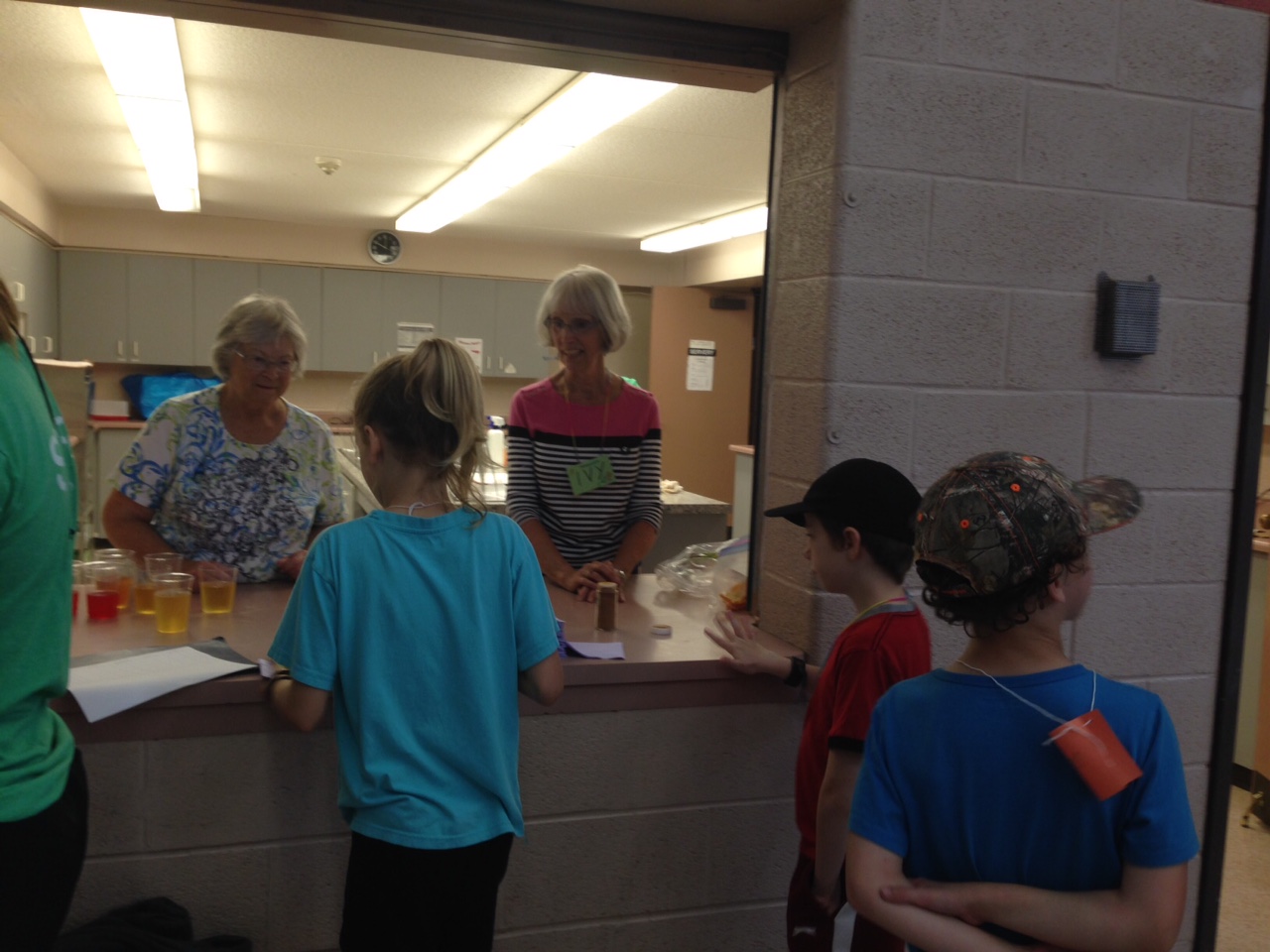
Wow, it is hot today!  But we are having a great morning with camp.
We have an amazing duo of counsellors from Camp Cairn here this week.  
A BIG Shout Out to Tumba and Jekko - you are awesome!


Always a favourite - Gaga Ball, by request!


Continue reading »

Canada 150: Where Pines and Maples Grow

Posted by on Sunday, July 16th, 2017 in Minister


Hespeler, 16 July, 2017 © Scott McAndless
Job 12:7-10, Psalm 8, Matthew 6:25-33
I
grew up in the church and so, from a very early age I was told about God. I heard about what God was like and what he wanted from me. I absorbed stories about God’s priorities and actions and I even learned how to speak to God in prayer. But I do not think that I can say that I actually met God in my early life in the church or in my family.
      No, I would have to say that the church taught me about God, but it was Canada that introduced me to God. At least that is how I think of it. For me, and I’m sure that this is true for many Canadians, I feel that the most authentic experiences of God that I have had have happened when I left behind the cities and found myself in Canada’s vast untamed wilderness – mostly, in my case, up in the Muskokas. Consider this:


      Have you been there, standing in a grove of trees, massive trunks around you on every side making you feel as if your strongest bones are like bendable twigs? Have you stood underneath the great green canopy, a vault more magnificent over your head than what any architect has achieved in any earthly cathedral or temple?
       Have you ever crawled out of your tent just as the sun peeks over the horizon in order to push your canoe out over the stillest and calmest waters in all creation? Have you heard the call of the loon echo across the water as the other birds begin their calls from the surrounding woods? And have you slowly and silently dipped your paddle into the water to make your bow cut through the thin wisps of fog and known them to be far holier than the all the clouds of incense that have ever poured from a golden jewel encrusted censer?
      But, most of all, have you ever gone out on cloudless and moonless night when you are far from any artificial source of light? Have you raised your eyes to the heavens and suddenly found yourself in the midst of a universe so vast that you knew you were nothing. And, at the same time, were the stars and the great river of the Milky Way so bright and so close that it seemed as if you would be able to touch them if only you managed to stretch your fingers a little higher? Have you heard the song of the stars just before dawn singing together – singing, it is to be admitted, at a frequency that cannot be detected by any human ear, and yet, all the same it is the most perfect and holy oratorio that ever could be.
      Have you done these things? I have. And I have seen the night sky light up with dozens of meteors in a few minutes, I have felt the power of an approaching thunderstorm and relished in the calm that has fallen after it has passed over. And I have seen God in seeing and experiencing all of these things.
      I suspect that many of you have had these kinds of experiences, though not in exactly the same ways that I have because such experience is intensely personal. And we are not alone. I believe that the very first place that human beings encountered God and knew themselves to be in the very presence of the divine was when they were confronted with the incredible beauty and majesty of nature.
      The Bible makes this point often. In the Book of Job, the main character is on a continual search for God. He desperately wants God to appear before him so that he can confront God with all of the bad things that God has allowed to happen to him. Job wants to judge God and he gets rather frustrated that God doesn’t show up. Nevertheless, Job admits that, if you look in the right places, God is not so hidden as he has been pretending: “ask the animals, and they will teach you;” he declares, “the birds of the air, and they will tell you; ask the plants of the earth, and they will teach you; and the fish of the sea will declare to you.” Clearly the natural world has access to certain truths that escape the rest of us. “Who among all these does not know that the hand of the Lord has done this? In his hand is the life of every living thing and the breath of every human being.”
      This is the same truth that Jesus was trying to point out when he famously invited his disciples to “look at the birds of the air” and to “Consider the lilies of the field, how they grow.” Now the point in what both Job and Jesus is saying is not that the natural world will teach you theology – it will not explain to you all of the human ideas about who God is supposed to be and how God is supposed to act. What it will teach you is something much more important: that you can trust in God.
      I think it is important to note that, according to these passages, reflecting on nature may not give you the answers to all the questions about God that you might have. It will not, for example, answer the question that Job is most desperately asking throughout the book that bears his name: why does God allow bad things to happen to good people. It will not answer the question, “where is God when there is suffering?” (That question was most definitively answered in the life, suffering, death and resurrection of Jesus of Nazareth.)
      But the promise is that, if you reflect on the natural world that God has created and when you see the ways that all parts of it work together to meet the needs of the birds of the air, the flowers of the field, the animals and the fish of the sea, you do indeed see that there is a compassion and care built into the creation itself that teaches you profound and true things about the character of God. It teaches you that God is a heavenly Father that you can trust even if you do not completely understand him.
      In our Psalm reading this morning, the magnificent display of the stars in the dome of the heavens speaks a somewhat different truth: “When I look at your heavens, the work of your fingers, the moon and the stars that you have established; what are human beings that you are mindful of them, mortals that you care for them?” Here the lesson is about the smallness of humanity – a way of putting our own small concerns into a bit of a cosmic perspective. And yet, even here there is a message of God’s concern for God’s human creation for those who will hear it: “Yet you have made them a little lower than God, and crowned them with glory and honour.”
      I have done my studies in Bible, in theology and church history. I have learned all of the ways that human beings have developed to talk about God, about the trinity and the nature of salvation. I have engaged in endless discussions of theodicy – the same question the Job asks in his book, the question of how we can justify the things that God allows to happen – and have found answers that at least make some logical sense. These have been good discussions that have helped me to grow. But still I would argue, the greatest and most enduring lesson I ever had about God came from the woods, the lakes, the rivers and the vast open skies of Canada.
      I know that God is present everywhere and that there is truly no place where God is not fully present, but I will still insist that God is closer when I am in such places because this is not about what makes logical sense. This is about encountering God in your heart, not in your understanding.
      If you have ever been out in the woods or on the lakes and rivers or up in the mountains of Canada, I suspect you know exactly what I have been talking about. If you haven’t, then maybe you don’t. But I promise you that there is a truth in what I have been saying.
      The question is, if there is truth in it, what do we do with that truth? How can we apply it to our lives today? The first thing I would say is this: if God is uniquely experienced in the wildlands of Canada, then, for God’s sake, let us not cut ourselves off from such places.
      I know that can be hard for some of us to do. Modern life seems to conspire to cut us off from the natural environment. It is quite possible for huge numbers of people to go through their days without encountering a truly natural setting – to encounter no growing things that have not been made to grow according to some human plan. But I would suggest to you that if you do not have the time or the means to spend some quality time surrounded by nature, you need to find the time and create the means. Your spiritual life – not to mention your general health – will only improve.
      Of course, one of the reasons why many of us have trouble encountering nature is that it is disappearing in too many ways. Yes, there are enormous swaths of it here in Canada – places where you can travel all day without seeing a human-made structure. But our ability to affect and damage even those huge swaths of land has grown until it is out of control. Our energy and mining projects are destroying habitats. Our consumption patterns are affecting the climate and we need to think carefully about what we do in response to that.
      I know that both Job and Jesus said that you could look at nature and see in it the proof that God knows how to take care of all his creatures including us. But we have taken the wrong lesson from that. We have thought that it meant that we could just go and take and take and take from nature as if it were an inexhaustible resource that we could never deplete or destroy. That was never the message and thinking that way has taken us to a dangerous place.
      What Jesus and Job were talking about was living in relationship with the natural world – entering into a conversation with the birds of the air and the flowers of the field. These things can only teach us that our heavenly Father is looking out for us when we don’t see them as something merely to exploit to enrich ourselves. If the natural world doesn’t teach us some humility, doesn’t teach us to say, “what are human beings that you are mindful of them, mortals that you care for them?” then we have clearly missed the lesson.
      So I do believe that another application of these passages is to rethink our relationship with the natural world – to learn not to see it as something merely to be exploited or as something that will just absorb our waste. This, too, is a way of finding God in the woods, lakes, rivers and mountains.
      The second verse of O Canada is rarely sung, but I’m told that it goes like this, “O Canada! Where pines and maples grow. Great prairies spread and lordly rivers flow. How dear to us thy broad domain, From East to Western sea. Thou land of hope for all who toil! Thou True North, strong and free!” And it is certainly true that this natural beauty is something we find very dear indeed. But it is more than that too. It is a place where God has made Godself known to us – where God draws near for those who have eyes to see him. For this we give thanks, but for this we also pray, “God keep our land glorious, free and alive with such beauty.”
     

#140CharacterSermon The church taught me many things about God. Canada's wilderness introduced me to God. #Canada150 #GodKeepOurLand        
Continue reading »