Category: Minister

Minister’s blog

Why I Made a Controversial Notice of Motion

Posted by on Tuesday, April 16th, 2019 in Minister

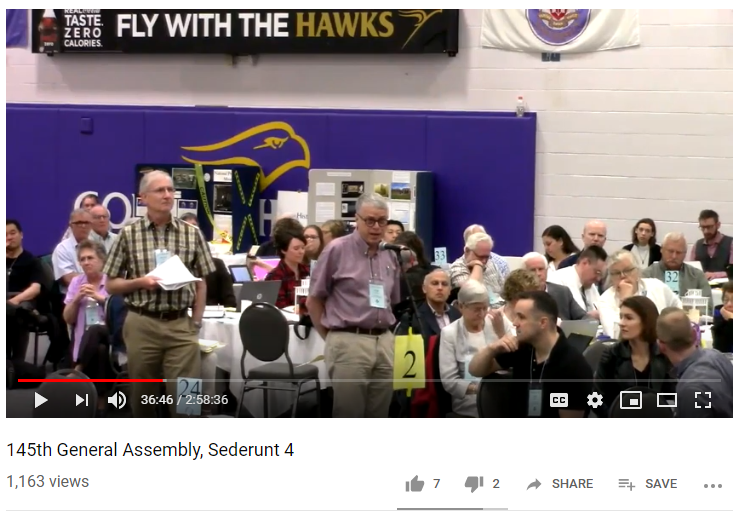
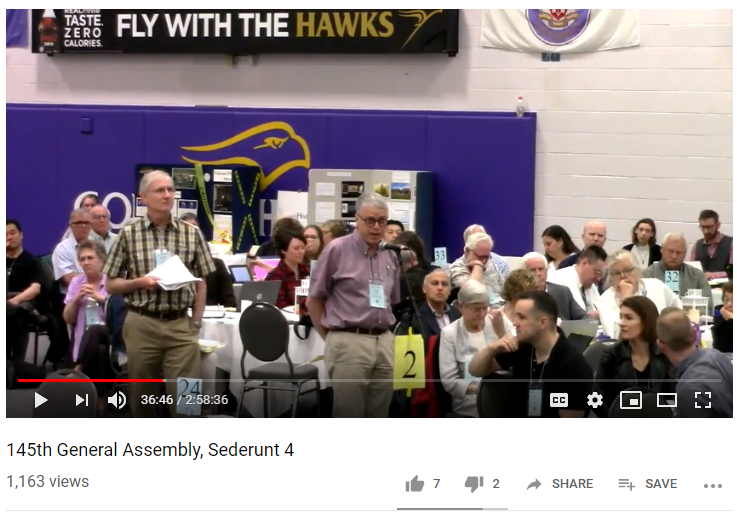
About a month ago, I made a notice of motion at a meeting of my Presbytery – Waterloo-Wellington. A notice of motion is basically a heads-up – an indication that you intend to put forward a motion for debate that will bring significant change or that might be controversial.

This was the notice that I gave:

At a future sederent, I will move or cause to be moved:
That the Presbytery of Waterloo-Wellington insert in an appropriate place in its standing orders the following section:

Recognizing Affirming Congregations:

Recognizing that there is a variety of opinion and theological understandings of the place of people who identify as LGBTQ+ in the life of the congregations of our presbytery, the Presbytery of Waterloo-Wellington would like to affirm that an inclusive and affirming approach is valid and has been chosen by a number of our congregations. We reflect this affirmation in the following standing orders of our presbytery.

  1. The Presbytery will perpetually extend the philosophy of amnesty adopted by the General Assembly to enable to work of the Rainbow Communion to all of the work of the Presbytery; the Presbytery will engage in no discipline regarding the revelation that any member of Presbytery or member or adherent in any congregation within its bounds identifies as LGBTQ+.
  2. The Presbytery will engage in no discipline of a teaching elder who, with the support of his/her session, presides over or participates in any marriage that is considered legal in Canada. The presbytery will not compel any minister or session to perform a particular marriage. The presbytery will recognize the status of any legal marriage in Canada.
  3. Presbytery will continue to exercise oversight and discernment over every student and candidate for ordination. The sexual orientation or gender identity of any potential candidate will not be entertained as a cause to call their call to ministry into question.
  4. In processing calls, the Presbytery will continue to exercise all due diligence as directed by the Book of Forms. The Presbytery does not consider that the sexual orientation or gender identity of a potential candidate can, in itself, cause a call to be invalid.
  5. Interim moderators must not prevent congregations from considering a candidate solely on the grounds of gender identity or sexual orientation.
  6. The Presbytery will not use its authority to compel any congregation to take specific actions to be more affirming. It will continue to engage in dialog and discussion on the matter.
I would like to take the opportunity in this blog post to offer some explanations for why I decided that it was necessary to make such motion a meeting of the Presbytery (called a sederent) in the near future.

The state of the discussion

Many people will know that the Presbyterian Church in Canada has been talking about the place of people who identify as LGBTQ+ in the life of the denomination for quite some time – for a couple of decades really. There have been some changes and certainly many shifts in attitude in that time, but the denomination as a whole has not really resolved anything. Another report, prepared by former moderators of the General Assembly will be presented to the General Assembly this June. I certainly hope and pray that it will enable some constructive discussion, but I have little expectation that it will resolve the question in any conclusive way.

Presbyterian congregations joyfully participate in a Gay Pride event
But meanwhile, a number of congregations have come to some resolution. Leaders in those congregations, both clergy and lay, have taken a serious theological, biblical and ecclesiological look at the question and come to the conclusion that not only is it possible for them to welcome all members of the LGBTQ+ community into the lives of their congregation but that this is a faithful way for them to live out the Christian gospel.

Thus, these openly welcoming and affirming congregations exist. They are doing their best to live out the gospel and there is much evidence that God is at work in their midst. That is not to say that all such congregations are thriving and growing numerically. They face the same challenges that all of our congregations face in terms of demographic and societal change. Some are growing, some are holding steady, some are shrinking. Affirming congregations don’t seem to differ significantly from the overall trends. I’m not suggesting that what they have done is a panacea for all congregations. Nevertheless, the evidence is there that the Holy Spirit is at work in those congregation. The Spirit is present in changed and changing lives, in meaningful mission and purpose. That is the evidence that matters.

The Presbytery is Responsible for its Congregations

In our polity, the presbytery is responsible to care for and give oversight to all congregations in its territory. This has always meant supporting congregations that have various ways of living out the gospel and that have differed in many ways. The Presbytery is required, therefore, to give thought to how it supports its affirming congregations.

There is a reason why our system of church government is called Presbyterian. It is because the Presbytery is the key body in the whole system. The Presbytery plays a key role particularly in the care of congregations. It is the body that is responsible for the care, conduct and discipline of clergy. It is also the body that ordains ministers and has the authority to judge whether a call to ministry is a true Gospel call.

In my motion, I have focused only on those areas of responsibility that rightly belong to the Presbytery. The Presbytery does not declare doctrines or set educational standards for clergy, but it is responsible for discipline and ordination.

I have written this motion because I believe that the Presbytery of Waterloo-Wellington has no desire to discipline its members because of such things as sexual orientation or gender identity. I also do not believe that we would discipline a minister who carefully considered all of the theological and practical questions and was willing to participate in some way in a same-sex marriage. Indeed, some of these things have happened and we have not engaged in any discipline. Some of these things have happened in other Presbyteries as well with no resultant discipline. I simply desire to make the reluctance of the Presbytery to discipline in such cases a matter of our policy.

I also believe that my presbytery, if presented with a call to ministry that was well supported by a congregation and that was otherwise in good order, would not reject such a call merely on the basis of a candidate’s sexual orientation or gender identity. So why not declare that as policy as well?

Of course, I might be wrong. That may not be where the Presbytery is at this moment in time. That is why I put this forward as a motion to be debated and decided on by the full body of Presbytery.’

Is this the time?

Some have suggested that this is not the time to put forward such a motion. There is a committee working on such matters that will be reporting to the upcoming meeting of General Assembly. Should we not wait for the moderators to do their work and for the Assembly to make its decisions? I certainly support the work of the moderators and the General Assembly. I will be a part of that Assembly as a commissioner and plan to fully participate. The General Assembly must decide how it may best take care of its responsibilities and duties. But that does not remove the need for the Presbytery to deal as positively and constructively as it can with the congregations it is responsible for – all of the congregations. I feel that for the Presbytery to declare how it wants to deal with its affirming congregations now can only contribute to the ongoing conversation in a helpful way.

Of course, that too is up to the Presbytery. I intend to present my motion to the Presbytery in May. It may, in its wisdom, choose to take a vote, or defer or table the motion until after Assembly meets. I will respect the wisdom of the Presbytery in that. If a vote is taken, there may well be an appeal and I would appreciate the clarification of these important matters of the rights and responsibilities of the Presbyteries that such an appeal would surely bring.
Continue reading »

Palming off the palms

Posted by on Sunday, April 14th, 2019 in Minister

Hespeler, 14 April 2019 © Scott McAndless – Palm Sunday
Psalm 118:1-2, 19-29; Luke 19:28-40, Isaiah 50:4-9a, Philippians 2:5-11
T
oday is Palm Sunday – the day when the church celebrates the triumphal entry of Jesus into the city of Jerusalem. Every Christian knows that. Every year we read the story of that day. If you follow the lectionary (as we are doing this year) one year you read the account in the Gospel of Matthew, the next year in Mark and the next year in Luke. So I was very eager this year to turn to Luke’s account of the story of that day. What new insight would I find into the palms and that meaningful entry? So I read the passage… and I honestly could not believe what I saw.
      I read it through once and I just thought that I missed them, so I read it again. Nope, still weren’t there. What is missing in Luke’s story? There are no palms and no triumphal entry in the Gospel of Luke. I went and looked it up on Wikipedia and Wikipedia assured me that, yes, that they were there, but I couldn’t find them. I thought it might be a translation error. I actually went and got out my Greek text of the New Testament and looked in there. But there are no palms in the original Greek text and not in any English translation that I could find. The Gospel of Luke’s story of the triumphal entry on Palm Sunday contains neither palms nor entry.
      Are you shocked? I was. I’ll bet you didn’t even notice when we read it. I’ve been reading and preaching on this passage for years and I never noticed it before. Luke states that the disciples lay their garments on the ground as Jesus went past, but there is not a single word about waving greenery either in people’s hands or on the ground. What’s more, while Luke does describe Jesus’ approach to the city from the Mount of Olives, his account of the event ends while Jesus is still outside the walls.
      So what am I saying here? That we should gather up all of the palms that the kids were waving around this morning and throw them away? Am I suggesting that we did something wrong this morning by re-enacting it as we did? No, not at all. The mere fact that Luke doesn’t mention palm leaves doesn’t mean that there weren’t any there. And just because Luke cuts off the account before Jesus arrives in the city doesn’t mean that he didn’t make a triumphal entry. Of course he did. In fact, there is evidence that Luke knew that palms were part of the story, they were in his source material. But that leaves us with another question, doesn’t it? If Luke knew that people had them there, why didn’t he mention them?
      Well, consider this: what if Luke knew what he was doing? Have you ever wondered about why the palms were there in the first place? Why is it that a crowd of people who were excited about the arrival of Jesus in Jerusalem just spontaneously all went and broke down branches and started waving them around and throwing them on the road? I have seen a lot of people in crowds or spontaneous demonstrations. I have seen people do a lot of things in those situations and use a lot of props, but I have never seen anybody cutting down branches to use as a part of a demonstration. So, if the people were doing that particular thing on that particular occasion, they must have had a reason. The palms must have meant something to them. And indeed they did!
      I’m going to have to give you just a little bit of history here to explain. As you know, in Jesus’ time Judea and Galilee were under Roman control. But before the Romans had come along and conquered the region, Judea had actually been an independent kingdom that was ruled over by a Jewish dynasty known as the Hasmoneans. When the Romans took over they ended the Hasmonean dynasty and put their own puppet king in charge of the region, a guy that you might have heard of named King Herod the Great. Later some parts of the region, such as Galilee, passed on to King Herod’s sons while Rome took on direct rule of other parts, such as Judea.
      Okay, what does that have to do with people waving around palm branches on Palm Sunday? Everything. What if I were to tell you that palm branches where a symbol of the Hasmonean dynasty? That’s right, thousands of ancient Hasmonean coins have been found marked with the symbol of crossed palm branches. Now, do you think that it was just a coincidence that the people cut down palm branches on that day?
      And think about what all of this would have looked like, especially to the Romans. It is only days before the great feast of Passover, the day when the people of Israel celebrate the time when their God freed them from being slaves to a great empire and a large procession of people approach the city of Jerusalem from the Mount of Olives where everyone could see them waving the symbols of the very kings that the Romans displaced when they took over and hailing somebody in their midst, somebody riding on the back of a donkey, as a king.
      I’ll tell you what it looked like. It looked like sedition. It looked like open revolt. Is it any wonder that, within a matter of days, the guy who had been riding on that donkey had been arrested and nailed to a cross?
      The people waving palm branches was roughly the equivalent of people today wearing orange to an NDP or blue to a Conservative or red to a Liberal rally, except, of course, that those parties are all legal in Canada. The Hasmonean party, if you can call it that, was not legal.
      So, having learned all of that, the mystery of Luke’s story of a palm-free Palm Sunday is an even bigger mystery to me. Why did Luke leave out the palms when all of the other gospel writers mention them? I’m convinced it must have been a deliberate decision. Is it possible that Luke was concerned about the idea that Jesus and the people with him might have indeed been making a political statement that day?
      I think I know exactly how Luke felt. I too am feeling pretty cautious about political statements these days. Can I be candid here? I’m a bit worried about what the political environment in this country might look like over the coming months. We are heading towards a federal election as you know, and I fear that it will be one of the most divisive we have seen in recent times. The problem, in my mind, is not the parties or their policies (though I won’t say I don’t personally have some concerns about both); the problem is the context that we find ourselves in. We are living in a time when fewer and fewer Canadians get their news and information from reliable sources – a world where a totally made up meme posted on Facebook or Twitter is read by many more people than a well-sourced and researched article in a reputable newspaper.
      I am worried that we are living in a country where increasing numbers of people are so entrenched into their positions that they immediately dismiss as fake anything that doesn’t fit the narrative that they have already bought into. Please understand, I am not saying that it is only one party or one group that is doing this. I am seeing it happen on all sides and I have even caught myself doing it as well. I worry about where that will lead us. I’m not scared that the result will be this brand of government or that one. I’m worried that the road to that end will bring to light all kinds of hatred, racism and destructive rhetoric. I fear that we will all be brought lower as a result.
      Now maybe I am wrong and it won’t be like that. I hope I am. But it has certainly made me think a lot about how we as the church participate in the political discussion. I do not believe it is the place of the church in a democratic country to be political partisans. You will never hear me endorse a particular party or candidate in the church, though I will always vote as a citizen. Nor do I expect that we should all agree in the church on how to vote; it is a healthy sign that we don’t.
      But, when Jesus went to Jerusalem and the people responded to his coming by grabbing onto a symbol of a certain political idea – palm branches – did Jesus rebuke them? No, but clearly not because Jesus endorsed that particular political idea. He let them do it because he knew that they had deep aspirations and needs, they were grasping for some way to express those things and they gravitated towards the palm as a symbol. It was an imperfect expression of their real hopes. In many ways, the palm leaves are like the political symbols, memes and fake news stories that people cling to today. I don’t think that we should blame people for being attached to such things, but at the same time, I think we should recognize that the issue is not the palm branches. The issue is the deeper drive that makes people grab onto those palm branches and wave them around.
      So, in some ways, I think Luke had it right. He was right to leave the palms out of Palm Sunday because the political partisanship of the moment was not actually what mattered. What mattered was what was going on in the people’s wounded hearts. That’s what Jesus was responding to. And Jesus recognized that there was no denying that. That whole incident at the end of this morning’s reading when the Pharisees come up to Jesus and tell him that he needs to shut down this dangerous political demonstration (and that is what it was), and Jesus responds by saying, “I tell you, if these were silent, the stones would shout out” – basically saying that there is no way to shut this down because you can’t silence the aspirations of the people – that is found only in the Gospel of Luke. And it represents a very important insight. Clearly, Jesus is not interested in getting caught up in the dispute between the Roman Empire and the partisans of an old Jewish dynasty, but he is there for the people and he’s not going to shut them down. He’s going to meet them where they are.
      And I think there is a model in that for the church in our present and somewhat difficult times. Yes, it is not the place of the church to get in the middle of partisan fights. But people are struggling. There are issues, often called hot button political issues, that are deeply affecting people’s lives – issues like poverty, immigration, racism, sexism and general inequality. The church doesn’t call these political issues; we call them justice issues, but to the outside world they often look like the same thing. And we can try to ignore those issues, but Jesus warns us that if we do try and shut those discussions down, we will fail. We try to ignore what the people are calling for and the stones will cry out in their place.
      The church needs to speak out, to cry out for what is just and right. In a world where truth has become little more than whatever people have already decided to believe no matter what the evidence is, we need to put it all on the line for certain truths. In a world where it has become easy to demonize and scapegoat anyone who disagrees with you – to call them the enemy of the people – we need to be a community where reconciliation is possible, where we pray for our enemies and love them. In a world where people are constantly told to look out only for what is in it for them, we need to be a place where the first must be last and the servant of all.

      Indeed, many of the things that most disturb me about our present political climate have their antidote in the church – or at least in the church as it is meant to be. I think we can lay down our palms – our partisan symbols – when we enter into the church community, but we have much that we could bring to the political discourse if we dare to speak up. It is our role and it greatly needed in the world today. I hope that the church steps up to that role in the days to come.
Continue reading »

One Perfect Afternoon

Posted by on Sunday, April 7th, 2019 in Minister

Hespeler, 7 April, 2019 © Scott McAndless – Lent 5
Isaiah 43:16-21, Psalm 126, Philippians 3:4b-14, John 12:1-8
I
 remember one perfect afternoon when I was in grade 6. It was a winter’s day and after school a friend and I had stayed late. We were having fun in the schoolyard. The hills behind the school were covered in ice and snow and we were sliding down them. And we were having so much fun particularly because my winter boots at that point were kind of old. The tread was all worn away and so I was able just slide all the way down the hill on my feet. It was so much fun. It was a perfect afternoon and I never wanted it to end.
      And then my mother came along. You see, she had been waiting for me at home and wondering why I was taking so long so she came to look for me. She had decided that today was the day I needed to get new boots. She had noticed something. She had noticed that my winter boots were really old. So old, in fact that the tread was, like, completely worn away. We had to go shopping for new boots and we had to go now.
      So I went. And my mother has never said anything, but I suspect that what happened next was probably one of the most frustrating experiences has she ever had shopping with me because, well, none of the boots that we tried on were what I liked. I couldn’t, or at least I didn’t, explain what was wrong with every pair of boots that I tried on, but I’ll tell you right now what was wrong with them. They were all winter boots and, as winter boots, they all had treads on the bottom. And that was the last thing that I wanted because if I got boots with winter treads on them, I would never be able to go sliding down the hills behind the school standing on my feet again. I would never again have that perfect afternoon.
      Well my mother was not going to leave that shoe store without a new pair of boots for me. So there was nothing for it but that I choose a pair and finally I found them. They were ugly. They had these weird high heels on them. They were actually really kind of heavy so that if you walked too far your feet would drag. But they had one thing going for them: they had virtually no tread. I don’t know what my mother thought about my taste in boots. I’m quite sure she didn’t know what I was basing my decision on. But at that point, I’m sure she just wanted to get out of the store. My winter boots had been chosen.
      I’m sure you can guess the rest of the story. Spring came soon after. I graduated from that school and went to another school that was a much longer walk. I never again had the opportunity to slide down those hills on my feet. And I was stuck trudging along in those ugly, heavy boots for many years to come.
      And I think I’ve gleaned a little bit of wisdom from that experience. It is probably not a very good idea to make a life decision based on wanting to go back to one perfect afternoon. And I’ve noticed that nobody ever talks about that side of success and perfection. When something goes extraordinarily well, it can sometimes doom us to future failure.
      You know, the people of Israel once had a perfect afternoon. It was amazing. There they were, trying to escape from lives of slavery in Egypt when they were caught, red handed, between a hostile army of horses and chariot drivers and an uncrossable body of water. They were sure they were done for. They were getting their affairs in order. And then, a miracle happened. God made a way in the sea, a path in the mighty waters.” It was a path that they could follow on foot but when the chariots tried to chase them their wheels stuck in the muck. “They lie down, they cannot rise, they are extinguished, quenched like a wick.”
      It was perfect – they were saved, chosen and beloved by God and their enemies got everything that they deserved. And so they told the story of that perfect afternoon over and over again and who wouldn’t forgive them if the story grew a little bit in the telling over the years. But here is the thing. The story was so perfect that, generations later, they were still trying to make it happen again. They were still buying winter boots without treads just in case they might have the opportunity to go sliding down the hills on their feet. No, wait, that’s not quite right. Let’s say that they kept buying rubber boots just in case they had to go wading through the Red Sea again.
      And you might think that that should be a good thing, that we should remember those moments in our history when God did something truly amazing for us. And of course that is true. But the fact of the matter is that that perfect afternoon was creating big problems for the people at one particular moment.
      You see, the people were in a position once again where they needed God to save them. But they weren’t slaves in Egypt. They were exiles in Babylon. And you might say to that, fine, what’s the problem with that? Surely the God who could save them from Egypt could save them from Babylon too. You would think. But it seems that they were having problems. There wasn’t a Red Sea between Babylon and their homeland. What there was instead was a huge uncrossable desert. They were so stuck back in the time when God saved them by creating a path through the sea that they couldn’t imagine that God could save them by creating a path through an uncrossable desert. They had bought rubber boots and they were no good for walking in the desert. That is the only way that I can understand the message we read in the Book of Isaiah this morning.
      “Do not remember the former things, or consider the things of old,” says the prophet. Now normally that is not something that we would expect to read in the Bible. Usually the people are being told to remember what God has done for the nation in the past. But, no, this prophet insists that they must forget it. Why? Because God says, “I am about to do a new thing; now it springs forth, do you not perceive it? I will make a way in the wilderness and rivers in the desert.” You see, that is their problem. They do not perceive it. And the reason why they do not perceive this new thing that God is doing is because they can’t forget that perfect afternoon that they had so long ago. They can’t stop trying to go back there.
      I sometimes wonder if this isn’t the problem that we also have as the church these days. It’s not that God is unable to save the church, that is, to give to the church a future that is exciting and meaningful. God is doing that and it’s going to do that. Our problem is that we do not perceive it. The reason why we don’t perceive it? It’s probably because we remember one perfect afternoon. and the perfect afternoon that we remember doesn’t include sliding down snow-covered hills or jaywalking across the Red Sea. The perfect afternoon that we remember is that moment when everything seemed to be just right in the church. And I realize that that perfect afternoon occurred at different times for different people. For some people, the perfect afternoon of the church happened back in the 1960’s and 70’s when Sunday Schools were full to bursting with the children of the baby boom. I don’t know how many times I have had people paint the picture of that particular perfect afternoon for me. But other people may locate that perfect afternoon of the church at another point in time – especially at a moment when the ministry of the church may have fulfilled a particular need for them or touched a particular nerve.
      The problem is not that we have such perfect afternoons in our memories of the church. Nor is the problem that we may sometimes remember them in some idealized way (forgetting some things about them that were less than perfect). The problem comes when we are so fixed on that perfect afternoon that we do things like try to revive programs that no longer work, or we reject new ideas or new ways of doing things because they do not look like that perfect afternoon or we criticize something that is happening that is really good because it doesn’t look like or measure up to something that happened during the perfect afternoon. When the memory of that perfect afternoon means that we cannot perceive the new things that God wants to do and is already doing among us, then we are certainly better to “not remember the former things, or consider the things of old.”
      So, I do think that the wise words of the ancient prophet do apply very powerfully to our collective life as the church today. But there is also an individual application that the Apostle Paul would bring to our minds in the reading from his Letter to the Philippians today. Paul is speaking to the Christians in Philippi in this passage about his own struggles to be a faithful follower of Christ. He looks back on the perfect afternoon of his own life and says he was circumcised on the eighth day, a member of the people of Israel, of the tribe of Benjamin, a Hebrew born of Hebrews; as to the law, a Pharisee; as to zeal, a persecutor of the church; as to righteousness under the law, blameless.”
      Paul is here looking back at a very idealised time in his life. It was basically a time when everything made sense. He had answers to every question. He knew what was right and he knew what was wrong and he knew what he had to do in every circumstance. Yes, that sense of certainty that he had made him do things, like persecute the church, that now horrify him, but he cannot deny that it just felt right at the time. And Paul could have held onto that perfect afternoon, kept trying to go back there, but it would have meant missing out on this incredible new thing that God had done in Jesus Christ. It would have meant missing out on the wonders of God’s grace and the power of Christ’s resurrection.
      But even after Paul had given in and become a follower of Christ, he could still have spent all of his energy trying to get back to that perfect afternoon. He could have become one of those Christians who was always trying to say he was better than everyone else and that he had it all right. Paul knew that that was the danger and so he made a conscious choice. He would forget what lay behind and strain forward to what lay ahead. He would press on toward the goal for the prize of the heavenly call of God in Christ Jesus.
      My friends, we have all of us been blessed to have had perfect afternoons in our lives both individually and communally. We have those moments in time where everything just seemed to go so well. That can be a wonderful blessing but the warning of Paul and of the prophet is that it can also be a curse. I invite you – I invite all of us – to examine the things that we do in our Christian life. Ask yourself, are you buying boots in the hope of recreating a perfect afternoon that will never happen again? Think of some of the decisions you make, some of the things you buy. Are you doing things, trying to recreate a memory of a time that may be wonderful but just won’t happen again?

      I don’t blame you for doing that. I’ve done it myself, as I have confessed. But I will remind you that the danger is not that you might end up wasting your mother’s money on boots that you don’t really like (if you know what I mean). The real danger is that you might not perceive the new thing that God is doing in our midst. And I’ve got to admit that that is my greatest fear, that I, that you and that we together as the church might miss out on the great new thing the God has probably already begun to do in the world today.
Continue reading »

While I kept silence…

Posted by on Sunday, March 31st, 2019 in Minister

Hespeler, 31 March, 2019 © Scott McAndless
Joshua 5:9-12, Psalm 32:1-11, 2 Corinthians 5:16-21, Luke 15:1-3, 11b-32
W
e read a story today – a rather famous story told by none other than Jesus – in which a young man gets a number of things tragically wrong. He goes to his father and asks to receive the inheritance that will rightly be his upon his father’s death. That is a bad thing to do. He is basically saying to this man who has done everything for him that he doesn’t value him as a father. He is saying that he would rather have him dead so that his value can be converted into cold, hard cash.
      Can you imagine how much it would have hurt for a father to hear something like that? I’m pretty sure it would have broken his heart. And that is all on the son. But the father, perhaps recognizing his own imperfections in the parental role (for, I’m sad to say, there is no such thing as a parent who gets it all right) gave in to his son’s demand. Perhaps he was at a loss and didn’t know what else to do.
      But the young son was not finished making bad choices. He went away to a distant land, foolishly thinking that he would leave all of his problems behind him. That is a strategy that almost never works. His problems went with him because he carried them within. The next mistake was to waste the precious resources that had been maintained and passed down by his family for generations. He threw it all away because he did not know its true value. He made bad connections – befriending people who did not value him for who he was but merely for what they could get out of him. Such people never make good friends.
      The young son truly did mess up. But, you know what, I’m not going to write him off because of all that. Yes, he was foolish. Yes, he valued the wrong things. Yes, worst of all, he deeply hurt people who cared about him. But I have done that and so has pretty much everybody else. I think I’m actually pretty fortunate that, when I messed up, the consequences that were visited upon me did not lead to me sitting starving in a pigpen and dreaming about eating the food that I was supposed to feed the pigs. But it could have. I suspect that all of us have made mistakes in our lives that, had the circumstances been right, would have lead to a similar dire situation.
      For example, one good way that someone the age of that young son can really mess up their life is by not taking their education seriously. A young person who is not interested in study and work – who only sees school as a place where they plan for their next party – runs a very serious risk of messing up the remainder of their life. We all agree that is true, right?
      But is it? It may well be true if you are poor, a member of a racial minority or don’t have other advantages, but there are other young people who seem to have this privilege of being able to mess up without worrying about consequences. We just heard about a scandal in the last couple of weeks in which wealthy parents bribed their children into the best of colleges and universities regardless of how seriously those children had taken their education. Some people are spared the worst consequences of their errors because of who their parents are or because of other advantages that they have. But I think we can probably all say that we have done some things that could have, given the right circumstances or the lack of certain privileges, landed us in a very bad place.
      What I’m saying is that I am not willing to condemn the young son because he messed up. Neither, by the way, is his father. And since Jesus told this parable in a way that clearly was trying to teach us something about God, neither does God. The crisis in this story is not that somebody sinned or made a big mistake. Sin and error are just part of what it means to be human. Sin, as a problem, is something that God has taken care of. That is what the coming of Jesus is all about. The crisis is in something else.
      That brings us to the words of the psalm that we read together this morning. It is what is called a penitential psalm – a song that was written to be used by worshipers who have messed up and want to make things right. It is a prayer that certainly could have been prayed by the young son at his lowest point. But, as a prayer, it also points out where the biggest problem is. The penitent says this, “While I kept silence, my body wasted away through my groaning all day long. For day and night your hand was heavy upon me; my strength was dried up as by the heat of summer.”
      You see, sins, mistakes errors and screw-ups they can all be overcome. In fact, they have all already been overcome. Jesus came and he was obedient even unto the cross so that the power of sin over the lives of people might be broken. We do not need to be in bondage to sin, not here and now and not in the life to come either. But people are in bondage. Many people are caught in patterns of disobedience or dependence. Many people are victimized by violence or hatred. Many more are trapped in the consequences of their own foolishness or of the evil systems set up by others. So what is the problem? What is it that keeps us in bondage to all of these things? I think that this psalm hits the nail on the head. The problem is silence.
      I mean this certainly applies to the young son in the parable of Jesus. I suspect that he knew very early on that he had messed up. He knew it when he saw the hurt in his father’s eyes as he made his request for the inheritance. He knew it when the wild life that he was living in that far distant country did not satisfy him. He knew it as he watched the people that he had thought were his friends turn away from him when his money ran out. But clearly there was a long walk from knowing the truth of his errors and speaking them aloud even to himself. He held his silence. Why? Out of pride; out of a stubbornness that is common to us all. (The psalmist also hits the nail on the head when he compares us to, “horse or a mule, without understanding.”) He kept his silence out of fear of further repercussions. The reasons for his silence might have been many, but the fact of the matter is that his situation only went downhill while he kept silent about his errors.
      But as soon as he decided to speak, everything changed. I’m not saying that it was easy. I am quite sure that he felt a whole lot worse before he began to feel better. But that decision to speak up about how he had messed up was the beginning of healing for himself and for his father and even, I would suggest, for his older brother.
      But we all get stuck in that time of silence don’t we? You know that you have hurt somebody. You can feel it every time you are in their presence. The feelings of resentment and tension only build and build. And the longer you wait, the harder it is to move from silence to speech. But breaking the silence is truly the only way to move forward.
      It is the same thing with God. I know that doesn’t make sense to some people. Why do you have to tell God your sins or the things that you regret? Doesn’t God already know everything about you? Why do you have to say it; it can be so hard to say – hard for your pride, hard to admit your own weakness. If it doesn’t change anything for God, why do you have to say it? Well, I don’t presume to understand it all from God’s point of view, but I do know this: it certainly changes something for you when you break that silence. It is precisely because it is so hard for you – because you don’t want to do it – that speaking honestly with God about your failures can begin to change things for you. It frees you to start moving forward to new and better ways of acting and being.
      And sometimes it is also helpful to speak to God through another human being. I know that, as Protestants, we don’t buy into the whole Roman Catholic sacrament of confession. We don’t believe that you have to go through a priestly mediator in order to find forgiveness from God. But they are not completely wrong in their approach. Sometimes speaking to a wise and trustworthy spiritual counsellor – to speak aloud to another human being our regret – can be a very helpful experience, especially when the person you open up to is then able to speak to you the words of grace and forgiveness that God would speak to you because of Jesus. You break your silence and they break the silence of God and healing and hope can abound.
      There are other ways in which silence is the enemy. When people remain in silence, that is an environment in which guilt and shame breed and become ever stronger in their destructive power. Shame, in particular, is a very destructive force – especially when people are made to feel ashamed of things that are completely beyond their control. When someone feels shame for something that is simply a product of who they are (their heritage, their gender, their sexual orientation) or because of something that has been done to them (rape, abuse, other crimes) it can destroy lives. Even when people feel shame for something that is a result of their own choices, it is rarely a helpful or productive thing.
      Shame festers in silence. It spreads its destructive power to every area of a person’s life and can damage their every relationship. But breaking the silence robs shame of its power. When we speak of the reasons for shame aloud, we can realize how ridiculous they often are. And when we speak words of grace and forgiveness aloud, shame is revealed to be a powerless tyrant, defeated by God’s love.
      And what of the other sins that plague this world? Sins like racism and hatred, sins like economic systems that drive some people deeper and deeper into poverty while a few reap all of the riches and then think they can bribe their kids’ way into top colleges, sins like an opiate crisis that inflicts our entire society because countless people were driven into addiction by drug companies that, thinking only of their profits, promised doctors that they could prescribe their opioids to patients without worrying that it would lead to addiction even though this was a lie.
      Well those sins all thrive in an environment of silence. So long as people are afraid to speak up and name what is happening, these things will continue to rule in this world. So long as people don’t challenge the racism or injustice that they see, it will continue to flourish. So long as we fail to call greed the sin that it is, it will continue to be presented as a virtue and the world will never change. So long as silence is the rule, so will sin be.

      The psalmist was incredibly wise. Silence is often the root of so much of our misery. God has done so much to take care of the power of sin and guilt and shame, but the roadblock that gets in the way of us experiencing everything that God has done for us is silence. So I will close today by asking you a simple but very hard question: is there a silence that you need to break? Is there someone that you have wronged and you know it but you haven’t been able to say it to them? Speak. Do you need to break the silence between you and God about something that you have regretted or resented? Speak. Or do you need to speak up about something that is just wrong in some situation that you find yourself in? Speak. It is the simplest thing in the world, but it can also be the hardest thing you have ever done. May God give you the strength and the grace to break the power of silence.
Continue reading »

Ho! Everyone who thirsts!

Posted by on Monday, March 25th, 2019 in Minister

Hespeler, 24 March 2019 © Scott McAndless – 3rd Lent
Isaiah 55:1-9, Psalm 63:1-8, 1 Corinthians 10:1-13, Luke 13:1-9
H
o, everyone who thirsts, come to the waters; and you that have money, come, buy and drink. Come, buy and drink.
      There is a well, not all that far from here from which a certain company pumps 3.6 million litres of groundwater every day. This is a fact that upsets a few people because it is such a large amount of water from a water table that we all depend on and maybe mostly because they don’t pay anything for that privilege. Well, that is not quite right. They actually pay something – a little over $13 a day. But, considering that they then put that water in bottles that they can sell for a dollar each or more – a markup that is so huge that I couldn’t even figure out how to calculate it – you might say they pay close to nothing.
      And I realize that the whole Nestlé Aberfoyle Bottling Plant water contract thing can be a bit of a controversial topic in these parts. And I don’t mean to get into the whole political controversy around it. I mention it, simply to name it as one of the controversial issues of our time.
      The fact of the matter is, whether we like it or not, whether we are more concerned for the job creation aspect or the environmental health aspect, it is an issue that’s simply not going to go away. We are living in a world where some of the basic things of life, things like water, have become and are becoming commodities and not merely services. And there is a lot of money and jobs and investments on the line as we deal with the question of the commodification of these things. These are issues we simply cannot escape.
      And it is strange. In fact, there are times when I just don’t recognize it. I mean, this is not the world that I grew up in. This is not the world that I was promised When I was small, the notion that someone would buy a bottle of water, much less that some corporation would build a billion-dollar enterprise on the sale of water, was simply laughable. Water was a service, not a commodity. That would never change especially in a place like Canada with abundant water resources. And yet here we are. Sometimes I feel as if I’m living as a stranger in a strange land.
      Ho, everyone who thirsts, come to the waters; and you that have money, come, buy and drink. Come, buy and drink.
      The prophet had heard that song every day of his life for decades now. He was living in the city of Babylon, but he was not a Babylonian. He was a Judean, a foreigner, who had been brought there many years before by a hostile invading Babylonian army that had destroyed his land. And in Babylon, they had these water sellers. Early in the morning they would walk the streets with their song: Ho, everyone who thirsts, come to the waters; and you that have money, come, buy and drink. Come, buy and drink.
      And the Judeans had no choice. They didn’t own access to wells or streams. Since no one could live without water, they had to buy from the water sellers. This was not the world that the prophet had grown up in. In Judah, the people had possessed the land that God had given them. They dug their own wells and built their cisterns or shared them in their communities. Never, back then, could they have imagined that the song of the water seller would be a part of their lives. It was as unthinkable to them as, well, the idea of buying plastic water bottles once was to us. It was simply laughable. It would never happen. And yet here they were, living as strangers in a strange land.
      That is the situation that the prophet is speaking to in our reading this morning from the Book of Isaiah. This passage was almost certainly addressed to Judeans who were living in exile. In fact, they had been living there so long that they had gotten used to a lot of things – things like the calls of the Babylonian water sellers. They had gotten so used to it that, while they were nostalgic for the lost past, they could not see a way forward.
      And the prophet was given the task of proclaiming the word of the Lord to the people who were living through all of that. And that word, amazingly, was that God was about to do something new. There was no way to go back to how things were before exile; that way of life was over. But God was about to take his people in exile back to the land where they had once lived so they could make a new beginning.
      We don’t know what the name of this prophet was; he was just the man who took up the words of the original Prophet Isaiah from over a century before and interpreted them for the new situation in Babylon. But I think that in many ways he is the biblical prophet we need most to hear today. I think we have an awful lot in common with the people that he was preaching to. We, like them, often feel as if we are living as strangers in a strange land.
      And I’m not just talking about the strangeness of finding ourselves living in a world where water has become a commodity and a part of a corporate business plan. There seems to be so much that we find so strange about the world today. We are living in a multi-faith, multi-ethnic, multi-cultural country of Canada today that I am sure many of us never imagined when we were younger. We are living in a world where we are being forced, many of us, to think of our relationship with Canada’s indigenous people in strange new ways. We are living in a strange, constantly connected world of social media.
      And maybe especially the Christian church finds itself living in a strange new world. Thirty years or so ago, the church had a place of honour in society – why society even reserved one day a week to the almost exclusive use of the church. But today that is almost all gone, and it often feels like the church is living in a society that is sometimes even hostile to its existence.
      We do often feel like exiles living in a strange land. And, like those exiles in Babylon, we know somewhere deep inside that there is no going back to the world that used to be. But that doesn’t stop us from looking back with nostalgia and pining for that lost world. God sent the prophet to those Judeans in exile in Babylon to break them out of that attitude. He didn’t want them to live in their memories of the past, but he also didn’t want them to just become complacent where they were now. He had to break them out of both of those things because God was about to do something completely new. So how did the prophet do that?
      Well, one day he went out in the streets of the exile community and he imitated the cry of the Babylonian water sellers: Ho, everyone who thirsts, come to the waters; and you that have no money, come, buy and eat! Come, buy wine and milk without money and without price. Why do you spend your money for that which is not bread, and your labour for that which does not satisfy?” (And I’m sure that he sang it much better than that but that is probably what he did – he sang it.)
      What was he doing? He was taking the familiar song of the water sellers that reminded the people every day that they were living as exiles in a strange land, and he was changing it. He was jarring them with an unexpected twist of the familiar. Pay without money? Buy without price? Spend instead on something that is not a commodity? That wasn’t how the world worked! It still isn’t how the world works? You are kind of forced into looking at everything from an entirely new point of view.
      It makes me wonder, what might the prophet do if he were among us today? I think that he would recognize us as fellow exiles – fellow strangers living in a strange land. He would recognize the tendency that we have to look back at the past with nostalgia and see everything in that past with rose coloured glasses. He would recognize the complacency with which we look at where we are right now and how we don’t necessarily want to risk change or anything new. He would recognize us as people who are caught between a lost past and an uncomfortable present. Those were the people he was talking to in exile in Babylon and I really think that we would seem familiar to him.
      He might even recognize what all of that leads to at its worst. Some people who can’t let go of that idealized image of the past – who think it must have been always good when for example, white men ruled unchallenged – will try and take us back there sometimes by the most despicable means. They will target and scapegoat immigrants and racial minorities, blaming them for all the problems they see in the world. They will imprison children and separate them from their parents for what is technically a misdemeanour in crossing a border without proper documentation. At the very worst, they will run, guns blazing, into mosques or synagogues. These things are all things that people who are troubled do because they feel like they no longer recognize the world that they are living in. Fortunately, the vast majority do not respond to such extremes, but the fact that a few do should give us pause.
      What would the prophet do for us? I suspect he would shake us up – maybe take something familiar to us, something that reminds us that we are caught living in this world where we don’t quite feel at home. He wouldn’t use the ancient water seller’s song, of course, because that doesn’t mean anything to us. But he might do something like impersonate the Fiji water girl at the Golden Globes. But the point would not be to merely mock what’s happening in our world today. The internet is full of people mocking what’s happening in the world today. He would be doing it in order to challenge our lack of imagination. You see, we are falling into this rut where all we can see is the world that used to be, which we look back on with nostalgia and not necessarily a whole lot of accuracy – we see that and the flaws of the present world. But we can’t imagine the world that needs to be – the world that God is calling into existence. That is what the prophet was really doing for the people who were stuck in Babylon. That is what God would like to do for us.
      “Seek the Lord while he may be found, call upon him while he is near.” That is what he would challenge us to do. He’s throwing out before us the radical idea that God is actually doing something in the world today and that, if we are ready to respond, we can be part of it. I know that we have fallen into thinking that God being active in the world is something that only happened in ancient times, a time before this exile in which we find ourselves, but that is a lie and we cannot accept it.
      Even more, the prophet challenges us with these words, “For my thoughts are not your thoughts, nor are your ways my ways, says the Lord. For as the heavens are higher than the earth, so are my ways higher than your ways and my thoughts than your thoughts.” He is saying that we think too small. Our ideas are limited by what we may have known in the past before we entered this strange land of exile, and our ideas are constrained by the realities that we find ourselves living in today. God’s ideas and thoughts are not limited like that and God does not want our ideas to be limited either.

      God is calling us onwards towards the new thing, the new creation and the new possibilities. But we have a hard time dealing with that because of where we are. God is sending us messages of possibility, wants us to dream big and to be bold enough to trust him for the big things. That was what the prophet was trying to do and he was successful. He persuaded many of the exiles in Babylon to step out and risk everything to build a brand new future. Now if only we would be so faithful.
Continue reading »

One desert evening

Posted by on Sunday, March 17th, 2019 in Minister

Hespeler, 17 March 2019 © Scott McAndless – 2nd Lent
Genesis 15:1-12, 17-18, Psalm 27, Philippians 3:17 - 4:1, Luke 13:31-35
D
uring the season of Lent this year, I have noticed, a lot of our scripture readings take us into desert places. Last week we spent forty days and forty nights with Jesus in the wilderness as he was tempted. And I think you will find over the coming weeks that many other readings take us into the desert as well. The desert is a hard place to be, of course. With no food and water, you quickly become desperate. It is also far from human society and culture and that can be very hard for some. But there is also no question that the desert can be a profoundly spiritual place – a place where God seems nearer.
      In our reading from Genesis this morning, the person we find in a desert place is none other than Abraham, the great father of our faith tradition. (In this text he is actually called Abram, but, since the story of how he changed his name really doesn’t have much to do with this particular passage, I’m going to ignore that and just call him by the name that we are used to.) But it is not just that Abraham is in a literal desert in this passage. I mean, he is. He seems to have pitched his tent in a very isolated place where there is nothing to interfere with him seeing all the stars in the sky and there are vultures and other things that prey upon dead things around him. But more than a literal desert, Abraham seems to have found himself in a spiritual desert.
      How can I tell that? Well, look at how Abraham reacts when God comes to him and, in a vision, gives him an extraordinary promise. “Do not be afraid, Abram, I am your shield; your reward shall be very great.” I mean, that’s a pretty amazing thing for anyone to hear. The great creator of the universe comes to you and says that he has an enormous reward just for you! But how does Abraham react? The Book of Genesis puts his reaction kind of nicely, I mean, Abraham is one of the heroes of the Bible after all. “You have given me no offspring,” he says, “and so a slave born in my house is to be my heir.” But Abraham’s reaction is basically to say, “God, don’t talk to me about rewards. What good are your rewards if I don’t have any future?”
      That is a pretty bleak place to be. Abraham is declaring that rewards, blessings and protection are absolutely meaningless to him because of something going on in his life. I mean, if I had friends who said that to me, I would be worried about them. That sounds like depression. And what has pushed Abraham into this spiritual desert? He actually has a great deal at this point. He is a very wealthy man according to the standards of his time and place. He has honour and respect from the people around him which, in that world, counted for even more. There were many who would have looked at Abraham and said that he had it all. So where does this discouragement come from? It comes from the simple fact that he sees no future.
      Abraham sees no future because he has no children of his own. But his feelings are not just unique to him, I feel, nor even just to people who have dealt with the problem of infertility. I think a lot of people today are feeling that despair for the future. The current and ongoing environmental crisis certainly makes many people feel that way. The nuclear arms race has certainly had that effect on many as well. You can understand the feeling – what is the point of anything that I achieve or amass if there is not going to be anyone around in the future who can appreciate it?
      Honestly, the church is feeling much the same thing in many places these days. The church has so much – such a powerful legacy that it has received from the past and so many vibrant ministries and beautiful buildings. But the church – and this is something that is true almost entirely across the board – is worried about the future. Every single denomination in Canada has suffered loss of membership in recent decades and, by far, the greatest loss has taken place in the youngest generations. The church is afraid that it’s losing its children and youth. That’s just the reality and everyone is talking about it. So, I think that Abraham could sympathize perfectly with the church today; we too are asking the question, what good are God’s promises and blessings if we don’t have children or youth to pass them onto?
      Now, I would like you to note that all these dark and depressing thoughts that Abraham is having seem to happen in a particular place. He is inside. We only know that because at some point we are told that he goes outside but I think that his location is significant. It doesn’t say what he is inside, but I think it’s fair to assume, based on the rest of the story, that he is in a tent. So we have poor little Abraham, sitting in his tent in the desert feeling sorry for himself. He is surrounded, I’m assuming, by all his flocks and cattle, all the symbols of his great wealth and success, but, as he thinks of all that success, he cannot help but feel that it is meaningless because he has no children – because the future is dead and empty to him.
      Often, honestly, that is exactly where the church is these days too – sitting inside our churches, surrounded by many blessings, but feeling sorry for ourselves because the future seems a bit bleak.
      But then something prompts Abraham to go outside. In fact, not just something but someone. It says, “He brought him outside.” “He” refers, of course, to God. And, in many ways, I think that is the most significant thing that God does for Abraham in this whole passage. God takes him outside. And what is outside? Well, the desert is outside. Ah, but it is the desert at night that is outside the tent.
      I wonder, have you ever been there – in a desert, far from civilization, in the middle of the night? I know that there aren’t too many deserts in Canada, but if you’ve been out in the Canadian wilderness someplace far from civilization – say in the middle of a Muskoka lake or in a clearing in Algonquin Park – you might have some sense of it. There, far from any artificial lights, there is only darkness. The only light comes from the stars and that light will completely blow you away. If you’ve only seen the stars in the city, I’m afraid that you have no idea. It’s not just the sight of those stars, it is the sheer uncountable abundance of them and the unfathomable space that they fill.
      I don’t think that anyone has a simple response to such a sight. It doesn’t just send information to your eyes it speaks to your soul. You may be someone who has decided, based on logic and reason, that there is no God, but when you are staring at such a sight, you cannot just respond to it with logic and reason. It speaks to the heart and what it tells you is that there are things in the universe that are far beyond your logic and understanding.
      So I, for one am not surprised that, when poor despondent Abraham lifted his eyes to the blazing glory that hung above that desolate place as he left his tent that night, God spoke to him – and Abraham received that as a much more hopeful word than he had heard inside. “The heavens are telling the glory of God; and the firmament proclaims his handiwork. Day to day pours forth speech, and night to night declares knowledge. There is no speech, nor are there words; their voice is not heard; yet their voice goes out through all the earth, and their words to the end of the world.” (Psalm 19:1-4) That was the voice that Abraham heard that night in the desert and it was the voice of God.
      Now, the particular word of hope that Abraham received when he went outside was that God would grant him a child that would come from inside his own body. The incredible overhead display made that promise undeniable. The God who could arrange for such an incredible sight could surely not only grant Abraham just one heir – could grant as many as those uncountable stars that filled the sky. That was the particular message that Abraham received when he looked up, but I don’t think that is necessarily the entire message nor that that voice has since been silenced.
      It makes me think of many people in the world today who are a lot like Abraham – people who have received many significant blessings and even protection from God but for whom those blessings mean little and may even be a reason for despair because they see no future. I have seen reports that the upcoming millennial generation in North America is, to an unprecedented degree, opting out of having children because they despair for the future given the promise of climate change and environmental destruction. They seem to have lost hope for the future. In these discouraging times, they are not alone.
      And then there is the church which, as I said, seems to have a lot in common with Abraham as we contemplate the future. Yes, we have many blessings and even riches. Many flocks and herds surround our tent on every side, but we cannot help but ask the question, what does all this mean if we do not have a future, especially a future that includes a healthy population of children and young people?
      Abraham’s story is extremely relevant today. And what do you think that God would say to us when we are feeling that way? I think that God would say, “Why don’t you go outside?” To the church, sitting inside of its magnificent buildings, God would say, “Go outside, I want to show you something.”
      In many ways, that is what I think God is saying. God is telling the church, for one thing, that if we think we can just wait around inside our tent – just doing the things that are familiar and comforting to ourselves – and that eventually a younger generation is going to just show up, we are deluding ourselves. Can a younger generation show up in the church? Absolutely! But I will tell you that it is far more likely to happen when the church sets out from what is familiar and what feels safe and steps into the world outside the church in mission. But if we’re just sitting in our tents feeling sorry for our lack of future, why would God make that happen?
      But even more important than that, stepping out of the tent means being willing to trust God enough to be people of faith in the big bad world. We’re told that when Abraham looked up and read the promise of God in the stars, “He believed the Lord; and the Lord reckoned it to him as righteousness.” God is looking for that kind of faith from us as well and will always reward it when he finds it in us.

      Is there a future for humanity? For the planet? For the church? Do our fears concerning that future suck the meaning and joy out of the blessings of the present? If ever they do, remember that the future is and always has been in the benevolent hands of God. And God would not have us sitting inside our tents paralyzed and demoralized by fear of the future. God is inviting us outside, to consider the wonders of creation and the heavenly hosts. He is inviting us outside to trust him as we do the new thing, the risky thing, that we are called to do in the name of Christ Jesus.
Continue reading »

A Lament (Inspired by Psalm 79 and the events in Christchurch)

Posted by on Saturday, March 16th, 2019 in Minister

So here we are, once again, struggling in the aftermath of a terrible tragedy and outrage. White supremacists have attacked and killed peaceful Muslims at prayer in Christchurch, New Zealand.

I always struggle with the question of how to respond, as a leader in a Christian church, in the aftermath of such events.

We may well pray in intercession -- pray for healing for the wounded and aggrieved and for a better world.

We may well pray in confession -- confessing the ways in which we participate in systems of oppression and exclusion of those who are different.

We should do these things, of course. But I believe that, in the immediate aftermath, we are not really able to do them with a whole heart.

Our first need, I believe, is simply to express to God our feelings, our desires and our disappointments. We need to complain. This is a legitimate response and a very biblical one. Therefore, for worship in the aftermath of the events in Christchurch, this is the prayer that I have written for my congregation:

A Lament (Inspired by Psalm 79)


L: O God, the wicked have entered into a sacred place. They have defiled two mosques sacred to many and thus sacred to you. That have left hundreds of lives in ruins. They have slain many people who you created and who you love. They have poured out their blood like water all around Christchurch.

P: They have spread their hatred far and wide through social media. They have made Muslims – our neighbours, our friends and fellow people of faith – feel unsafe at worship even here in Canada on the opposite end of the world.

L: How long, O Lord? Will you endure such wickedness forever? Will you let zealous wrath burn like fire?

P: Pour out your wrath on evildoers and those who support them for they have devoured people at prayer and laid waste to their mosques.

L: Help us, O God of our salvation, for the glory of your name; deliver us, and forgive our sins, for your name’s sake.

P: Why should the nations say, “Where is their God?”

L: Let the avenging of the outpoured blood of your servants be known among the nations before our eyes.

P: Let the groans of the aggrieved and wounded come before you; according to your great power preserve those in danger of death.

L: And let those who are afraid, who are wounded and surrounded by hatred know blessings sevenfold in repayment of the taunts with which they have endured, O Lord!

P: For you are our God. You are the hope of all nations. You are the hope of peace.
 
Continue reading »

Desert Days

Posted by on Sunday, March 10th, 2019 in Minister

Hespeler, 10 March, 2019 © Scott McAndless – 1st Lent
Deuteronomy 26:1-11, Psalm 91:1-2, 9-16, Romans 10:8b-13, Luke 4:1-13
T
oday is the first Sunday in Lent. And on the first Sunday in Lent, if you follow the lectionary, which we have chosen to do this year at St. Andrew’s Hespeler, you always read the same story from the gospels. You read the story of the temptation of Jesus in the desert.
      That can be a bit of a problem for a preacher like me, reading the same story each year at the same time. I mean, who likes reruns? It is one reason why I decided, several years ago, to set aside the lectionary for a time and exercise my freedom to choose the passages that I felt God was calling me to preach on each Sunday, even during Lent. That was fine and one way to deal with it, but I am finding it kind of interesting this year to come back to the lectionary and to live within that discipline of visiting the same old familiar stories. There is a value and even a power in repetition.
      So today I find myself looking at this familiar story and asking myself what is special and what is unique about the way that the Gospel of Luke chooses to tell this story. And the answer to that question, honestly, is not that much. Luke’s account of the temptation in the wilderness is almost identical to Matthew’s.
      But there is one difference in the way that Luke tells the story. And actually, it is a key difference that you have to notice when you compare Matthew and Luke. It is the last phrase. Luke, and Luke alone, ends his account of the temptation in the wilderness with these specific words: “When the devil had finished every test, he departed from him until an opportune time.”
       Now, when you end a story like that, you immediately make your readers ask a question, don’t you? You read that, and you have to ask the question when? When will be that opportune time when the devil steps back into the story of Jesus? That’s going to be a particularly meaningful moment, isn’t it? And so, as you continue to read the Gospel of Luke from this point on, you should be looking for the devil to reappear. That will be the indication that the “opportune time” has come. And, guess what? The devil does not reappear as a character in the Gospel of Luke throughout the entire ministry of Jesus. Jesus does it all, the preaching, the miracles, the incredible parables, and never once does the devil show up in the narrative.
      He does not step into the story again until 18 chapters later in Chapter 22, verse 3: “Then Satan entered into Judas called Iscariot, who was one of the twelve; he went away and conferred with the chief priests and officers of the temple police about how he might betray him to them.” Oh yes, it seems that the devil has finally found his opportune time and the opportune person through whom to carry out his design.
      That is the way that Luke chooses to tell his story of the ministry of Jesus. It is bookended by the action of the devil, who is active in the temptation at the beginning and is active through the passion at the end, but the middle – the entire ministry of Jesus – rolls out in a devil-free zone. Now, why does Luke choose to tell the story in that way?
      I believe that it is symbolic. Luke is trying to teach us about creating the kind of ministry that Jesus had – the kind of ministry that transforms the world, because that’s why he wrote this Gospel, to teach us how to do exactly that. That gives the story of Jesus in the desert particular significance. Jesus clearly has to go through that ordeal; he is led there by the Holy Spirit. The message seems to be that the decisions that he makes in the desert are all about setting Jesus up to have the kind of effective ministry that he has been called to have. By dealing with all of the temptations that may arise and lead his ministry astray in the desert, Jesus effectively banishes the devil from interfering throughout his earthly ministry.
      And surely that is also a lesson for us. The things that tempted Jesus in the desert, the things that he rejected, will surely be the very things that will easily derail our ministry; we are being warned against them. So let us take a look at those three temptations in the desert. Is there some way in which the church today find itself facing the same temptations, though perhaps in somewhat different form?
      The first temptation is fairly straightforward. After fasting for many days, Jesus is understandably hungry and is tempted to use his power to provide bread for sustenance. Now, what is wrong with doing that? When the devil tells Jesus that he has the power to provide bread for himself, he is surely not lying. If Jesus is who he says he is, he must have such power. What’s more, we are told in the same Gospel that Jesus actually did a very similar thing. He had four thousand people in a secluded place, five thousand on another occasion, and yet bread and even fish were miraculously provided at Jesus’ command. He provided bread then, what’s wrong with doing it now?
      The answer, I suspect, has nothing to do with how the bread is provided, but rather the question of for whom. Jesus might provide bread for others by such means, but he will not provide it for himself. He justifies this refusal by quoting from the book of Deuteronomy, “one does not live by bread alone.” That quote comes from a longer passage where Moses is talking about God’s provision for the people of Israel and how God gave them manna to eat while they wandered in the desert. The meaning seems to be that God did this as a way of teaching them that they should trust in God first, and not in their ability to provide for themselves.
      So how do we take this temptation and apply it to the life of the church today. I believe that the same power offered to Jesus is still available to the church today. We are given the ability to produce sustenance. Oh, we may not do it in as powerful a way as Jesus did it with the five thousand in the wilderness. We certainly don’t produce bread out of stones. But I have seen that miracle occur in this place. It has occurred when enough food to produce one of our famous Thursday Night Supper and Socials just appeared when it is needed most – when somebody maybe dropped off some food that they didn’t need or gave generously in another way.
      I’ve seen the same miracle happen (though not with food) in the Hope Clothing room when someone has come in with a particular need for a certain item and we discover that the perfect item had been dropped off minutes earlier by some random donor. That kind of things happens once or twice and you just sort of shrug your shoulders and say, “That’s quite a coincidence.” But when it keeps happening, you start to suspect that something special is going on.
      So, I absolutely believe that God can provide bread and other basic needs in stunning ways. Jesus trusted in that too. The temptation in the desert, however, is all about taking that awesome power that God has bestowed upon us and using it merely to take care of our own needs. That is not why that power is given. And this is frankly a temptation that the church often gives into.
      Whenever we start to feel that resources are getting scarce in the church – when we are going through a desert experience – churches always seem to retract – to say that we cannot be involved in ministry to others because we have to use everything that we’ve got just to survive. I’ve seen it time and time again. When a church enters into that kind of survival mode, concentrating on bread for itself, it can so quickly lose sight of what it is meant to be. So Jesus dispenses with that temptation at the very beginning. So should the church do if we want to banish the influence of the devil from our ongoing ministry.
      The second temptation that Christ faces in the desert is also one that the church continues to face today. The devil offers Jesus power and influence over the authorities of this world. “Then the devil led him up and showed him in an instant all the kingdoms of the world. And the devil said to him, ‘To you I will give their glory and all this authority.’” Can churches do that – sacrifice their mission and identity in the quest for political power and influence? Absolutely! The most powerful demonstration of that temptation we’ve seen in recent times is the powerful alliance that has been made between the white Evangelical Church and the Republican Party in the United States. They seem to have pledged near unconditional support in the quest to achieve certain policy and judicial goals.
      The problem with that is not necessarily that there is something wrong with those political goals (though I realize, of course, that not every Christian would agree with their goals). The problem with that is what it does to the church – it takes us away from our true identity, our true calling. The church may see some short-term benefit, of course. Such power and influence is intoxicating. But the long-term effect will definitely be to turn people sour as they recognize the cynicism with which the church interacts with the world. We are willing to set aside what matters most for the sake of gain in this world. “For what will it profit them to gain the whole world and forfeit their life?” (Mark 8:36)
      So, the first temptation seems to be about using the power that God has given us to merely take care of our own needs. The second one is about using our power and position to gain political influence. I think you can already see a pattern here; it is all about taking care of ourselves first as a church and as a Christian movement. I think you will find that the third temptation takes us even further down the road.
      In the third temptation, the devil takes Jesus to the top of the highest building anywhere in the world, and he says, “If you are the Son of God, throw yourself down from here.” That is exactly what it sounds like: an invitation to commit very public suicide. Now, you may ask, how would that be something at all tempting to the church today? We are just trying to survive as an institution, why would we be attracted to suicide?
      But, of course, it’s not actual suicide that the devil is talking about. He wants Jesus to put himself in such a position precisely so that God might save him. In other words, he wants Jesus to make it all about nothing but his own survival. And that is something that I see churches doing a lot these days. Churches are scared, I know that. The world has changed and the place of the church in it is no longer as clear as it once was. When things get desperate, there is this temptation that churches find themselves dealing with. They decide that it is all about survival. The only purpose of the church becomes the continued existence of the church. We are so busy with survival that there is nothing left for ministry, mission, learning or growth in grace.
      It is just like what happens when someone flings themselves from the top of a high building. In that moment every other concern is reduced to one question: will I survive or will I not. Churches go into that mode and they pray and expect that God will save them. And the issue at that point is not whether or not God can save them. The issue is not even whether or not God will save them. The issue is that we are testing God by once again making it all about us and our survival instead of questions about what God has called us to do and be in the world.

      The temptations of Christ in the wilderness are not just about Jesus and what he had to deal with for our sakes. They are about us and the real issues that we continue to face. They are about banishing the devil – this very influence of evil upon the lives of our churches – so that we might get on with the business of becoming what we were called to be.
Continue reading »

In the fading afterglow

Posted by on Sunday, March 3rd, 2019 in Minister

Readings, March 3, 2019 © Scott McAndless
Exodus 34:29-35, Psalm 99:1-9, 2 Corinthians 3:12-4:2, Luke 9:28-36
I
 have been there. There have been moments in my life when I can truly say that I went where Moses went – into the very presence of God. Oh, not literally the same place that Moses went and maybe not in the presence of God in exactly the same way but, yes, there are moments that I can point to when I had absolutely no doubt and no other way to explain it than to say that I had just experienced God. Sometimes it has happened in subtle ways that nobody would have even noticed who was around me. Sometimes it has come while interpreting scripture and when I saw a special connection or deeper understanding that I knew I could not have found by myself – the spirit of God must have been operating within me.
      Other moments have been more dramatic. I will never forget the time, for example, when I was literally out of money. I didn’t tell anyone but I didn’t know how I was going to get my next meal. And yet, in that moment, I impulsively chose to make a donation of my last five dollars to a worthy offering that was being taken. It was an act of faith and trust that was perhaps foolish, but I did it. I still do not know to this day how a twenty dollar bill ended up in my mailbox the following morning. Surely God had given someone a little nudge.
      And yes, of course, there have also been those moments of greatest drama when, in the midst of worship or in the midst of a crisis I just knew. Every fibre of my being just reoriented to the certainty that I was in the presence of someone far beyond my understanding.
      I have experienced the presence of God. I imagine that many of you have had such moments as well. Now, since such things are personal experiences, they are usually not shared. For that reason, I cannot really use my personal experiences to prove to you that God exists. Spiritual experience is not about proof. It does, however, play an important part in the formation and forms of human religion.
      The model for how that works is demonstrated in how the Book of Exodus tells us that Moses gave spiritual leadership to the people of Israel. He would go into the tabernacle – a portable sanctuary that the Israelites would carry with them – and there he would have an experience of the presence of God. What that experience was – how exactly God was there for Moses in the tent – we do not know. We cannot know because it was Moses’ own personal experience. Nobody else could share in it and you could not prove that God was there in the tent to anybody but Moses.
      Nevertheless, on the basis of his own personal experience, while the afterglow of that experience was still on him and slowly fading, Moses would speak to his people and give insights and commandments to them based on what he had experienced. But, after a time, that afterglow faded, the experience became less potent in his mind, and so the time of sharing based on it would come to an end. Moses would cover his face with a veil and for a time, they would only have the wisdom given in the afterglow to fall back on until it was time for Moses to have another personal experience of God in the tabernacle.
      Now, in Exodus, this is all told in quite literal fashion. Moses’ face glows with a real and frightening light which slowly fades away. He then literally covers his face with a veil during the interim time. But I would say that this is how spiritual experience always works if you set aside the literal details. Whenever a spiritual leader has a powerful experience, there is a time when he or she is able to give great wisdom and insight in the fading afterglow of that experience. But then that afterglow wisdom gets codified and even turned into law to guide the community through the period of the veil – the time when no particular guidance comes through spiritual experience.
      That is how it has always worked in many faiths, not just our own. It is a fairly natural way for human beings to respond to experiences of the divine. We see the very same pattern, for example, in our gospel reading this morning. Peter, James and John go up a high mountain where they have an experience of God in Jesus Christ – a powerful experience marked, once again, by glowing white light. Peter’s response, in the fading afterglow of that powerful experience, is to want to codify it. Let us make three dwellings,” he says, “one for you, one for Moses, and one for Elijah.” He wants to set up religious buildings where they can process the experience and turn it into commandments and regulations, just like Moses did when he came out of the tabernacle. He wants to do this so that the experience might sustain them through the long period of the veil when there is no dramatic God experience.
      So that is the pattern. And it is a good pattern that human beings have developed to deal with the fact that people do sometimes have incredible spiritual experiences of God, the power of that experience fades and then we tend to go through long periods of veil time when there is no revelation. In many ways, you might say that that’s what religion is. It is the institutional structures that we build in the fading afterglow of experiences of the divine – structures that are designed to get us through the veil time.
      But, while that is a natural human thing and while it is what Moses did, you probably picked up a little note in our reading from the gospel this morning – a note that seemed to indicate that Simon Peter didn’t actually respond in the right way. Jesus doesn’t say anything, but what happens immediately afterwards – the encompassing cloud, the mindless terror and the words, “This is my Son, my Chosen; listen to him!” booming from heaven, all seem to indicate that Peter didn’t quite get his response right. But what did he do wrong? What is inappropriate in what he says?
      That brings us, finally, to our reading this morning from Paul’s letter to the Corinthians. In this letter, Paul is talking specifically about the very passage we’ve been discussing – about the whole description of Moses having these face-to-face experiences with God, giving laws and rules and commandments in the fading afterglow, and then putting on the veil to signify the time when that direct experience of God is completely absent. Paul understands where this comes from, but he also explains what is wrong with this model of relating to God.
      Paul writes this: “Since, then, we have such a hope, we act with great boldness, not like Moses, who put a veil over his face to keep the people of Israel from gazing at the end of the glory that was being set aside.” The problem, Paul says, is the veil. And what does the veil represent? It represents that long period of time when the direct experience of God is absent. In fact, it represents the fear of God’s continued absence. We are afraid, having had these extraordinary experiences of God at some point, that it will never happen again. And so we set ourselves up to try and make it through that long period of the veil. That is what the fading afterglow time is all about. We try to codify, to reduce the experience down to laws and rules, so that they may continue to guide us when the experience of God is absent.
      The problem with all of that, from Paul’s point of view, is that it’s all motivated by fear. Having had an experience of God’s presence, we are afraid of the absence of that experience. In many ways that is the history of religion. It is the story of people who had extraordinary experiences of God and then created a religion to guide people in the absence of that experience. Now, Paul does not deny the power of those kinds of experiences. He had some of his own. They were very important and formative to him. But Paul actually resists using the fading afterglow of his experiences of the risen Christ, to give laws and rules. For him, laws and rules are the problem, not the solution.
      For him, the point of whatever experience of Christ you have is not to give you rules to live by. It is to transform you. “And all of us, with unveiled faces, seeing the glory of the Lord as though reflected in a mirror, are being transformed into the same image from one degree of glory to another; for this comes from the Lord, the Spirit.”
      What, then, does all this mean? How should we apply it to the way that we live out our faith in Jesus Christ? The fact of the matter is that we are only here, we are only the church, because, at some point there were people who experienced the presence of God. It started, of course, with the apostles who, a matter of days after the death of their Lord Jesus, experienced his presence with them alive again. But they are not the only ones. The Presbyterian Church and Reformed tradition came into being because of the experiences of reformers like John Knox and John Calvin. The people who built this church did so because, in small ways and large, they had experienced God at work in their lives. The people who, down through the years, preached in this pulpit and who led in the session and in other ways in this church had their own experiences of the presence of God. None of this would have happened without such experiences.
      But the temptation, Paul is saying, is to leave it at that. To take those experiences, those extraordinary experiences, and say that that is it. That the gospels were written, the church was given its structure and doctrines, this church building was erected in the fading afterglow of those extraordinary experiences. The temptation is to live out our Christian life and faith under the veil – living under the legacy left behind by those experiences. “Let’s build three dwellings,” we say with Peter, “one for the reformers, one for the people who built this beautiful church, one for the leaders who went before and that will be enough.”
      To that, Paul says no. To that, Paul says, it is not enough. We must not be merely conformed to the rules and expectations of those who have gone before. We ourselves are to be transformed daily into the image of Christ Jesus – brought to a place where we don’t need those rules and expectations because we are already becoming new beings in Christ.
      These spiritual experiences – our own and those of people who have gone before us – are wonderful and beautiful – but when they become the basis of religion – when we put them under the veil – they become sterile and lifeless. Paul wants us to live under a different pattern. As a daily discipline – through prayer, scripture reading, meditation and contemplation – we are to continually reflect on the very presence of Jesus among us. Our purpose is not to build dwellings, or create rules and commandments and expectations for others to follow. Our purpose is to become what we contemplate, the living Christ, moving and acting through us in the world.
      Paul is calling us to something higher here – higher than religion, higher than ethics and commandments, higher than building sacred memorials to our experiences. He is calling us to become the very embodiment of Jesus in this world.
Continue reading »

On the other cheek…

Posted by on Sunday, February 24th, 2019 in Minister

Hespeler, 24 February 2019 © Scott McAndless
Genesis 45:3-11, Ps 37:1-11, 39, 40; 1 Cor 15:35-38, 42-50, Luke 6:27-38
A
 little while ago I had a conversation with a woman who had been in an abusive marriage. We were talking about how you know when to intervene, what the signs are that somebody might be being abused and that you might need, at the very least, to ask them some questions. Of course, one of the signs that the literature often suggests that you should look for is bruises and scars. A black eye or a bruised cheek, they say, should be taken as a significant warning sign.
      And I suppose that is true enough, but I will not soon forget what my friend said to me. “You know,” she said, “I never had a black eye or a mark on my face. My husband was calculating enough to know not to hit me where anyone would see it, but that didn’t mean he didn’t hit me in other places.”
      And that conversation came back very powerfully to me when I first turned to our gospel reading this morning. To think of that cold, cruel and calculating violence being inflicted on a weaker victim is all that more disturbing when you hold it up against this advice of Jesus: “But I say to you that listen, Love your enemies, do good to those who hate you, bless those who curse you, pray for those who abuse you. If anyone strikes you on the cheek, offer the other also.”

      These are, of course some of the most familiar words of Jesus. But they are words that we often treat in rather vague and symbolic terms. “Turning the other cheek,” has become a proverb, sometimes even a joke. We don’t usually talk about it in cases of actual physical violence. We don’t usually talk about it in practical terms at all. But I think it’s important to realize that when Jesus said it, he meant it practically. When he said it, there were people, both men and women, in the crowd listening who knew what it felt like to be struck and struck hard on the cheek and in many other places. If we cannot understand these words in very practical terms, I’m not sure how useful they are to us.
      And there is, indeed, something in me that very strongly wants to reject these words of Jesus for use in practical terms because, let me tell you, if I ever had a woman who came to me and confessed to me that she was being physically abused, my advice to her would never be that she should respond to that abuse by inviting further abuse in any way. In fact, I would feel it to be my duty to do what I could to get her out of her situation if there was any chance of ongoing abuse.
      I also know that passages like this one have been used by abusers to protect themselves and to keep their victims trapped in endless cycles of violence – to make the victims feel like they are obliged to accept it and not protest. And that is just not right.
      But despite all of that, I do believe these words of Jesus are powerful and true and that they can apply in cases of abuse and, indeed, in the face of many other injustices. You do need to understand who Jesus was speaking to, though, and what he was really saying.
      The people in the crowd that Jesus was preaching to that day – and indeed on most days – were mostly the lowest of the low. They were the people that, as we said last week, Jesus addressed directly as poor, hungry, weeping and oppressed. If they were abused, and they were regularly abused, they had no recourse and no one who would help them. For a slave, or a peasant, or a woman to be struck in that world was not considered to be illegal. It was just considered to be normal. And, while Jesus knew that what was happening to them was wrong, he could not promise that any human authority would help them. So this is what he did: he told them to respond to their abuse in such a way as to shame their abusers.
      Ancient Mediterranean society was a culture that had shame and pride at its foundation. In every encounter, everything that happened, people in that society were continually judged as either honourable or ashamed. If they were judged as honorable their standing in society would be raised. But if they were judged shamefully, that could be a disaster for them and their families. Jesus told the poor and abused folks who were listening to him that, while they might not have any power to challenge the people who abused them, there were ways they could shame them.
      That is whole point of Jesus’ teaching about turning the other cheek. Poor people, slaves and women were regularly struck on the face in that society, but they were struck in a particular way. The way you hit a slave was with the back of your hand, your right hand, because it would be considered shameful to touch anyone with your left hand because the left hand was considered to be unclean – something that I, as a left handed person find personally rather offensive. But that was how it was. That meant that abused people were regularly struck on the right cheek with the back of the right hand. (And, by the way, in the version of this saying that you will find in the gospel of Matthew Jesus actually specifies to the people “if anyone strikes you on the right cheek” because that was how they were always struck.) Everyone in the crowd would have known that. Just about everyone in the crowd would have been struck many times in their lives on the right cheek with the back of a hand.
      So then, what is Jesus saying when he tells the people that if they are struck on the one cheek they should offer the other? They are actually putting their oppressor in a very difficult spot if they do that. Their oppressor might be only too happy to strike them one more time, but not on the other cheek. To do so, would mean either to strike them with the back of the left hand which, as I said would be shameful, or to give a front handed blow with the right hand, either a slap or a fist. To put someone in that kind of position in that society was to say there were equal to a slave or a woman and thus to bring shame upon them. I know that doesn’t make much sense to us but that was how things worked in that society.
      Jesus next piece of advice essentially accomplishes the same thing. From anyone who takes away your coat,” Jesus says, “do not withhold even your shirt.” There are also cultural considerations at work in that piece of advice. In that world, everybody basically only wore two pieces of clothing. There was a tunic worn against the body and a cloak worn over top. To make that something more that we could relate to, it was translated in the New Revised Standard Version as “shirt” and “coat.” The only problem with that translation is that if you or I were to take off our shirts and our coats, We would still be wearing pants or skirts at least and probably a bit more. Well, they didn’t wear pants. Pants hadn’t been invented yet. And everybody in the crowd would have immediately understood what it meant to take off your tunic and cloak in public. It would have meant that you were entirely exposed and naked.
      Now, for you and for I to strip down in public, would be seen, probably by most of us as putting ourselves in a very shameful position. But here is another way in which their shame and honour society was different from ours. For them, when somebody appeared naked in public, it might be a very embarrassing situation, but it wasn’t necessarily seen as a shameful situation for the person who is stripped. It was seen as shameful for the person who caused them to become so. I could explain to you why this was so, there were certain legal realities and customs that came into play, but the bottom line is that this was just a very different culture that looked on these things in a very different way.
      So really, a lot of the advice that Jesus was giving in these two pieces of wisdom was very much conditioned on the customs of his time and place. To simply take what he says and apply it directly to a very different culture doesn’t really make much sense. So what we need to do is extract from what Jesus says the underlying principles and then figure out how to apply them in our very different culture. So, what are the principles?
      One thing that Jesus is saying is very clearly: do not answer violence or oppression with more violence. I know that not everyone will buy that nonviolent approach, but it was truly fundamental to Jesus’ approach to finding justice. He believed, and I personally agree, that more violence is not the solution to an injustice, and generally only makes things worse. In his case, he knew that the peasants and slaves who surrounded him would have only been slaughtered if they had dared to lift their hands against their oppressors. But Jesus seems to have been willing to extend that to just about any situation. Maybe there are some exceptions. Maybe there are some circumstances where violence can be part of the answer, but if he thought there were, Jesus never mentioned them.
      But, though he rejects violence as a means of making things better, that does not necessarily mean that Jesus intends to leave his listeners simply at the mercy of powerful and evil people. He is asking them to rely (as he did in all things) upon God as their helper. And the actions that he suggests would have used the mechanisms of that society and culture – particularly the mechanism of shame – to take power away from abusers. Shaming their oppressors was one of the only ways that oppressed people could actually damage and expose the people who were harming them.
      So what am I saying? Am I saying that when people are being abused, they should find ways to shame their abusers? No, not exactly. There are cases where that can still work. In many ways, the non-violent campaigns of Gandhi in India or the Civil Rights campaigns led by Martin Luther King Jr. did seek to expose the sins of their oppressors by bringing them public shame. But those were very similar situations where you had completely powerless people and shame was about the only tool that they had.
      But generally speaking, I think, our goal is not to use shame to expose injustice. Our society is not structured around honour and shame like the society of Jesus was. (And I actually believe that that is a very good thing – such a structure had some horrible effects.) What I am saying is that a proper application of Jesus’ teaching to our modern society would be to say that if, say, a woman is being abused in her relationship, she must not simply seek to endure that abuse by continually turning another cheek and hoping that will change something. It will not. What she must do is follow the spirit of Jesus’ teaching and use whatever non-violent avenues are available to her to expose the evil in her abuser. And fortunately, our society has provided many very excellent avenues to do so including talking to friends, officials, police, seeking shelter and more. What Jesus was suggesting had, at its bottom line, the exposing of the evil that was in the oppressors and abusers as a part of the path to God’s salvation.
      If you have suffered abuse in your life, the good news that Jesus has for you today is that you were not meant to suffer such a thing and Jesus wants to set you free from any remains of that abuse that continue to weigh you down. Do not be afraid to talk to somebody you trust if any of that is true of you. If you have someone in your life that you worry may be suffering abuse, the good news that Jesus has for you today is that God has put you there to support your friend and to give you the strength and wisdom to act should your friend choose to confide in you.

      My friend who I spoke of at the beginning, she is strong today – amazingly strong. Her act of turning the other cheek was not that literal act – not just because her husband was too calculating to hit her in a visible place, but also because that is not an effective application of Jesus’ true teaching in such a situation today. She followed Jesus’ teaching by seeking help, by getting out and getting safe. She did it by finding healing in the power of God. Her journey is not over – such journeys rarely go quickly – but it is amazing to see God at work in such a life.
Continue reading »